There was a Tuesday last month when I had exactly forty minutes to figure out dinner, two hungry kids, and a husband who was already complaining about the takeout menu. I was staring into the fridge, half-expecting a miracle to appear in the form of a pre-made meal, but all I found was a lonely fillet of salmon and a limp bunch of asparagus. I didn’t have time to chop, sauté, bake, and clean up three different pans. I just wanted something that tasted fancy enough to feel like a treat, but easy enough that I wouldn’t lose my mind.
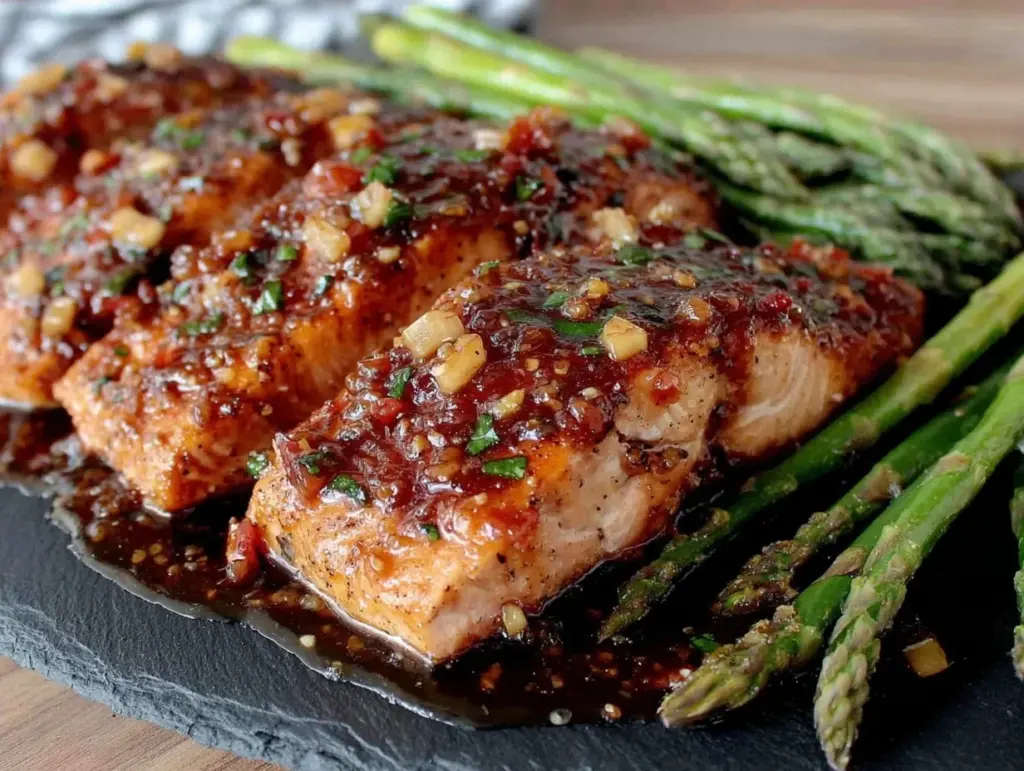
So I threw everything onto one baking sheet. I drizzled it with honey, smashed some garlic, and shoved it in the oven. Twenty minutes later, I pulled out a pan that looked like something from a high-end restaurant—glossy, caramelized salmon resting on tender-crisp asparagus spears. The kitchen smelled like a spa, not a stress zone. My husband took one bite and actually stopped scrolling through his phone. That’s when I knew I had found my new weeknight hero.
This one-pan honey garlic salmon recipe has saved me more times than I can count. It’s sweet, savory, garlicky, and ridiculously fast. If you’ve been looking for a dinner that looks impressive but requires zero culinary degree, this is it. I’ve made this at least a dozen times since that chaotic Tuesday, tweaking the garlic ratio until it was perfect. It’s the kind of meal that makes you feel like you’ve got your life together, even when you’re running on three hours of sleep.
Why You’ll Love This One-Pan Honey Garlic Salmon
I’m not going to lie to you—some weeknights, I just want the food to work. I don’t want to wrestle with complicated techniques or buy twelve ingredients for a sauce that only makes enough for two people. This honey garlic salmon checks every single box for me. Here’s why it’s permanently parked in my weekly rotation:
- Zero Cleanup Stress — Seriously, one pan. That’s it. You roast the fish and the veggies on the same sheet, and that’s all you wash afterward. I’ve made this after long days when the last thing I wanted to do was scrub pots, and this recipe made it actually enjoyable.
- Flavor That Punches Above Its Weight — The combination of sticky honey, sharp garlic, and salty soy creates this incredible glaze that caramelizes in the oven. It tastes like you spent hours in the kitchen, but you’re really just waiting for the timer.
- Healthy Without Feeling Like Diet Food — Salmon is packed with omega-3s, and asparagus is a nutrient powerhouse. But because of that honey-garlic glaze, it doesn’t taste “healthy.” It tastes indulgent. My kids don’t even realize they’re eating vegetables until they ask for seconds.
- Ready in 25 Minutes — From oven to table in under half an hour. The active prep time is maybe five minutes if you’re slow. I can have this ready before the kids finish their homework.
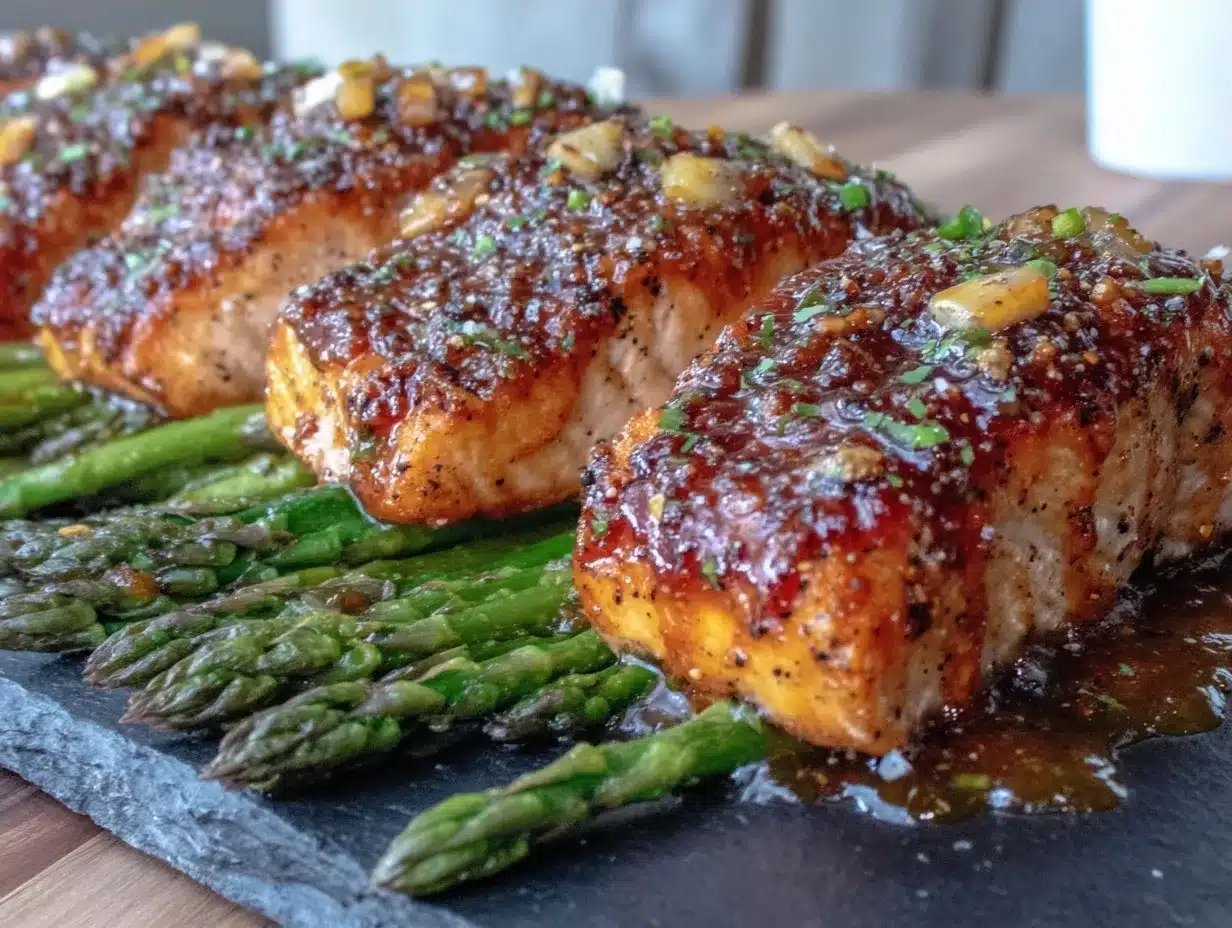
- Looks Stunning — The salmon gets this beautiful golden-brown crust, and the asparagus gets slightly charred and crispy. It’s visually appealing enough that I don’t feel bad serving it when I have friends over. It’s basically the healthy salmon and asparagus sheet pan dinner but with a sweeter, sticky twist that I personally prefer.
This is my go-to when I need dinner to just work. No fancy techniques, no weird ingredients, just reliable, delicious food that makes everyone happy and leaves me with a clean pan.
Ingredients You’ll Need
Here’s the best part: you probably have most of this already in your pantry and fridge. This recipe relies on simple, high-quality ingredients that do the heavy lifting. I’m particular about three things here, and I’ll tell you exactly why.
For the Salmon
Salmon fillets (1.5 pounds / 700g) — I use center-cut fillets because they cook evenly and look nicer on the plate. Wild-caught is better for flavor, but farmed works fine if that’s what you have on sale. Make sure they’re roughly the same size so they cook at the same rate. If you have thin tails, tuck them under.
Asparagus (1 bunch, about 1 pound / 450g) — Look for spears that are about the thickness of your pinky finger. They’re tender but hold up well in the oven. Avoid the super thin ones—they’ll dry out before the salmon is done. Or the super thick ones—they take forever to roast. Medium is the sweet spot.
Garlic (4-5 cloves, minced / about 1 tablespoon) — Yes, fresh garlic only. Do not use jarred garlic for this. The flavor is completely different, and fresh garlic caramelizes beautifully with the honey. Mince it finely so it spreads evenly over the fish.
For the Glaze
Honey (3 tablespoons / 45ml) — This is the star. It provides the sweetness and helps the glaze stick. I use regular clover honey. If you have a fancy local honey, this is the time to use it, because you’ll taste the difference.
Soy Sauce (2 tablespoons / 30ml) — Adds saltiness and umami to balance the sweet honey. I use low-sodium soy sauce so I can control the salt level. If you’re watching sodium, you can use tamari or coconut aminos.
Rice Vinegar (1 teaspoon / 5ml) — Just a splash. It cuts through the richness and adds a little brightness. Don’t skip it, or the sauce can taste cloyingly sweet. If you don’t have rice vinegar, white wine vinegar works too.
Minced Ginger (1 teaspoon / 5g) — Fresh ginger is best here. It adds a warm, spicy kick that pairs perfectly with salmon. I keep a knob of ginger in my crisper drawer specifically for this recipe. If you’re lazy, ground ginger works in a pinch, but use half the amount.
Sesame Oil (1 teaspoon / 5ml) — Toasted sesame oil. This is non-negotiable. It adds that nutty, restaurant-quality aroma. A little goes a long way. Make sure it’s toasted, not just regular sesame oil.
For Garnish
Green Onions (2 stalks, sliced) — For color and a fresh onion bite. I slice them thinly so they distribute evenly.
Sesame Seeds (1 tablespoon) — Toasted sesame seeds add a nice crunch and visual appeal. I buy pre-toasted ones because I’m always too tired to toast them myself.
Lemon Wedges — For squeezing over the top right before eating. The acidity brightens everything up.
Equipment Needed
You don’t need fancy equipment for this. Here’s what I actually use.
Large Rimmed Baking Sheet — I use a half-sheet pan (18×13 inches). It needs to be big enough to fit the salmon and asparagus in a single layer. If your pan is too small, the veggies will steam instead of roast. I line mine with parchment paper for zero cleanup, but foil works too if you grease it well.
Small Mixing Bowl — For whisking the glaze. Any small bowl works.
Pastry Brush or Spoon — To apply the glaze. I use a silicone brush because it’s easier to clean, but a spoon works fine if you’re careful.
Sharp Knife — For trimming the asparagus and mincing garlic. Dull knives make you cry more—learned this the hard way with garlic.
Cutting Board — Any size works. I use a small one for the veggies and a larger one for the fish to avoid cross-contamination.
Optional but nice: A kitchen torch if you want to char the salmon even more at the end, but the oven does a great job on its own.
How to Make It: Step-by-Step
Alright, let’s make this! I’m walking you through exactly how I do it, including the little tricks I’ve picked up.
Step 1: Prep the Oven and Pan (5 minutes)
Preheat your oven to 400°F (200°C). Line a large baking sheet with parchment paper or aluminum foil. The parchment paper is my favorite because the honey glaze can get sticky, and you don’t want to fight it later. Set it aside.
Step 2: Prep the Asparagus (3 minutes)
Wash the asparagus and pat it dry. Trim off the woody ends. I usually just bend a spear where it naturally snaps, and everything above that is good to go. Toss the asparagus on one side of the baking sheet with a drizzle of olive oil, salt, and pepper. Spread it out in a single layer. If they’re crowded, they’ll steam instead of roast.
Step 3: Prep the Salmon (2 minutes)
Pat the salmon fillets dry with paper towels. This is crucial—moisture is the enemy of a good sear. Season both sides lightly with salt and pepper. Place the salmon on the other side of the baking sheet, skin-side down if your fillets have skin. Leave space between the fillets so heat can circulate.
Step 4: Make the Glaze (2 minutes)
In a small bowl, whisk together the honey, soy sauce, minced garlic, rice vinegar, minced ginger, and sesame oil. It should look like a thin, glossy sauce. Taste it—it should be sweet and salty with a hint of kick. Adjust if needed.
Step 5: Assemble and Roast (15-18 minutes)
Brush about two-thirds of the glaze generously over the salmon fillets. Don’t worry if it drips onto the pan; that’s where the flavor is. Slide the baking sheet into the preheated oven. Roast for 12-15 minutes. The salmon is done when it flakes easily with a fork and is opaque throughout. The asparagus should be tender-crisp and slightly charred at the tips.
Pro Tip: If your salmon fillets are very thick (over 1 inch), you might need an extra 2-3 minutes. If they’re thin, check them at 10 minutes. You want to avoid overcooking, which makes salmon dry and rubbery.
Step 6: Final Glaze and Serve (2 minutes)
Remove the pan from the oven. Brush the remaining glaze over the hot salmon. The residual heat will warm it through without burning the garlic. Sprinkle with sliced green onions and sesame seeds. Serve immediately with lemon wedges on the side.
Expert Tips & Tricks
Here’s everything I’ve learned from making this dozens of times. These tips will save you from my mistakes.
Don’t Crowd the Pan
This is the #1 mistake people make. If your asparagus is piled on top of itself, it will steam and become soggy. Use a large enough pan. If you have a small pan, roast the asparagus for 5 minutes first, then add the salmon and glaze. I’ve made this mistake twice, and the difference in texture is night and day.
Pat the Salmon Dry
Wet salmon = steamed salmon. I know it seems like a minor detail, but drying the fillets with paper towels ensures you get that beautiful caramelized glaze instead of a watery mess. It takes 30 seconds and makes a huge difference.
Watch the Garlic
Garlic burns easily at 400°F. That’s why I brush half the glaze on before roasting and the rest on after. If you put all the raw garlic on before roasting, it might turn bitter. The second application keeps that fresh garlic flavor bright.
Use a Meat Thermometer
I used to guess, but now I use an instant-read thermometer. Salmon is perfect at 125°F (52°C) for medium-rare or 130°F (54°C) for medium. It will continue to cook a bit after you take it out of the oven. If you go over 145°F, it’s going to be dry.
Toast Your Sesame Seeds
If you buy raw sesame seeds, toast them in a dry pan for 2 minutes before sprinkling. It brings out a nutty flavor that elevates the whole dish. I’m lazy, so I usually buy pre-toasted, but when I have time, I toast them myself.
Variations & Substitutions
Once you’ve nailed the basic version, here’s how you can mix it up. I’ve tried all of these.
Spicy Version
Add 1 teaspoon of sriracha or red pepper flakes to the glaze. It adds a nice heat that cuts through the sweetness. My husband likes it this way. It’s similar to the kick you get in salmon rice bowl with spicy mayo, but baked.
Teriyaki Twist
Swap the rice vinegar for mirin and add 1 tablespoon of brown sugar. It’s sweeter and more traditional teriyaki flavor. Great if you’re serving this with rice or noodles.
Gluten-Free
Simply use tamari instead of soy sauce. Everything else is naturally gluten-free. I’ve used gluten-free soy sauce and it tastes identical.
Dairy-Free
This recipe is already dairy-free, so no changes needed. It’s a great option for those avoiding dairy.
Vegetarian Swap
Use firm tofu instead of salmon. Press the tofu, cube it, and roast it with the asparagus. Use a cornstarch slurry in the glaze to make it thicker. It’s not the same, but it’s tasty.
Serving & Storage
How to Serve
I usually serve this straight from the baking sheet at the dinner table—it looks rustic and stays warm. But here are other ways I’ve enjoyed it:
Side Dishes:
- Fluffy jasmine rice or quinoa (to soak up the extra glaze)
- Steamed broccoli or bok choy
- A simple arugula salad with lemon vinaigrette
- Crispy waffle iron hash browns if you want something extra hearty
Toppings Bar:
When I have guests, I put out: extra sesame seeds, sliced jalapeños, chopped cilantro, and lime wedges. Everyone customizes their bowl.
Wine Pairing:
Not a wine expert, but my wine-snob friend says a crisp Pinot Grigio or a dry Riesling works great with this. The acidity cuts through the honey.
Storage Instructions
Refrigerator:
Store leftovers in an airtight container for up to 3 days. The salmon will hold up well, but the asparagus might get a bit soft. That’s normal.
Reheating:
Best method: Reheat in a skillet over medium-low heat with a splash of water to steam it slightly. This keeps the salmon moist.
Microwave method: Heat in 30-second intervals, but it will likely dry out the salmon. I usually just eat it cold from the fridge if I’m being lazy—it’s still good.
Freezing:
Honestly, this doesn’t freeze well. The asparagus becomes mushy, and the salmon texture changes. Make it fresh or store in the fridge for up to 3 days.
Nutrition Information
I’m not a nutritionist, but here’s the breakdown if you’re tracking. This is per serving (based on 4 servings).
| Nutrient | Amount |
|---|---|
| Calories | 320 |
| Protein | 28g |
| Carbs | 18g |
| Fiber | 3g |
| Fat | 14g |
| Sugar | 14g |
| Sodium | 450mg |
What’s Good:
High in protein and omega-3s. Good source of vitamins A and K from the asparagus.
What to Know:
Higher in sugar from the honey, but it’s natural sugar. Moderate sodium from the soy sauce.
Look, this is a balanced meal with healthy fats and veggies. It’s not a diet recipe, but it’s way better than takeout. When I want to make it lighter, I reduce the honey to 2 tablespoons and use low-sodium soy sauce. But usually? I just enjoy it.
Final Thoughts
So that’s my one-pan honey garlic salmon! I’ve probably talked your ear off at this point, but when you make a recipe this often, you have a lot to say about it.
This has saved weeknight dinners more times than I can count. It’s my answer to “what’s for dinner” when I’m tired, don’t want takeout, and still want something that tastes really good. My kids are happy, my husband’s happy, and I’m happy because I’m not stressed about cooking.
Make it yours! Try different add-ins, swap in your favorite vegetables, adjust the garlic (though more is always better in my opinion). The best recipes are the ones you adapt to your family’s tastes.
If you make this, drop a comment and let me know what you think! I love hearing how recipes turn out in your kitchen. And if something doesn’t work, tell me that too—I’m here to help troubleshoot.
Happy cooking! And I hope your kitchen smells half as good as mine does right now.
Frequently Asked Questions
Can I use frozen salmon?
You can, but you need to thaw it completely first. Pat it very dry before seasoning. Frozen salmon tends to release more water, so you might need to roast it a minute longer. Fresh is always better for texture, but frozen works in a pinch.
Why did my salmon turn out dry?
It was probably overcooked. Salmon cooks fast! Check it at 10 minutes. If it flakes easily and is opaque, it’s done. If it’s still translucent in the center, give it another 2 minutes. I’ve ruined several fillets by being impatient.
Can I make this in an air fryer?
Yes! Cook at 400°F for 8-10 minutes. You’ll need to do it in batches if your air fryer is small. The glaze might drip, so put a piece of foil in the bottom basket. It’s surprisingly good, though the asparagus doesn’t get as crispy.
What if I don’t have rice vinegar?
Use white wine vinegar or apple cider vinegar. The flavor will be slightly different, but it still works. The key is just a little acidity to balance the sweet honey.
Can I add other vegetables?
Absolutely. Broccoli, bell peppers, and snap peas all work well. Just make sure they’re cut into similar sizes to the asparagus so they roast evenly. Zucchini works too, but add it in the last 5 minutes so it doesn’t get mushy.
How do I reheat leftovers without it getting dry?
Add a splash of water or broth to a skillet, add your leftover salmon, and heat gently over low heat, covered. The steam brings back the moisture. Microwave sort of works but tends to dry it out. If you do microwave, definitely add a splash of water first and heat in short bursts.
Pin This Recipe!
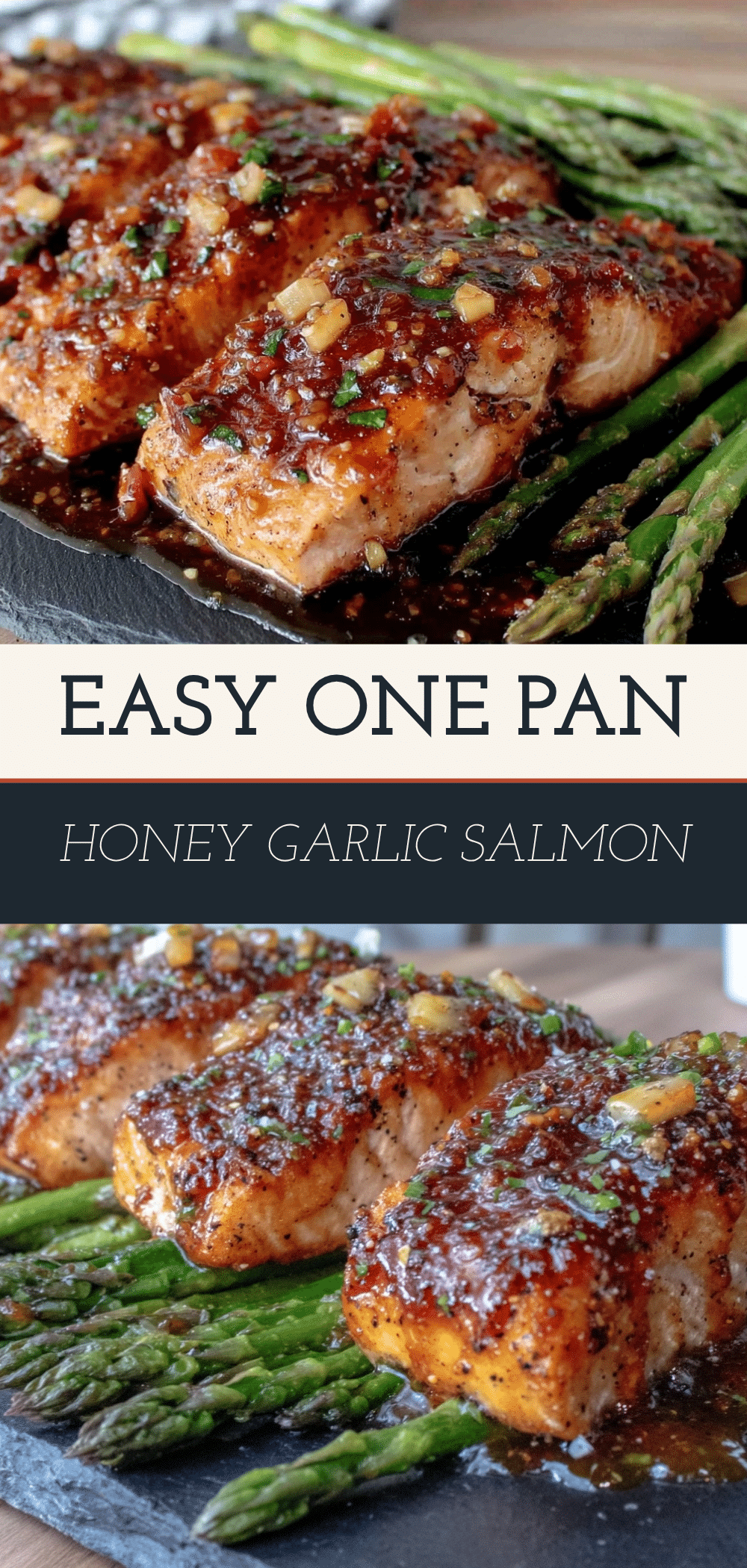
One-Pan Honey Garlic Salmon: Perfect Weekend Dinner
- Total Time: 25 minutes
- Yield: 4 servings 1x
Description
A quick, one-pan weeknight dinner featuring salmon and asparagus roasted with a sticky honey-garlic glaze. It’s healthy, flavorful, and requires minimal cleanup.
Ingredients
- 1.5 pounds salmon fillets (center-cut)
- 1 bunch asparagus (about 1 pound)
- 4–5 cloves garlic, minced
- 3 tablespoons honey
- 2 tablespoons soy sauce (or tamari for gluten-free)
- 1 teaspoon rice vinegar
- 1 teaspoon minced fresh ginger
- 1 teaspoon toasted sesame oil
- 2 stalks green onions, sliced
- 1 tablespoon toasted sesame seeds
- Lemon wedges, for serving
- Olive oil, salt, and pepper, for seasoning
Instructions
- Preheat oven to 400°F (200°C). Line a large rimmed baking sheet with parchment paper or foil.
- Wash and dry asparagus, trim woody ends, and toss with olive oil, salt, and pepper. Spread in a single layer on one side of the baking sheet.
- Pat salmon fillets dry with paper towels. Season with salt and pepper. Place on the other side of the baking sheet, skin-side down.
- In a small bowl, whisk together honey, soy sauce, minced garlic, rice vinegar, minced ginger, and sesame oil.
- Brush about two-thirds of the glaze over the salmon fillets.
- Roast in the preheated oven for 12-15 minutes, or until salmon flakes easily with a fork and is opaque throughout.
- Remove from oven and brush the remaining glaze over the hot salmon.
- Sprinkle with sliced green onions and sesame seeds. Serve immediately with lemon wedges.
Notes
Do not crowd the pan to ensure asparagus roasts instead of steams. Pat salmon dry before seasoning for better caramelization. Use a meat thermometer to check for doneness (125°F for medium-rare, 130°F for medium). Garlic burns easily, so apply half the glaze before roasting and the rest after to keep the flavor bright.
- Prep Time: 10 minutes
- Cook Time: 15 minutes
- Category: Main Course
- Cuisine: Asian Fusion
Nutrition
- Serving Size: 1 fillet with aspara
- Calories: 320
- Sugar: 14
- Sodium: 450
- Fat: 14
- Saturated Fat: 2
- Carbohydrates: 18
- Fiber: 3
- Protein: 28
Keywords: honey garlic salmon, one-pan dinner, weeknight meals, healthy salmon, sheet pan dinner, quick recipes, gluten-free options