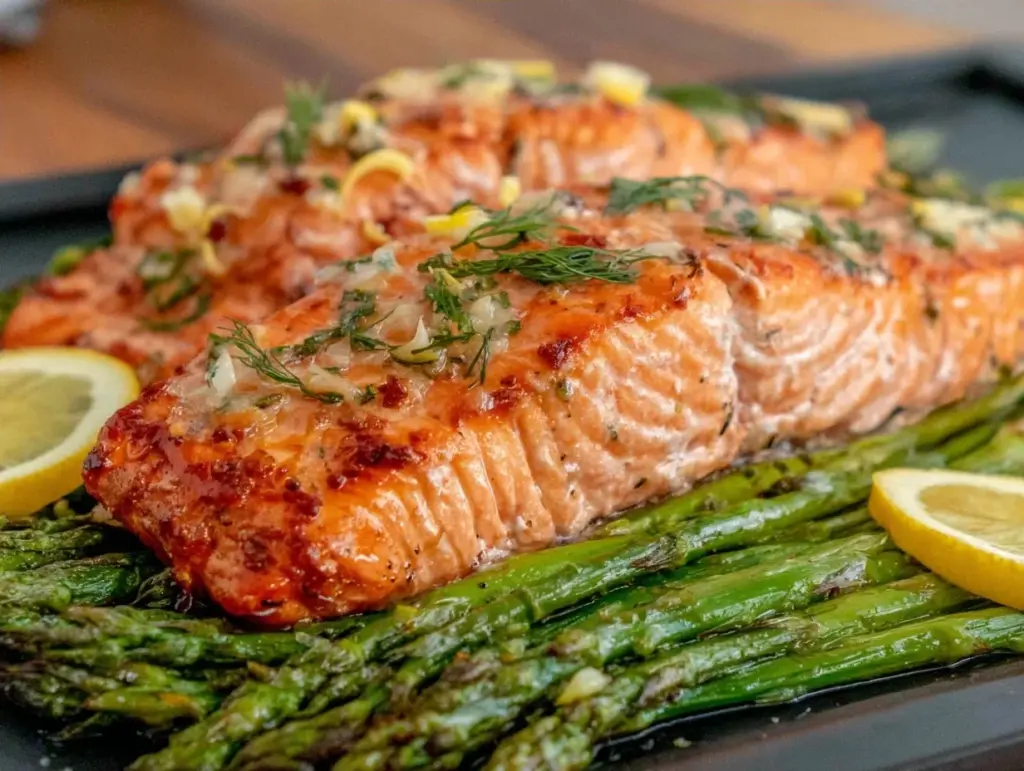
There is a specific kind of panic that sets in about 4:30 PM on a Friday. You’ve had a long week, your inbox is a disaster, and the thought of chopping vegetables, managing three different pots, and standing over a hot stove feels less like cooking and more like a chore you didn’t sign up for. Last month, right in the thick of that panic, I scraped together some salmon fillets and a bunch of asparagus that were slowly turning into green sticks in my crisper drawer. I threw them on a baking sheet, drizzled them with lemon and garlic, and shoved them into the oven. I literally went to change into sweatpants while it cooked.
When I pulled the pan out twenty minutes later, the kitchen smelled like a high-end restaurant, not a home kitchen. The salmon was flaky and moist, the asparagus had those perfect charred tips, and the whole thing looked so elegant I almost didn’t want to eat it. I plated it, sat down, and took one bite. It was that rare combination of healthy and deeply satisfying. It was light enough that I didn’t feel sluggish afterward, but rich enough with the garlic butter that I felt treated.
That single Friday night meal became a staple. This healthy salmon and asparagus sheet pan dinner has made it onto our table at least once a week for the last six months. It’s the perfect bridge between “I want to eat clean” and “I want to feel fancy without the work.” If you’re tired of dry, overcooked fish or mushy veggies, you’re going to love this. I’ve tested the timing and the marinade dozens of times to ensure the salmon stays juicy and the asparagus stays crisp-tender. Here’s exactly how to do it right.
Why You’ll Love This Recipe
Real talk: most healthy dinners are boring. They’re boiled, they’re bland, or they require five different bowls of prep work. This recipe flips the script. It’s my go-to when I want to impress a date or just treat myself to something that feels special, but I still want to get back to my couch in under an hour.
- Zero Cleanup Stress — Seriously, this is the best part. Everything cooks on one sheet pan. You’ll have maybe one bowl for the marinade and your serving plates. If you line your pan with parchment paper or foil, you can literally just toss it. No scrubbing pots, no washing pans. My husband calls this the “lazy chef’s dream” and I’m not arguing.
- Restaurant-Quality Look — It sounds silly, but presentation matters. The bright green asparagus against the pink-orange salmon, drizzled with that golden garlic butter and fresh dill, looks incredible. I’ve served this to friends who think I spend hours in the kitchen, and they’re shocked when I tell them it took 25 minutes from start to finish.
- Protein-Packed and Light — Salmon is one of those foods that just makes you feel good. It’s loaded with omega-3s, and the asparagus adds fiber and vitamins without weighing you down. Unlike my cheesy green chili chicken enchilada casserole, which is a hearty comfort food, this meal leaves you feeling energized, not stuffed and sleepy.
- Flexible and Forgiving — Can’t find fresh asparagus? Use broccolini. Don’t love dill? Thyme or parsley works just as well. Salmon can vary in thickness, so I’ve included tips for adjusting cook times so you never end up with dry fish. It’s hard to mess this up.
- Ready in 25 Minutes — From the moment you preheat the oven to the moment you take the first bite, it’s a quick 25-minute process. That’s faster than ordering takeout, waiting for delivery, and dealing with the plastic containers.
This is the kind of meal that makes you feel like a competent, stylish adult. It’s healthy, it’s delicious, and it’s ridiculously easy. Let’s get cooking.
Ingredients You’ll Need
One of the reasons this healthy salmon and asparagus sheet pan dinner works so well is that the ingredient list is short, simple, and mostly things you probably already have or can grab on the way home. I’m particular about quality here—specifically the fish and the olive oil—but for the rest, keep it simple.
For the Salmon
Salmon fillets (4 pieces, about 6 oz each / 170g each) — Look for wild-caught sockeye or Atlantic salmon if you can find it. They have a richer flavor and firmer texture than farmed. Ask your fishmonger to cut them to equal thickness if possible, which helps them cook evenly. If you can’t find fresh, high-quality frozen salmon works too—just thaw it completely in the fridge overnight.
Lemon (2 medium) — You’ll need juice and zest. The acid cuts through the richness of the salmon and brightens the asparagus. Don’t skip the zest; that’s where the essential oils are. Use a microplane if you have one, or a fine grater.
Garlic (4 cloves, minced / about 2 tablespoons) — Fresh garlic is non-negotiable here. Jarred garlic has a metallic aftertaste that clashes with the delicate fish. Minced fresh garlic infuses the oil and the veggies with that savory backbone we all love.
Extra virgin olive oil (3 tablespoons / 45ml) — Use a good quality one. This is one of the main flavors, so if you have a bottle that tastes grassy or peppery, use it. It adds a fruity depth that cheap oil just doesn’t have.
Butter (2 tablespoons / 30g) — Unsalted butter. We’ll melt this with the garlic for a finishing drizzle. It adds that luxurious mouthfeel that makes fish feel like a treat.
Dry mustard (1 teaspoon) — This is my secret weapon. It doesn’t make the fish taste like mustard; it just adds a subtle tang and depth that enhances the lemon. If you don’t have it, skip it, but I recommend it.
Dried dill (1 teaspoon) — Or 1 tablespoon of fresh dill, chopped. Dill and salmon are a classic pairing for a reason. Fresh dill adds a brighter, fresher note; dried is more concentrated and convenient.
Red pepper flakes (½ teaspoon) — Optional. If you like a tiny hint of heat to contrast the lemon, add these. If you’re sensitive to spice, skip them or use just a pinch.
Salt and black pepper — Kosher salt is best because it’s easier to control. Freshly cracked black pepper adds a nice bite.
For the Asparagus
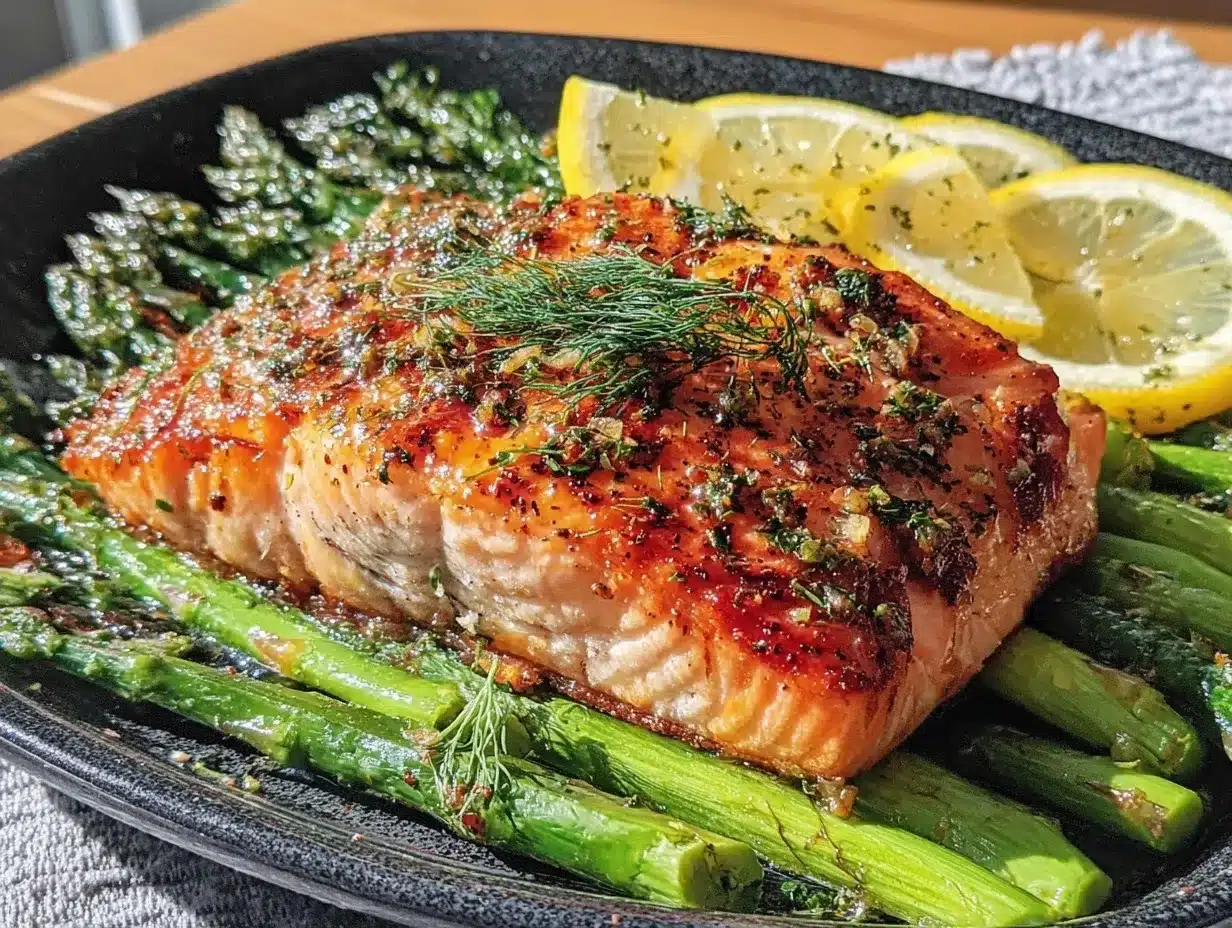
Asparagus spears (1 large bunch, about 1 pound / 450g) — Look for spears that are roughly the same thickness. If you get a mix of thick and thin stalks, save the thin ones for a stir-fry and use the thick ones for this. They cook more evenly.
Asparagus prep tip — You don’t need a fancy tool to snap the ends. Just hold the spear at both ends and bend it; it will naturally snap where the tough part ends and the tender part begins. It’s satisfying and ensures you don’t eat the woody bits.
For Garnish
Fresh dill (2 tablespoons, chopped) — For that pop of green color and fresh aroma right before serving.
Lemon wedges — For squeezing over the top at the table. It’s the final touch that wakes up all the flavors.
Parmesan cheese (optional, ¼ cup / 25g) — I sometimes sprinkle a little grated Parmesan over the asparagus right after it comes out of the oven. It melts slightly and adds a salty, nutty crunch. It’s not traditional, but it’s delicious. If you’re keeping it strictly low-carb or dairy-free, skip it.
Equipment Needed
You don’t need a fancy kitchen to make this healthy salmon and asparagus sheet pan dinner. Here’s what I actually use, along with alternatives if you’re missing something.
Large rimmed baking sheet — I use a half-sheet pan (18×13 inches). It’s the standard size for a reason. You need enough surface area so the salmon and asparagus aren’t crowded. If they’re piled on top of each other, they’ll steam instead of roast, and you won’t get those nice browned edges. If your pan is smaller, cook in two batches. It’s better to do two quick batches than one sad, steamed dinner.
Parchment paper or aluminum foil — I prefer parchment for easy cleanup and because it prevents sticking without the risk of aluminum leaching (though foil is fine if you grease it well). Parchment makes the cleanup literally zero.
Small mixing bowl — For whisking the olive oil, lemon juice, garlic, and spices. A small ramekin or even a large mug works.
Microplane or fine grater — For the lemon zest. If you don’t have one, a regular grater works, just be careful not to get the white pith (which is bitter).
Sharp knife and cutting board — For trimming the asparagus and mincing garlic.
Spatula — A wide, flat spatula is helpful for flipping the salmon if needed, though we mostly just pull it out when it’s done.
Measuring spoons — Standard stuff. I keep a set in a drawer.
Oven — Obviously, but make sure it’s calibrated correctly. If your oven runs hot, you might end up with dry fish. I have an oven thermometer to check mine.
How to Make It: Step-by-Step
Alright, let’s make this! It’s straightforward, but there are a few key moves that separate a good sheet pan dinner from a great one. I’m walking you through exactly how I do it.
Step 1: Prep Your Oven and Pan (5 minutes)
Preheat your oven to 400°F (200°C). This is a high enough heat to roast the veggies quickly and cook the fish without drying it out. While the oven heats, line your baking sheet with parchment paper or foil. Lightly grease it with a little olive oil or cooking spray so nothing sticks.
Step 2: Prep the Asparagus (5 minutes)
Wash the asparagus and pat it dry. Take each spear and bend it gently near the bottom; it will snap at the natural point where the tough stalk ends. Discard the woody ends. If the spears are very thick, you can trim the tips too, but usually, just snapping the bottom is enough. Toss the asparagus in a bowl with 1 tablespoon of olive oil, a pinch of salt, and a pinch of pepper.
Step 3: Make the Marinade (2 minutes)
In your small bowl, whisk together the remaining 2 tablespoons of olive oil, the juice of one lemon, the zest of that same lemon, the minced garlic, the dry mustard, dried dill, and red pepper flakes (if using). Whisk until it’s emulsified and looks creamy-ish.
Step 4: Assemble the Pan (3 minutes)
Spread the asparagus in an even layer on one side of the prepared baking sheet. Don’t pile it up. Place the salmon fillets on the other side of the sheet, skin-side down if they have skin. Brush the tops of the salmon generously with the lemon-garlic marinade. Drizzle any leftover marinade over the asparagus. Season the salmon with a little extra salt and pepper on top.
Pro tip: If your salmon fillets vary in thickness, tuck the thinner ends under slightly so they cook at the same rate as the thicker parts. This prevents the thin ends from drying out.
Step 5: Roast (12-15 minutes)
Slide the pan into the preheated oven. Roast for 12-15 minutes. The exact time depends on the thickness of your fillets. A general rule of thumb is 4-5 minutes per half-inch of thickness. You’ll know it’s done when the salmon flakes easily with a fork and the asparagus is tender-crisp with some charred edges.
Visual cue: The salmon should turn opaque and pink-orange throughout. If you poke it gently, it should resist slightly but yield. The asparagus should be bright green, not dull or mushy.
Step 6: The Garlic Butter Finish (2 minutes)
While the salmon is in the oven, melt the 2 tablespoons of butter in a small saucepan or microwave. Stir in a tiny pinch of salt. Once the salmon comes out of the oven, immediately drizzle that garlic butter over the fillets. The residual heat will melt it into the fish without overcooking it. Garnish with fresh dill and serve immediately with lemon wedges.
Expert Tips & Tricks
Here’s everything I’ve learned from making this healthy salmon and asparagus sheet pan dinner dozens of times. These tips will save you from my early mistakes.
Don’t Crowd the Pan
This is the #1 reason sheet pan dinners fail. If the salmon and asparagus are touching or piled up, they steam. Steam makes fish rubbery and veggies soggy. Give them space. If you have a small oven or small pan, cook in two batches. I’d rather do two quick roasts than one disappointing one.
Check for Doneness Early
Salmon continues to cook slightly after it comes out of the oven (carryover cooking). If you pull it out when it looks *just* done, it might be overdone by the time you sit down. I aim for it to look *almost* done in the center, then let it rest for 2 minutes on the counter. It will finish cooking perfectly.
Use a Thermometer (Optional but Helpful)
If you’re nervous about dry fish, use an instant-read thermometer. Salmon is perfectly cooked at 145°F (63°C) according to the USDA, but many chefs prefer it at 125-130°F (52-54°C) for a medium-rare, juicy texture. If you like it well-done, go for 145°F, but keep an eye on it.
Save the Lemon Zest Before Juicing
Zest the lemon first, then juice it. If you juice it first, your hands get slippery and zesting is a nightmare. Also, the zest adds aroma that the juice alone doesn’t have. Don’t skip it.
Adjust for Thick vs. Thin Asparagus
Thin asparagus cooks faster than thick stalks. If you have a mix, put the thick stalks on the pan first and roast for 5 minutes, then add the thin ones and the salmon. This ensures everything finishes at the same time.
Variations & Substitutions
Once you’ve nailed the basic version, here’s how you can mix it up. I’ve tried all of these, and they’re all winners.
Herb Swap
Not a fan of dill? Fresh thyme or parsley works beautifully. Tarragon is another classic pairing with salmon, though it has a slightly anise flavor that some people love and others don’t. Basil is also surprisingly good if you’re going for a Mediterranean vibe.
Veggie Swap
Can’t find asparagus? Broccolini (baby broccoli) is a fantastic substitute. It has a similar texture and roasts beautifully on sheet pans. Zucchini slices or cherry tomatoes also work, though tomatoes will release more juice, so keep them away from the salmon.
Protein Swap
Not a fan of salmon? Thick white fish fillets like halibut, cod, or sea bass work well, but they cook faster (usually 10-12 minutes). Chicken thighs are another option, but they need a longer cook time, so you’d need to roast the chicken first and add the veggies later. For a quick swap, one-pan tuscan butter salmon is a great alternative if you want a creamier sauce profile.
Gluten-Free & Dairy-Free
This recipe is naturally gluten-free. For dairy-free, simply omit the butter drizzle or use olive oil instead. The flavor will be slightly less rich, but still delicious.
Spicy Kick
Add a pinch of cayenne pepper to the marinade, or top with sliced jalapeños before roasting. It’s a fun twist if you like heat.
Serving & Storage
This healthy salmon and asparagus sheet pan dinner is best served immediately, but here’s how to handle leftovers or side dishes.
How to Serve
I usually serve this straight from the pan to the table. It looks rustic and inviting. Pair it with a simple side like quinoa, couscous, or roasted potatoes to soak up the lemon-garlic juices. A light arugula salad with a vinaigrette also complements the richness of the salmon perfectly.
Storing Leftovers
Store leftovers in an airtight container in the refrigerator for up to 3 days. The salmon will firm up as it cools, which is normal. To reheat, gently warm it in the microwave for 30-60 seconds, or better yet, eat it cold the next day over a salad. Cold salmon salad is a thing, and it’s delicious.
Freezing
I don’t recommend freezing this dish. The texture of the asparagus becomes mushy when thawed, and the salmon can become dry. It’s best enjoyed fresh.
Nutrition Information
I’m not a nutritionist, but here’s the breakdown if you’re tracking. This is per serving (1 fillet + 1/4 of the asparagus).
Per Serving:
- Calories: ~350
- Protein: 34g
- Carbs: 8g
- Fiber: 3g
- Fat: 20g
- Saturated Fat: 5g
- Sodium: 300mg (varies based on salt)
What’s Good:
- High in protein and omega-3 fatty acids.
- Low in carbs and sugar.
- Good source of fiber from the asparagus.
What to Know:
This is a heart-healthy meal, but the calorie count can vary depending on the size of your fillets and the amount of olive oil/butter you use. If you’re watching calories, measure your oil and use less butter.
Final Thoughts
So that’s my healthy salmon and asparagus sheet pan dinner! It’s become such a reliable part of my weeknight routine because it checks all the boxes: healthy, delicious, pretty, and incredibly easy. I love that I can throw it together, clean up in two minutes, and still feel like I’ve made something special for my family.
Make it yours! Try different herbs, swap in your favorite veggies, or adjust the lemon to your taste. The best recipes are the ones you adapt to your life. If you make this, drop a comment and let me know how it turned out! I love hearing how recipes work in your kitchen. And if something doesn’t go as planned, tell me—I’m here to help troubleshoot.
Happy cooking! I hope your kitchen smells amazing and your dinner is perfect.
Frequently Asked Questions
How do I know when the salmon is done?
The easiest way is the fork test. Gently press the top of the fillet with a fork. If it flakes easily along the white lines (the fat layers) and feels firm but not hard, it’s done. If it’s still translucent in the center, give it another 2-3 minutes. You can also use a meat thermometer; 145°F is the safe temperature, but many people prefer it slightly under at 135°F for juiciness.
Can I use frozen asparagus?
You can, but the texture will be softer. Frozen asparagus releases a lot of water, which can make the salmon steam instead of roast. If you must use frozen, thaw it completely and pat it very dry before adding it to the pan. Fresh is always better for this recipe.
Why did my salmon dry out?
Overcooking is the main culprit. Salmon cooks very quickly, and it’s easy to leave it in the oven too long. Check it a few minutes before the timer goes off. Also, if your fillets are very thin, they will cook faster. Adjust your cook time accordingly.
Can I make this in the air fryer?
Yes! Cook at 375°F for 8-10 minutes. You may need to cook in batches depending on the size of your air fryer basket. The salmon will be slightly more browned, which is nice. Just keep an eye on it so it doesn’t dry out.
What sides go well with this?
Quinoa, roasted potatoes, couscous, or a simple green salad are all great. I also love it with crusty bread to soak up the lemon-garlic juices. If you want something heartier, check out my fall chicken and apple sausage skillet for a similar cozy, one-pan vibe with a different protein.
Can I marinate the salmon ahead of time?
Yes! You can marinate the salmon in the fridge for up to 2 hours. Just don’t leave it longer than that, as the acid in the lemon can start to “cook” the fish and change the texture. If you’re prepping ahead, keep the marinade separate and brush it on right before roasting.
Pin This Recipe!
Healthy Salmon and Asparagus Sheet Pan Dinner: 5-Step Impressive Dinner
- Total Time: 25 minutes
- Yield: 4 servings 1x
Description
A quick, elegant, and healthy one-pan meal featuring flaky salmon and charred asparagus with a lemon-garlic butter marinade, ready in just 25 minutes.
Ingredients
- 4 salmon fillets (about 6 oz / 170g each)
- 2 medium lemons (for juice and zest)
- 4 cloves garlic, minced
- 3 tablespoons extra virgin olive oil
- 2 tablespoons unsalted butter
- 1 teaspoon dry mustard
- 1 teaspoon dried dill (or 1 tablespoon fresh dill)
- 1/2 teaspoon red pepper flakes (optional)
- Kosher salt and freshly cracked black pepper
- 1 large bunch asparagus (about 1 lb / 450g)
- 2 tablespoons fresh dill, chopped (for garnish)
- Lemon wedges (for serving)
- 1/4 cup Parmesan cheese, grated (optional)
Instructions
- Preheat oven to 400°F (200°C). Line a large rimmed baking sheet with parchment paper or foil and lightly grease.
- Wash and dry asparagus. Snap off the woody ends by bending each spear. Toss asparagus in a bowl with 1 tablespoon olive oil, salt, and pepper.
- In a small bowl, whisk together the remaining 2 tablespoons olive oil, lemon juice, lemon zest, minced garlic, dry mustard, dried dill, and red pepper flakes.
- Spread asparagus in an even layer on one side of the baking sheet. Place salmon fillets on the other side, skin-side down. Brush salmon generously with the marinade and drizzle remaining marinade over asparagus. Season salmon with extra salt and pepper.
- Roast for 12-15 minutes, or until salmon flakes easily with a fork and asparagus is tender-crisp with charred edges.
- While salmon roasts, melt butter in a small saucepan or microwave with a pinch of salt. Immediately drizzle garlic butter over the cooked salmon.
- Garnish with fresh dill and serve with lemon wedges.
Notes
Do not crowd the pan to avoid steaming the fish. If salmon fillets vary in thickness, tuck thinner ends under. Salmon continues to cook after removal from oven; aim for it to look almost done in the center. For dairy-free, omit butter or use olive oil. Can be made in an air fryer at 375°F for 8-10 minutes.
- Prep Time: 15 minutes
- Cook Time: 12-15 minutes
- Category: Main Course
- Cuisine: American
Nutrition
- Serving Size: 1 fillet and 1/4 of
- Calories: 350
- Sodium: 300
- Fat: 20
- Saturated Fat: 5
- Carbohydrates: 8
- Fiber: 3
- Protein: 34
Keywords: salmon, asparagus, sheet pan dinner, healthy dinner, quick meals, gluten-free, omega-3, weeknight dinner, one-pan meal