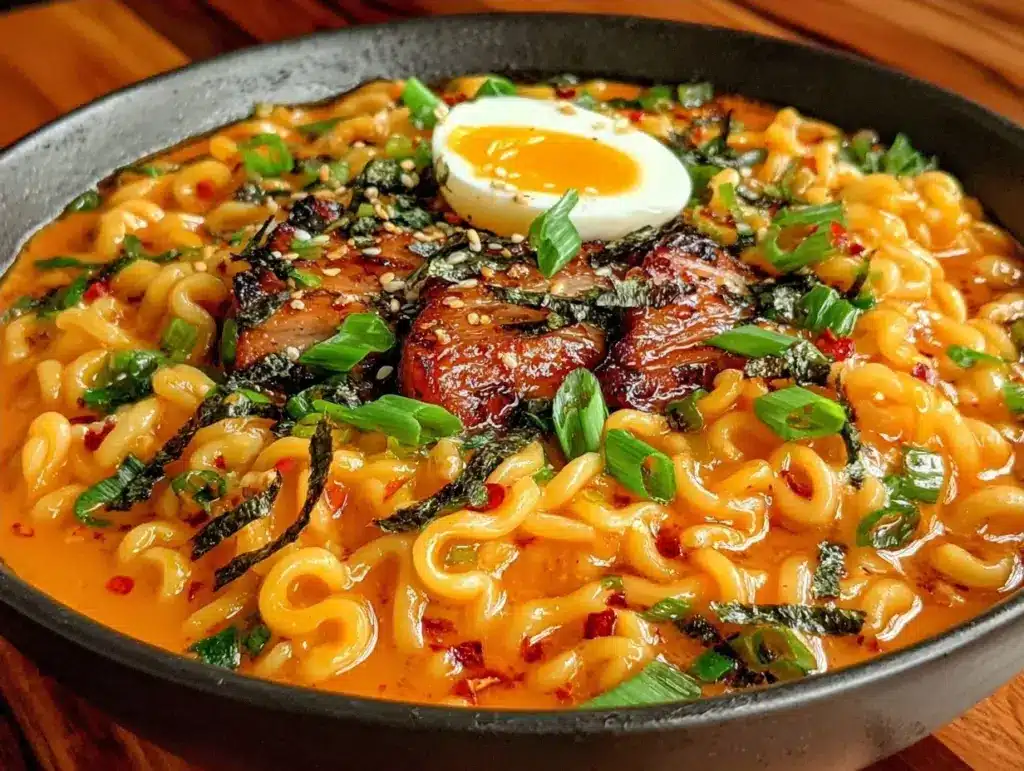
It was 2 AM on a Tuesday, and I was staring at the glowing clock on the microwave, wondering if I should order takeout or just go to bed hungry. The truth is, I’d had a long day, my brain was fried, and the last thing I wanted to do was think. But my stomach had other plans. It wasn’t just hungry; it was craving warmth. It was craving something that felt like a hug in a bowl.
So, I dug into the pantry. I found a jar of red miso paste, some dried shiitake mushrooms I’d been meaning to use, and a carton of eggs that were definitely past their “best by” date but still perfectly good. Thirty minutes later, I wasn’t just fed. I was restored.
This isn’t one of those complicated, multi-day soup projects that require you to roast bones for six hours. This is the Restaurant-Style Spicy Miso Ramen with Jammy Soft-Boiled Eggs that has become my secret weapon for cold nights, stressful days, and lazy weekends. It’s the kind of dish that makes you forget about the outside world for an hour. And that jammy egg? The one with the custard-like yolk that coats every noodle? That’s the moment everything clicks.
I’ve made this Restaurant-Style Spicy Miso Ramen with Jammy Soft-Boiled Eggs at least a dozen times since I perfected it. Some nights I add extra chili oil. Other nights I throw in some leftover mediterranean chicken skewers for extra protein. But usually, it’s just me, the pot, and the quiet satisfaction of eating something I made from scratch that tastes better than anything from a delivery app.
Why You’ll Love This Spicy Miso Ramen Recipe
Look, I get it. Making ramen from scratch sounds intimidating. But once you try this Restaurant-Style Spicy Miso Ramen with Jammy Soft-Boiled Eggs, you’ll realize it’s actually one of the easiest weeknight dinners you can pull off. Here’s why it’s taking over my kitchen rotation:
- It’s Fast (But Doesn’t Taste Like It) — From fridge to table in 30 minutes. The only active chopping time is about 10 minutes. The rest is just simmering. I make this on weeknights when I get home tired, and it’s ready before the credits roll on my favorite show.
- It’s Actually Fueling — This isn’t just empty carbs. The miso broth is packed with fermented goodness for your gut, the noodles give you energy, and those jammy eggs provide high-quality protein to keep you going until dinner. It’s comfort food that actually works for your body.
- Customizable Comfort — Hate mushrooms? Skip them. Love bok choy? Add two cups. Want it spicier? Add more chili oil. This recipe is a canvas. I’ve made it with high-protein ground beef skillet leftovers mixed in, and it was surprisingly delicious. It’s forgiving and flexible.
- The Jammy Egg Factor — Let’s be honest. The egg is the star. Getting that perfect soft-boiled, jammy yolk feels like a magic trick. Once you nail the timing, you’ll feel like a culinary wizard every time you crack it open.
- Pantry-Friendly Base — You don’t need fancy dashi stock if you don’t have it. I use a mix of miso, soy sauce, and garlic to build depth. Most of these ingredients are already in your spice cabinet.
This is my go-to when I need dinner to just work. No complicated techniques, no weird ingredients you can’t find, just reliable, delicious food that makes you feel warm and satisfied from the inside out.
Ingredients You’ll Need for the Best Spicy Miso Ramen
Here’s the best part: you probably have most of this already. I’m particular about a few things, but for the most part, this is a pantry-staple powerhouse. I break it down below so you know exactly what to grab.
For the Broth (The Soul of the Bowl)
Chicken broth or vegetable broth (6 cups / 1.5 liters) — I use low-sodium chicken broth because I like to control the saltiness myself. If you’re vegetarian, a rich vegetable broth works perfectly. I usually grab a carton from the fridge and don’t overthink it.
White or red miso paste (3-4 tablespoons) — This is the flavor bomb. Red miso is saltier and deeper; white miso is milder and sweeter. I usually use a mix (2 tbsp red, 2 tbsp white) for the best of both worlds. Don’t buy the cheap stuff in the tube. Get the real stuff in the tub or block.
Soy sauce (2 tablespoons) — I use regular soy sauce, not low-sodium, because I need that salty umami hit. Tamari works if you’re gluten-free.
Garlic (4 cloves, minced) — Yes, four cloves. Miso loves garlic. Don’t skimp. Fresh only—no jarred garlic in this recipe. It tastes metallic and ruins the nuance.
Fresh ginger (1 tablespoon, grated) — Grate it yourself. Pre-grated ginger is often dried out or has weird preservatives. It adds that zesty kick that cuts through the richness.
Chili oil or chili crisp (1-2 tablespoons) — This is where the heat comes in. I use chili crisp (like Lao Gan Ma) because the crunchy bits add texture. But plain chili oil works too. Adjust based on how much spice you can handle.
For the Noodles and Toppings
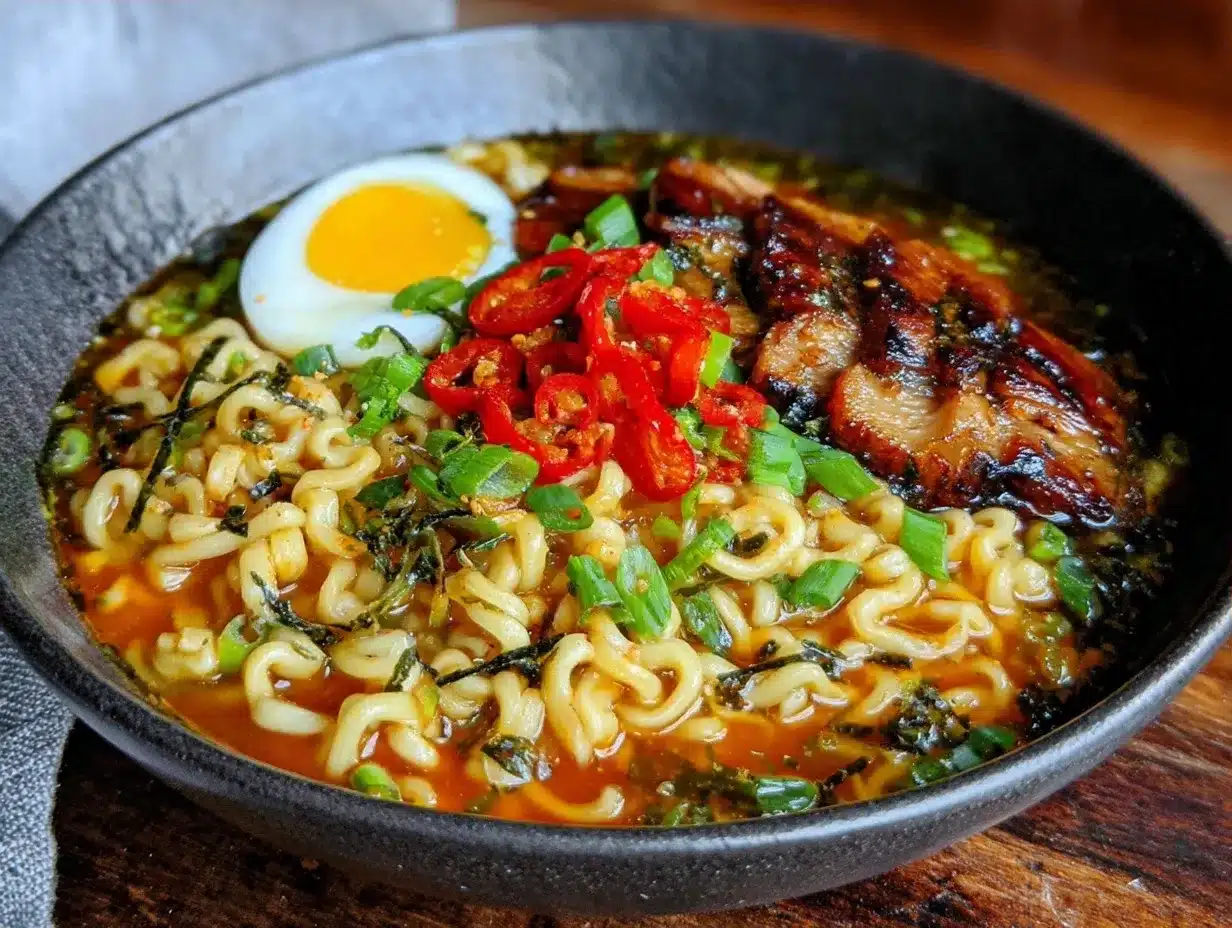
Ramen noodles (1 pack / 200g) — I buy fresh ramen noodles from the refrigerated section of the Asian grocery store. They have a better chew than the dried kind. If you can’t find them, dried ramen blocks work, just cook them a minute less.
Soft-boiled eggs (4 large eggs) — The jammy egg is non-negotiable. I use large eggs for the perfect 6.5-minute boil. See my tips below for the secret to getting them right every time.
Green onions (3-4 stalks, thinly sliced) — For garnish and a little oniony crunch. I use both the white and green parts.
Cilantro (1 small handful, chopped) — I love cilantro in ramen. It adds a fresh, bright note that balances the heavy broth. If you’re one of those people who think it tastes like soap, skip it or use parsley. No judgment.
Sesame seeds (1 teaspoon) — Toasted sesame seeds add a nutty finish. I usually keep a jar in my pantry specifically for dishes like this.
Optional Add-Ins (Because Why Not?)
Blanched bok choy (2 cups) — Adds fiber and crunch. I throw it in the hot broth right before serving.
Bean sprouts (1 cup) — Adds a refreshing crunch. Great for texture contrast.
Leftover protein — I’ve added shredded rotisserie chicken, mediterranean salmon bowl flakes, or even diced ham. It turns this into a heartier meal.
Equipment Needed
You don’t need fancy equipment for this. Here’s what I actually use.
Medium pot (3-4 quart) — For the broth. A standard saucepan works fine. I use a stainless steel pot because it heats evenly.
Large pot or Dutch oven — For boiling the eggs. I use a separate pot so I’m not juggling two things at once. If you have a small one, that’s perfect for eggs.
Large bowl — For the ice bath. This is crucial for the eggs. I use a mixing bowl filled with cold water and ice cubes.
Slotted spoon — To get the eggs out of the boiling water without breaking them. A regular spoon works if you’re careful.
Whisk — For dissolving the miso paste. You don’t want clumps of paste in your final bowl.
Serving bowls — I prefer wide, shallow bowls for ramen. It gives you more surface area for toppings and keeps the noodles warm.
Timer — Your phone works. Do not guess the egg time. Set it.
How to Make It: Step-by-Step
Alright, let’s make this! I’m walking you through exactly how I do it, including the little tricks I’ve picked up over the years.
Step 1: Prep Your Eggs (The Jammy Secret)
Before you touch the stove, get your eggs ready. Bring a small pot of water to a boil. While that’s heating, fill a large bowl with ice water. Once the water is boiling, gently lower the eggs in with a slotted spoon. Set a timer for exactly 6.5 minutes. When the timer goes off, immediately transfer the eggs to the ice bath. Let them sit for at least 5 minutes. This stops the cooking and makes them easier to peel. Trust me on the timing. 6 minutes is runny; 7 minutes is too hard. 6.5 is the sweet spot.
Step 2: Build the Broth Base
In your medium pot, heat a splash of oil over medium heat. Add the minced garlic and grated ginger. Sauté for about 1 minute until fragrant. Don’t let the garlic brown—it gets bitter. Next, add the miso paste. Stir it into the garlic and ginger for another minute to “toast” the miso. This unlocks deeper flavors. Pour in the chicken broth and bring it to a gentle simmer. Add the soy sauce and chili oil. Taste it. It should be bold and savory. If it needs more salt, add a dash of soy sauce. If it needs more depth, add a pinch of sugar.
Step 3: Cook the Noodles
While the broth simmers, cook your noodles. If using fresh ramen, drop them into a separate pot of boiling water. Cook for 2-3 minutes, or according to package directions. They should be tender but still have a slight chew (al dente). If using dried ramen, cook for 3-4 minutes. Drain the noodles, but save a ladleful of the starchy pasta water. You’ll use it to adjust the broth consistency later.
Step 4: Assemble the Bowls
Divide the cooked noodles among your serving bowls. Ladle the hot miso broth over the noodles. Be careful not to boil the broth once the miso is in it—boiling can kill the beneficial bacteria and make the miso taste flat. Just keep it hot. Add your toppings: sliced green onions, cilantro, bean sprouts, or any protein you’re using. Slice your jammy eggs in half and place them on top. The yolk should ooze out beautifully.
Step 5: Serve Immediately
Grab your chopsticks or fork and dig in. The noodles will absorb the broth as you eat, so it’s best to eat while it’s hot. Add a drizzle of extra chili oil if you want more heat. Enjoy every warm, savory bite.
Expert Tips & Tricks for Perfect Ramen
Here’s everything I’ve learned from making this dozens of times. These tips will save you from my mistakes.
The Ice Bath is Non-Negotiable
If you skip the ice bath, the eggs will continue cooking in their own heat, and you’ll end up with hard-boiled eggs instead of jammy ones. The shock of cold water also contracts the egg inside the shell, making it much easier to peel. I’ve peeled undercooked eggs that were a mess before I started using the ice bath. Never again.
Don’t Boil the Miso
Miso is a fermented product. Boiling it destroys the probiotics and can make the flavor bitter and flat. Always turn off the heat or lower it to a bare simmer before stirring in the miso paste. If your broth is too hot, let it sit for a minute before adding the miso.
Toast Your Aromatics
Sautéing the garlic and ginger before adding the liquid builds a flavor foundation that raw ingredients just can’t match. It adds a nutty, caramelized depth that makes the broth taste like it simmered for hours.
Save the Pasta Water
That starchy water from the noodles is liquid gold. If your broth ends up too thin or too salty, you can use a splash of pasta water to adjust the consistency and balance the saltiness. It’s a chef’s trick that makes a huge difference.
Use Good Miso
Cheap miso paste can be overly salty and lack complexity. Look for brands like Marukome or Hikari Miso. They have a richer, more nuanced flavor that makes the broth taste like restaurant quality.
Variations & Substitutions
Once you’ve nailed the basic version, here’s how you can mix it up. I’ve tried all of these.
Vegan Miso Ramen
Swap chicken broth for vegetable broth. Use a vegan miso paste (some miso contains fish dashi, so check the label). Top with tofu instead of eggs. I use extra-firm tofu pressed and pan-fried for a nice crunch.
Spicy Miso Shrimp Ramen
Add 1lb of shrimp to the broth in the last 3 minutes of cooking. Shrimp pairs beautifully with miso and chili. It’s a lighter option but still very satisfying.
Beef Miso Ramen
Sauté ground beef or sliced steak with the garlic and ginger before adding the broth. It makes the dish heartier and more like a stew. I’ve paired this with ground beef stroganoff flavors before, and it was surprisingly good.
Gluten-Free Miso Ramen
Use gluten-free ramen noodles (rice noodles or buckwheat soba work well) and tamari instead of soy sauce. Check your miso paste to ensure it’s gluten-free.
Quick Veggie Load-Up
Add frozen edamame, corn, or spinach to the broth while it simmers. It’s an easy way to sneak in more vegetables without much effort. I do this when I’m trying to get my kids to eat greens.
Serving & Storage
How to Serve:
I usually serve this straight from the stove at the dinner table. It’s rustic and comforting. Add extra chili oil on the side for those who want more heat. A squeeze of lime juice right before eating adds a nice brightness that cuts through the richness.
Leftovers:
Ramen is best fresh. The noodles will continue to absorb the broth, becoming soggy if stored. If you must store leftovers, keep the broth and noodles separate in airtight containers in the fridge for up to 3 days. Reheat the broth gently and cook fresh noodles when you’re ready to eat. The eggs can be stored peeled in the fridge for 2 days.
Reheating:
Reheat the broth on the stove over medium-low heat. Do not microwave the noodles with the broth, or they’ll turn into mush. Heat the broth separately, then pour over fresh or reheated noodles.
Nutrition Information
I’m not a nutritionist, but here’s the breakdown if you’re tracking. This dish is designed to be fuel that keeps you going, not a diet compromise.
Per Serving (based on 4 servings):
- Calories: 450
- Protein: 22g
- Carbs: 55g
- Fiber: 4g
- Sugar: 4g
- Fat: 16g
- Sodium: 900mg (varies based on miso/soy sauce)
What’s Good:
High protein from the eggs and broth. The miso provides probiotics for gut health. The noodles offer complex carbs for energy. You can boost the fiber by adding more vegetables like bok choy or bean sprouts.
What to Know:
Higher sodium due to miso and soy sauce. If you’re watching salt, use low-sodium broth and reduce the soy sauce. But honestly, the flavor is worth it. Balance it out with water intake during the day.
Final Thoughts
So that’s my go-to Restaurant-Style Spicy Miso Ramen with Jammy Soft-Boiled Eggs! I’ve probably talked your ear off at this point, but when you make a recipe this often, you have a lot to say about it.
This has saved weeknight dinners more times than I can count. It’s my answer to “what’s for dinner” when I’m tired, don’t want takeout, and still want something that tastes really good. My family is happy, and I’m happy because I’m not stressed about cooking. Plus, knowing that this bowl is fueling my day with protein and probiotics makes me feel good about eating it.
Make it yours! Try different add-ins, swap in your favorite vegetables, adjust the garlic (though more is always better in my opinion). The best recipes are the ones you adapt to your family’s tastes. If you make this, drop a comment and let me know what you think! I love hearing how recipes turn out in your kitchen. And if something doesn’t work, tell me that too—I’m here to help troubleshoot.
Happy cooking! And I hope your kitchen smells half as good as mine does right now.
Frequently Asked Questions
Can I use dried ramen noodles instead of fresh?
Yes, you can! Dried ramen blocks are convenient and work well. Just be careful not to overcook them. Fresh noodles cook in 2-3 minutes, while dried noodles take 3-4 minutes. Dried noodles can be slightly firmer, which some people prefer. Just taste test as you go.
Why did my eggs turn out hard-boiled?
You probably overcooked them. For jammy eggs, 6.5 minutes is the sweet spot for large eggs. If your eggs are extra large or you’re at a high altitude, you might need to adjust by 30 seconds. Always use the ice bath to stop the cooking immediately. If you miss the window, you can still use them as soft-boiled eggs, but they won’t be jammy.
Can I make the broth ahead of time?
Yes! The broth actually tastes better the next day as the flavors meld. Make the broth, let it cool, and store it in the fridge for up to 3 days. Reheat it gently before serving. Just remember to add the miso paste at the end, when you’re ready to serve, to preserve its flavor and probiotics.
Is miso paste healthy?
Yes! Miso is a fermented soybean paste rich in probiotics, which are great for gut health. It also contains protein, vitamins, and minerals. However, it is high in sodium, so use it in moderation. One tablespoon of miso has about 900mg of sodium, so be mindful of the other salty ingredients in the recipe.
Can I freeze this ramen?
I don’t recommend freezing the noodles, as they become mushy when thawed. The broth can be frozen for up to 3 months, but the texture of the miso might change slightly. If you freeze the broth, thaw it in the fridge and reheat gently. Cook fresh noodles when you’re ready to eat.
What if I don’t have chili oil?
You can use red pepper flakes, sriracha, or even hot sauce. Chili oil adds a nice oily richness, but any heat source will work. Start with 1 teaspoon and add more to taste. I like to drizzle it on top right before eating for a visual pop and extra heat.
Pin This Recipe!
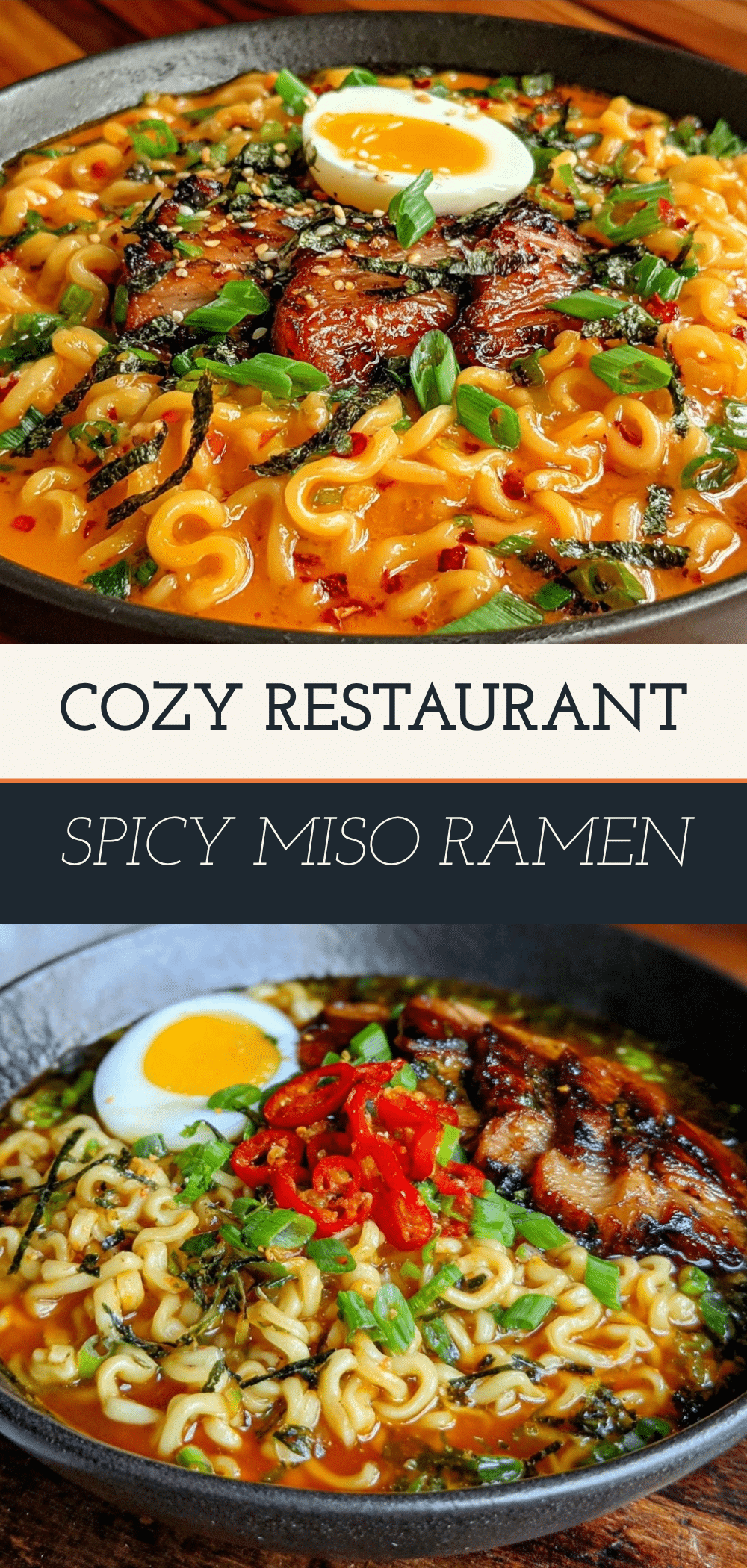

Restaurant-Style Spicy Miso Ramen with Jammy Soft-Boiled Eggs
- Total Time: 30 minutes
- Yield: 4 servings 1x
Description
A quick, 30-minute homemade spicy miso ramen featuring a rich broth, tender noodles, and perfectly jammy soft-boiled eggs. This pantry-friendly recipe is customizable and perfect for weeknight dinners.
Ingredients
- 6 cups chicken broth or vegetable broth (low-sodium recommended)
- 3–4 tablespoons miso paste (mix of red and white for best flavor)
- 2 tablespoons soy sauce (or tamari for gluten-free)
- 4 cloves garlic, minced
- 1 tablespoon fresh ginger, grated
- 1–2 tablespoons chili oil or chili crisp
- 1 pack (200g) fresh ramen noodles (or dried ramen blocks)
- 4 large eggs
- 3–4 stalks green onions, thinly sliced
- 1 small handful cilantro, chopped
- 1 teaspoon toasted sesame seeds
- Splash of oil for sautéing
- Optional: Blanched bok choy, bean sprouts, or leftover protein
Instructions
- Bring a small pot of water to a boil. Fill a large bowl with ice water.
- Gently lower eggs into boiling water and set a timer for exactly 6.5 minutes.
- Immediately transfer eggs to the ice bath and let sit for at least 5 minutes, then peel.
- In a medium pot, heat a splash of oil over medium heat. Add garlic and ginger, sautéing for 1 minute until fragrant.
- Add miso paste to the pot and stir for another minute to toast it.
- Pour in chicken broth and bring to a gentle simmer. Add soy sauce and chili oil.
- Cook ramen noodles in a separate pot of boiling water for 2-3 minutes (fresh) or 3-4 minutes (dried). Drain, reserving some pasta water.
- Divide cooked noodles among serving bowls.
- Ladle the hot miso broth over the noodles. Do not boil the broth after adding miso.
- Top with sliced green onions, cilantro, bean sprouts, and halved jammy eggs.
- Serve immediately with extra chili oil on the side.
Notes
Do not boil the miso paste as it destroys probiotics and alters flavor. Use an ice bath for eggs to ensure a jammy yolk and easy peeling. Save starchy pasta water to adjust broth consistency. For vegan version, use vegetable broth, vegan miso, and tofu instead of eggs.
- Prep Time: 10 minutes
- Cook Time: 20 minutes
- Category: Main Course
- Cuisine: Japanese
Nutrition
- Serving Size: 1 bowl
- Calories: 450
- Sugar: 4
- Sodium: 900
- Fat: 16
- Saturated Fat: 3
- Carbohydrates: 55
- Fiber: 4
- Protein: 22
Keywords: miso ramen, spicy ramen, homemade ramen, jammy eggs, weeknight dinner, easy ramen, Asian noodles, comfort food