Last Saturday, I was standing in my kitchen at 7 AM, staring at a bowl of bubbly, tangy sourdough starter that had been sitting on my counter since Thursday. It was active, sure, but I had no idea what to do with it. I didn’t want bread. I didn’t want pancakes. I wanted something warm, something that smelled like a fancy Italian bakery, but required zero kneading and zero stress.
That’s when I remembered the sourdough focaccia I’d been meaning to try. Not the complicated, three-day process kind, but the “dump it in the pan and let it rise” kind. I threw some olive oil in a baking dish, dumped in the starter, added some flour, water, and salt, and walked away. When I came back an hour later, the dough had transformed into something pillowy and alive. I dimpled it with my fingers, scattered rosemary, and hit it with those crucial flakes of sea salt.
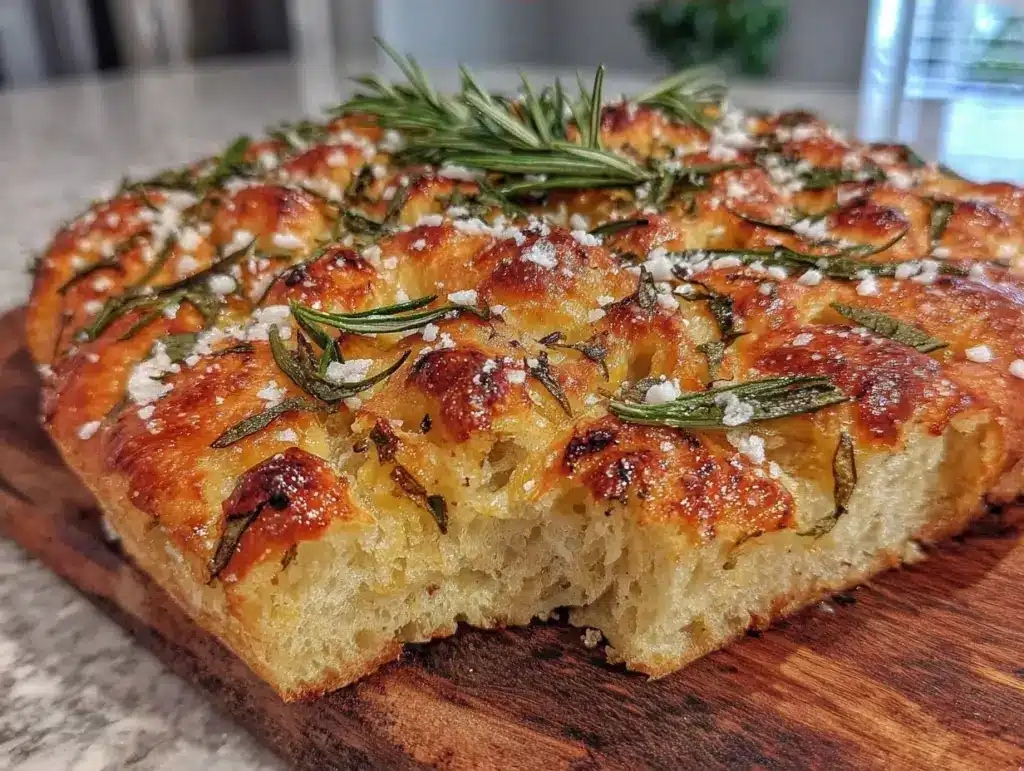
The result? Crispy edges, a chewy, airy interior, and that complex sourdough tang that makes you want to eat it straight from the pan. I’ve made this foolproof sourdough focaccia with rosemary and flaky sea salt at least a dozen times since then. It’s become my secret weapon for dinner parties, brunch spreads, or just when I need to feel like a culinary genius without actually doing any work. It’s easy, it’s impressive, and honestly? It’s better than anything you’ll buy at a grocery store.
Why You’ll Love This Recipe
Look, I know baking bread sounds intimidating. But this sourdough focaccia is different. It’s forgiving, it’s fast, and it delivers restaurant-quality results without the elbow grease.
- Zero Kneading Required — Seriously. This is an autolyse-style mix that does all the work for you. If you can whisk, you can make this. I’ve made it while watching TV, and it turns out perfect every time.
- Uses Your Discard or Active Starter — Whether your starter is a hungry, fed beast or a lazy discard sitting in the fridge, this recipe works with both. It’s the perfect way to use up that extra cup of starter you’re not sure what to do with.
- Insanely Crispy and Chewy — The high olive oil content creates a golden, crispy bottom crust that shatters when you cut it, while the inside stays soft and airy. It’s the perfect texture contrast.
- Impresses Without Trying — I served this to my sister-in-law, who is a serious bread snob, and she asked for the recipe before I even finished serving it. It looks rustic and fancy, but it’s actually super simple.
- Perfect for Leftovers — Focaccia tastes great warm, but it’s also incredible toasted the next day. I often tear off pieces for breakfast with my sourdough breakfast toast or just eat it plain with a little extra olive oil.
This is my go-to when I want to bake something that smells amazing and makes everyone happy, but I don’t have hours to spare. It’s reliable, delicious, and honestly? It’s just fun to make.
Ingredients You’ll Need
Here’s the best part: you probably have most of this already in your pantry and fridge. This isn’t a recipe that requires specialty items. It’s simple, honest ingredients that come together to create something special.
For the Dough
Sourdough Starter (1 cup / 220g) — Active and bubbly is ideal, but discard works too. If using discard, you might need a bit more rise time. I prefer active because it adds that nice tang.
Warm Water (1 ½ cups / 360ml) — Not hot! Just lukewarm to the touch. This helps activate the yeast if you’re using active starter, or just hydrates the flour if using discard. Room temp is fine too.
All-Purpose Flour (3 ½ cups / 450g) — I use AP flour because it gives that perfect chew. Bread flour works too if you want a chewier crust, but AP is foolproof for beginners.
Fine Sea Salt (1 ½ teaspoons) — This is for the dough. It brings out the flavor of the wheat. Don’t skip it, or the bread will taste flat.
Extra Virgin Olive Oil (½ cup / 120ml) — This is non-negotiable. Focaccia is essentially a bread soaked in olive oil. Use the good stuff. It creates that crispy, golden bottom and adds richness to every bite.
For the Toppings
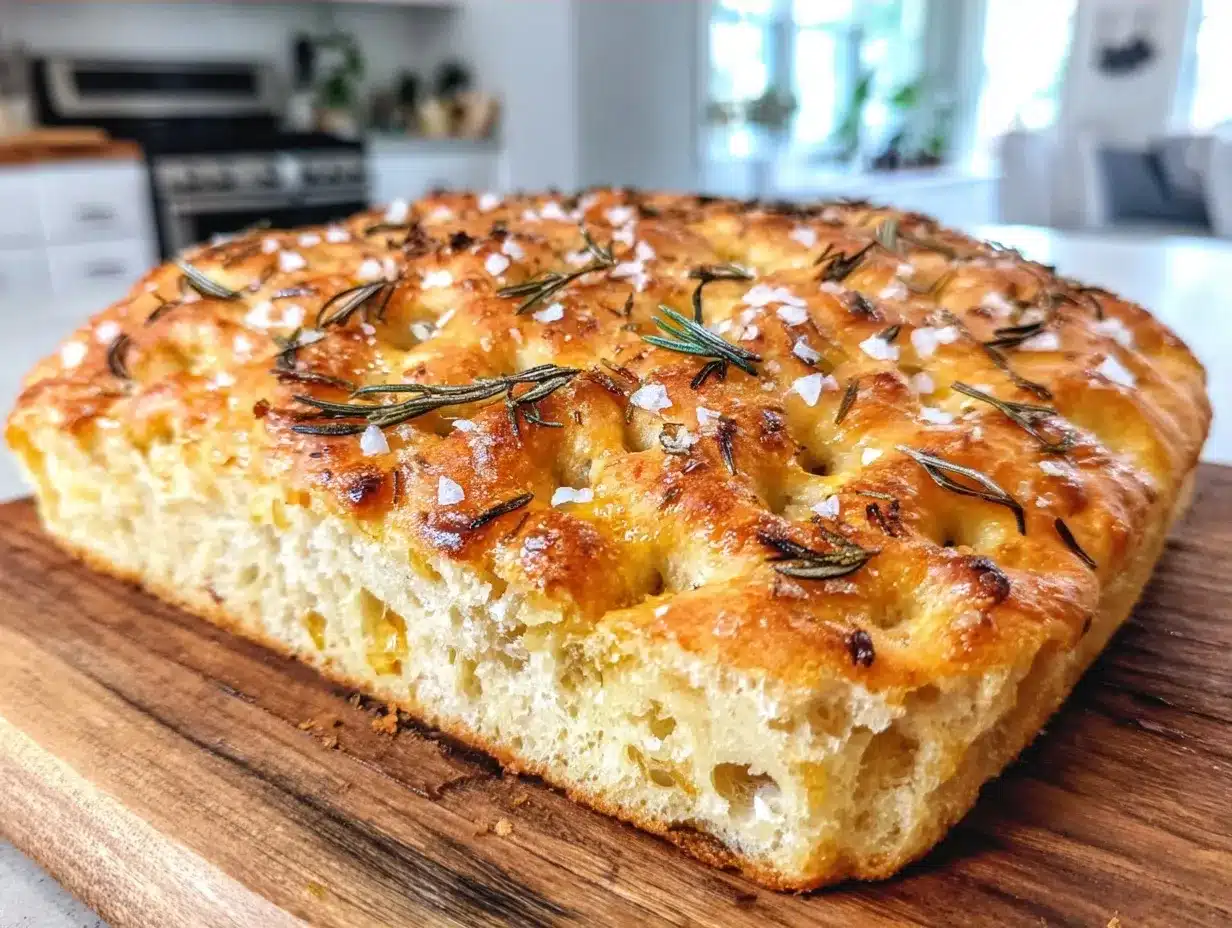
Fresh Rosemary (2-3 sprigs, leaves stripped) — Fresh rosemary is key. Dried rosemary gets bitter when baked. Strip the leaves off the stems and chop them roughly.
Flaky Sea Salt (like Maldon) — This is the second trick. Fine salt in the dough, flaky salt on top. The flaky salt crunches and melts in your mouth, adding that gourmet touch.
Garlic (Optional) — I love thinly sliced garlic roasted into the dough. It adds a subtle sweetness. Just don’t use minced garlic from a jar; it burns too easily.
Cherry Tomatoes (Optional) — Pressed into the dough, they get jammy and sweet. Great for summer.
Equipment Needed
You don’t need fancy equipment for this. Here’s what I actually use.
9×13 Inch Baking Pan — A metal or glass pan works best. I prefer a dark metal pan because it conducts heat well for that crispy bottom. A ceramic dish works too, but might need a few extra minutes.
Large Mixing Bowl — Just something big enough to hold the dough as it expands. It will double or triple in size.
Whisk or Fork — For mixing the initial dough. You don’t need a mixer.
Plastic Wrap or Damp Towel — To cover the dough during rising. Keeps the surface from drying out.
Parchment Paper — I line my pan with parchment for easy cleanup and to ensure nothing sticks. It’s worth the extra step.
How to Make It: Step-by-Step
Alright, let’s make this! I’m walking you through exactly how I do it, including the little tricks I’ve picked up over years of baking.
Step 1: Mix the Dough (5 minutes)
In a large bowl, combine your sourdough starter and warm water. Whisk until the starter is mostly dissolved. Add the flour and fine sea salt. Stir with a wooden spoon or spatula until a shaggy, sticky dough forms. It doesn’t need to be smooth. Just combine everything. Cover the bowl with plastic wrap or a damp towel.
Step 2: The Rest (30 minutes)
Let the dough rest at room temperature for 30 minutes. This is crucial. It allows the flour to fully hydrate and the gluten to start developing without any kneading. You’ll notice the dough becoming slightly smoother and more elastic.
Step 3: Oil the Pan (5 minutes)
Generously coat your 9×13 inch baking pan with olive oil. I use about 3-4 tablespoons. Place parchment paper in the pan and oil the top of the parchment too. This ensures the focaccia doesn’t stick and gets that crispy edge all around.
Step 4: Transfer and Stretch (10 minutes)
Transfer the dough to the prepared pan. Wet your hands with a little olive oil (this prevents sticking) and gently press the dough into the pan. It will be sticky and resist stretching. Don’t force it. Let it rest for 10-15 minutes, then come back and gently stretch it to the corners. It’s okay if there are small holes; that’s where the air bubbles will go.
Step 5: The Dimple (5 minutes)
This is the fun part. Oil your fingers again and press deep dimples into the dough all over. Get them close together. This creates the classic focaccia texture. Drizzle the remaining olive oil over the top, making sure it pools in the dimples.
Step 6: Second Rise (1-2 hours)
Cover the pan loosely with plastic wrap or a towel. Let it rise until puffy and jiggly. This usually takes 1-2 hours, depending on your kitchen temperature. The dough should look alive and filled with bubbles. If your kitchen is cold, it might take longer. Don’t rush this step.
Step 7: Add Toppings and Bake (25-30 minutes)
Preheat your oven to 425°F (220°C). Sprinkle the chopped rosemary and flaky sea salt over the dough. If using garlic or tomatoes, press them in now. Bake for 25-30 minutes, rotating the pan halfway through, until the top is golden brown and crispy, and the bottom sounds hollow when tapped.
Step 8: Cool and Serve
Let the focaccia cool in the pan for 10 minutes before lifting it out. Slice into squares and serve warm. It’s best eaten the day it’s made, but it’s still good the next day.
Expert Tips & Tricks
Here’s everything I’ve learned from making this dozens of times. These tips will save you from my mistakes.
The Olive Oil is Key — Don’t be shy with the oil. It’s not just flavor; it’s texture. The oil prevents the dough from drying out and creates that crispy, crackly crust. If you skimp on oil, you skimp on results.
Don’t Rush the Rise — The second rise is what makes focaccia airy. If you bake it too soon, it’ll be dense. Wait until it’s puffy and jiggle-y. It’s better to wait an extra 15 minutes than to bake it too early.
Wet Hands for Stretching — Sourdough dough is sticky. Wetting your hands with olive oil makes stretching so much easier. It’s a game-changer.
Flaky Salt on Top — Using flaky sea salt like Maldon adds a luxurious crunch and visual appeal. Regular salt works, but the flaky version makes it feel fancy.
High Heat for Crispiness — Baking at 425°F ensures the outside crisps up before the inside dries out. If your oven runs hot, check it at 25 minutes.
Variations & Substitutions
Once you’ve nailed the basic version, here’s how you can mix it up. I’ve tried all of these.
Garlic and Herb — Add 3-4 cloves of thinly sliced garlic and some chopped thyme. Roasted garlic gets sweet and savory.
Caramelized Onion — Spread caramelized onions over the dough before the second rise. It adds a deep, sweet flavor.
Sausage and Fennel — Crumble cooked Italian sausage and sprinkle over the dough. Great for a hearty meal.
Cherry Tomato and Basil — Press halved cherry tomatoes into the dough and top with fresh basil after baking.
Gluten-Free — You can use a gluten-free flour blend, but the texture will be different. It won’t be as chewy, but it’s still delicious.
Serving & Storage
How to Serve: I usually serve this straight from the pan, torn into pieces. It’s perfect for dipping in olive oil or balsamic vinegar. It pairs wonderfully with mediterranean shrimp pasta or a simple mediterranean chickpea bowl for a complete meal.
Storage: Store leftovers in an airtight container at room temperature for up to 2 days. It can also be refrigerated for up to 5 days, but it will lose some crispiness.
Reheating: Reheat in a 350°F oven for 5-10 minutes to restore crispiness. The microwave will make it chewy and soft, which is fine if you prefer that texture.
Freezing: You can freeze focaccia for up to 3 months. Wrap tightly in plastic wrap and foil. Thaw at room temperature and reheat in the oven.
Nutrition Information
I’m not a nutritionist, but here’s the breakdown if you’re tracking.
Per Serving (based on 12 servings):
- Calories: 280
- Protein: 6g
- Carbs: 35g
- Fiber: 2g
- Sugar: 1g
- Fat: 14g
- Saturated Fat: 2g
- Sodium: 350mg
What’s Good: Decent carbs for energy, some protein from the flour, and healthy fats from the olive oil.
What to Know: Higher in calories due to the olive oil. It’s a comfort food, so enjoy it in moderation.
Final Thoughts
So that’s my go-to foolproof sourdough focaccia with rosemary and flaky sea salt! I’ve probably talked your ear off at this point, but when you make a recipe this often, you have a lot to say about it.
This has saved dinner parties more times than I can count. It’s my answer to “what can I bring that’s impressive but easy?” My guests are always happy, and I’m happy because I’m not stressed about cooking. It’s my answer to “what’s for dinner” when I’m tired, don’t want takeout, and still want something that tastes really good.
Make it yours! Try different add-ins, swap in your favorite herbs, adjust the garlic (though more is always better in my opinion). The best recipes are the ones you adapt to your family’s tastes.
If you make this, drop a comment and let me know what you think! I love hearing how recipes turn out in your kitchen. And if something doesn’t work, tell me that too—I’m here to help troubleshoot.
Happy cooking! And I hope your kitchen smells half as good as mine does right now.
Frequently Asked Questions
Can I use discard sourdough starter?
Yes! You can use unfed discard. The bread might be slightly denser and less tangy, but it will still be delicious. If using discard, you might need an extra 30 minutes for the second rise.
Why did my focaccia turn out dense?
This usually happens if the dough didn’t rise enough. Make sure the second rise is complete—it should be puffy and jiggle-y before baking. Also, check that your starter is active and feeding it regularly.
Can I make this ahead?
You can prepare the dough up to the second rise, then refrigerate it overnight. Let it come to room temperature and finish rising before baking. It’s a great way to have fresh bread in the morning.
Why did my focaccia stick to the pan?
Not enough oil! Make sure you’re using a generous amount of olive oil in the pan and on top of the dough. Parchment paper also helps prevent sticking.
Can I add cheese?
Absolutely! Grated mozzarella or parmesan works well. Add it before baking. Just be careful not to overload it, or the bottom might not crisp up.
How do I know when it’s done?
The top should be golden brown and crispy. Tap the bottom—it should sound hollow. If it sounds dull, it needs more time.
Can I freeze focaccia?
Yes, wrap it tightly in plastic wrap and foil. It will keep for up to 3 months. Thaw at room temperature and reheat in the oven to restore crispiness.
Pin This Recipe!

Foolproof Sourdough Focaccia with Rosemary
- Total Time: 3 hours
- Yield: 12 servings 1x
Description
A simple, zero-knead sourdough focaccia recipe that yields crispy edges, a chewy airy interior, and a complex tang. Perfect for using active starter or discard, this recipe requires minimal effort for restaurant-quality results.
Ingredients
- 1 cup (220g) active sourdough starter or discard
- 1 ½ cups (360ml) warm water
- 3 ½ cups (450g) all-purpose flour
- 1 ½ teaspoons fine sea salt
- ½ cup (120ml) extra virgin olive oil, plus more for the pan
- 2–3 sprigs fresh rosemary, leaves stripped and chopped
- Flaky sea salt (like Maldon) for topping
- Garlic, thinly sliced (optional)
- Cherry tomatoes, halved (optional)
Instructions
- In a large bowl, whisk together the sourdough starter and warm water until mostly dissolved.
- Add the flour and fine sea salt. Stir with a wooden spoon or spatula until a shaggy, sticky dough forms. Cover the bowl with plastic wrap or a damp towel.
- Let the dough rest at room temperature for 30 minutes to allow hydration and gluten development.
- Generously coat a 9×13 inch baking pan with olive oil. Line with parchment paper and oil the top of the parchment.
- Transfer the dough to the prepared pan. Wet hands with olive oil and gently press/stretch the dough into the corners. Let rest for 10-15 minutes, then stretch again if needed.
- Oil your fingers and press deep dimples into the dough all over. Drizzle remaining olive oil over the top, letting it pool in the dimples.
- Cover loosely and let rise for 1-2 hours until puffy and jiggly.
- Preheat oven to 425°F (220°C). Sprinkle with rosemary and flaky sea salt. Add optional toppings like garlic or tomatoes.
- Bake for 25-30 minutes, rotating halfway, until golden brown and crispy. The bottom should sound hollow when tapped.
- Cool in the pan for 10 minutes before slicing and serving.
Notes
Use active starter for best tang, but discard works too. Ensure the second rise is complete (puffy and jiggly) to avoid dense bread. Wet hands with oil to prevent sticking when stretching dough. Use flaky sea salt on top for texture contrast.
- Prep Time: 30 minutes
- Cook Time: 30 minutes
- Category: Side Dish
- Cuisine: Italian
Nutrition
- Serving Size: 1 square slice
- Calories: 280
- Sugar: 1
- Sodium: 350
- Fat: 14
- Saturated Fat: 2
- Carbohydrates: 35
- Fiber: 2
- Protein: 6
Keywords: sourdough focaccia, rosemary bread, zero knead bread, sourdough discard recipe, easy focaccia, Italian bread