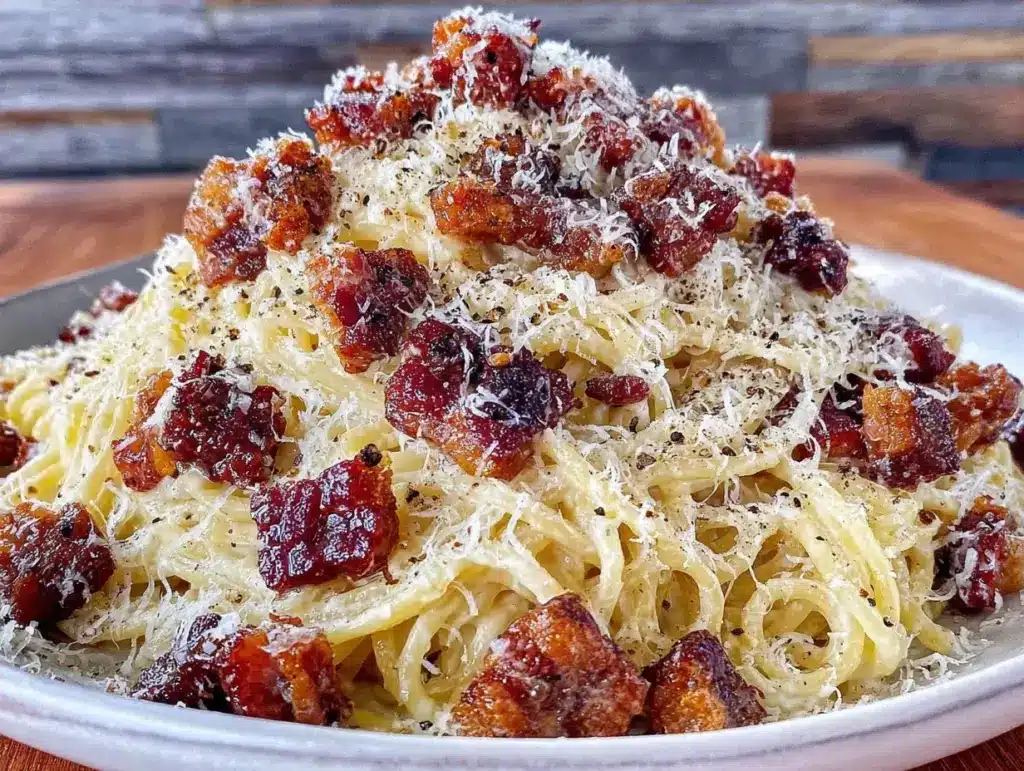
It was a rainy Tuesday in Rome, and I was standing in a tiny kitchen that smelled like old wood and roasted coffee. I had just arrived, jet-lagged and hungry, and my friend Marco looked at me like I’d insulted his grandmother when I asked if they put cream in their carbonara. He didn’t say anything. He just grabbed a pan, threw in some crispy pancetta, and started whisking eggs with intense focus. “Cream is for people who are afraid of eggs,” he said with a grin. That night, I ate the most incredible pasta of my life. It wasn’t heavy or cheesy in the way American carbonara is. It was silken, savory, and rich without being cloying. It tasted like comfort, but elevated.
I’ve been making this authentic Italian carbonara recipe ever since. I’ve tested it in my kitchen dozens of times, tweaking the heat and timing until I got it right. The secret isn’t a secret at all—it’s technique. It’s about understanding that the eggs and cheese create the sauce, not butter or cream. And it’s about getting that pancetta perfectly crispy, almost like bacon, but with a deeper, smokier flavor that changes everything. If you’ve ever been intimidated by the idea of cooking eggs into hot pasta without scrambling them, don’t worry. I’m going to walk you through it step-by-step. This is the recipe that finally made me understand why Italians obsess over simplicity.
Why You’ll Love This Recipe
This isn’t just another pasta recipe. It’s a lesson in how less can truly be more. Once you master this method, you’ll never go back to the creamy, heavy versions you get at restaurants (or make at home with a shortcut). Here’s why this crispy pancetta carbonara has taken over my weeknight dinners:
- Five Ingredients, Maximum Flavor — Seriously. Eggs, pecorino romano, black pepper, guanciale or pancetta, and pasta. That’s it. No heavy cream, no garlic, no onions. Just pure, unadulterated flavor. I’ve made this on nights when I had nothing in the fridge, and it still tasted like a Michelin-star meal.
- Crispy Pancetta is Non-Negotiable — I’ve tried rendering the fat slowly, but I’ve found that cooking the pancetta until it’s shatteringly crispy adds a texture contrast that makes every bite exciting. It’s like adding a savory crunch to every forkful. Trust me, once you try it, you won’t settle for soft.
- Ready in 20 Minutes — From boiling water to plating, this takes less time than it takes to wait for takeout. I make this on busy weeknights when I’m tired but still want something that tastes impressive. It’s foolproof if you follow the steps.
- It’s Actually Healthy(ish) — No cream means no heavy dairy overload. The sauce is rich from the eggs and cheese, but it’s lighter than you’d expect. It’s a protein-packed dinner that leaves you feeling satisfied, not sluggish. I pair it with a simple green salad to keep it balanced.
- Restaurant Quality at Home — People think carbonara is hard because they’ve never seen the technique. Once you learn how to temper the eggs with the pasta water, you’ll feel like a pro. I’ve served this to friends who swear I hired a chef, and it’s just a few simple steps.
This recipe has saved me from ordering takeout more times than I can count. It’s my go-to when I want to impress without stress, or when I just need a hug in a bowl. It’s reliable, delicious, and deeply satisfying. I promise, your taste buds will thank you for branching out and trying the real thing.
Ingredients You’ll Need
Here’s the best part: you probably have most of this already. This recipe relies on high-quality ingredients because there’s nowhere to hide. If one ingredient is weak, the whole dish suffers. So, let’s talk about what you need and why it matters.
For the Pasta and Sauce
Spaghetti or Rigatoni (1 pound / 450g) — I prefer spaghetti for the classic look, but rigatoni is great if you want the sauce to cling to the ridges. Use a good quality dried pasta. I like Buitoni or De Cecco because they hold up well to the heavy sauce. Don’t cook it until it’s mushy—al dente is key.
Eggs (3 large + 1 yolk) — This is the base of the sauce. I use three whole eggs and one extra yolk for extra richness and color. The yolks give it that beautiful golden hue. Make sure they’re at room temperature if possible, though I often forget and it still works.
Pecorino Romano Cheese (1 cup / 100g, freshly grated) — This is the authentic choice. It’s salty, sharp, and tangy. Do not substitute with Parmesan unless you have to. Parmesan is milder and sweeter, which changes the flavor profile. If you must use Parmigiano-Reggiano, mix it 50/50 with Pecorino. Grate it yourself. Pre-grated cheese has anti-caking agents that prevent it from melting smoothly.
Freshly Cracked Black Pepper (1-2 teaspoons) — This isn’t just a garnish. You need a good amount of pepper for that signature “carbonara” kick. Crack it fresh. Pre-ground pepper just doesn’t have the same aroma or punch.
For the Crispy Pancetta
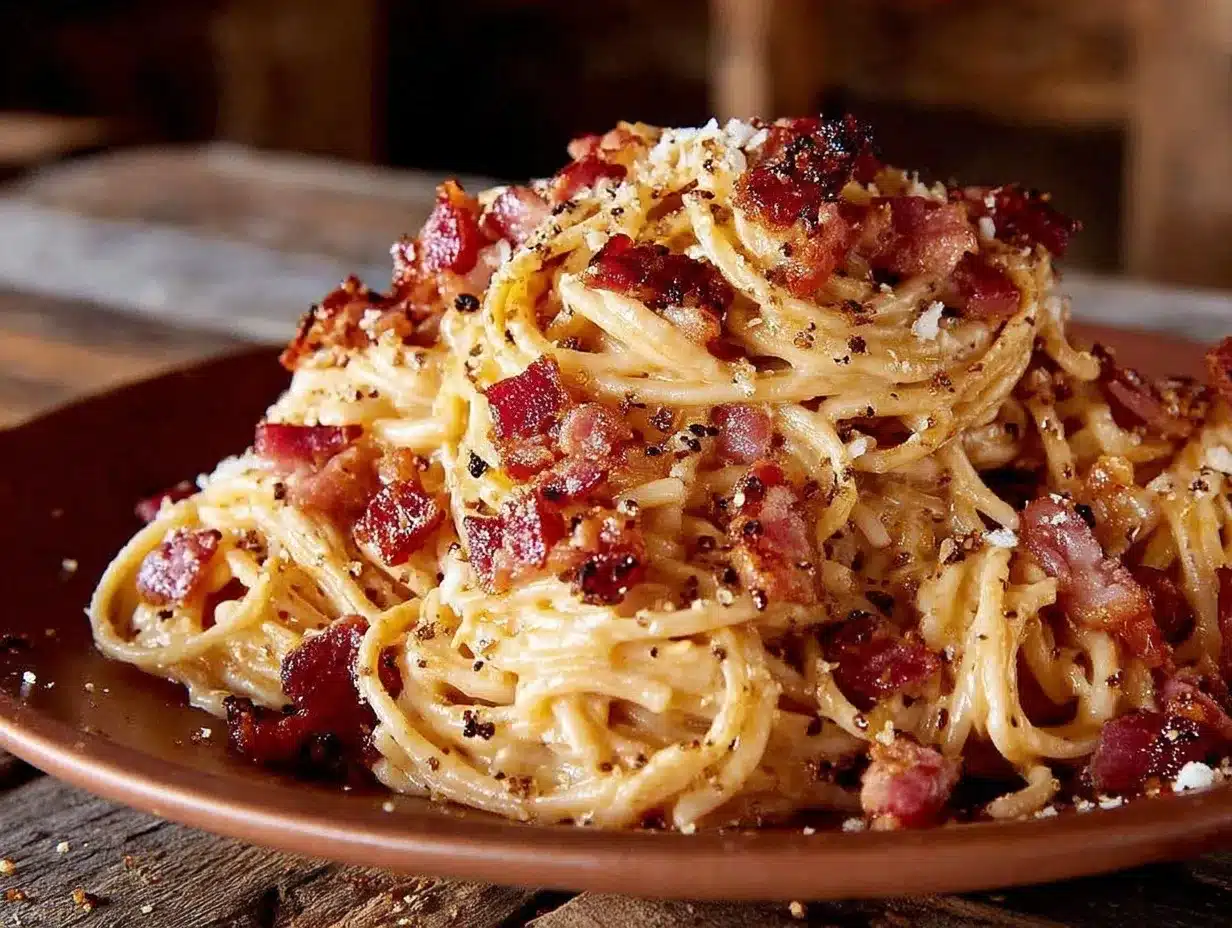
Pancetta or Guanciale (8 ounces / 225g) — Guanciale is the traditional choice (cured pork jowl), and it’s richer and more flavorful. But it can be hard to find. Pancetta (cured pork belly) is a perfectly acceptable and widely available alternative. Look for uncured pancetta if you can. Cut it into small cubes or strips. The key is getting it crispy.
Optional: Olive Oil (1 tablespoon) — If your pancetta is very lean, you might need a splash of oil to start the rendering. Most good pancetta will release enough fat on its own.
Pro Tips for Ingredients
Save the Pasta Water — This is liquid gold. The starchy water helps emulsify the eggs and cheese into a smooth sauce. Set aside at least 1 cup before draining the pasta.
Room Temperature Eggs — Cold eggs can shock the hot pasta and scramble. Let them sit out for 15 minutes before you start. If you forget, put them in a bowl of warm water for a few minutes.
Quality Matters — Since there are so few ingredients, buy the best Pecorino you can afford. And don’t skimp on the pepper. Good black pepper makes a huge difference.
Equipment Needed
You don’t need fancy gadgets for this. Here’s what I actually use in my kitchen:
Large Skillet or Cast Iron Pan — I use a 12-inch stainless steel skillet. It needs to be big enough to hold all the pasta later. Cast iron works too, but stainless steel gives me better control over the heat.
Large Pot — For boiling the pasta. A 6-quart pot is ideal. It needs to fit the pasta comfortably so it cooks evenly.
Mixing Bowl — A medium bowl for whisking the eggs and cheese. I use glass or ceramic because it’s easy to clean.
Whisk — Essential for blending the eggs and cheese into a smooth paste. Don’t use a fork; you’ll get lumps.
Tongs — For tossing the pasta with the sauce. They’re much easier than a spoon for this step.
Colander — For draining the pasta. Or use the lid method if you’re feeling fancy.
Grater — A box grater or microplane for the cheese. Freshly grated melts so much better.
Thermometer (Optional) — If you’re worried about scrambling the eggs, a kitchen thermometer helps. You want the pasta water to be around 160-170°F (70-75°C) when you add the egg mixture. But I usually just go by feel and experience.
How to Make It: Step-by-Step
Alright, let’s make this! I’m walking you through exactly how I do it, including the little tricks I’ve picked up over the years. This method ensures creamy sauce without scrambled eggs.
Step 1: Prep Your Ingredients (5 minutes)
Before you turn on the stove, get everything ready. This is crucial because things move fast. Cut the pancetta into small cubes. Grate the Pecorino Romano. Crack the eggs into a bowl and add the grated cheese and a generous amount of black pepper. Whisk it all together until it’s a thick, smooth paste. Set it aside. I know it looks like a lot of cheese, but trust me—it melts into the sauce.
Step 2: Cook the Pancetta (8-10 minutes)
Heat your large skillet over medium heat. Add the pancetta. You don’t need oil if it’s fatty enough. Cook it, stirring occasionally, until it’s crispy and golden brown. This takes about 8-10 minutes. You want it to look like bacon but smell like Italy. Once it’s crispy, turn off the heat. Remove the crispy bits with a slotted spoon and set them aside on a paper towel, but leave the rendered fat in the pan. This fat is flavor.
Step 3: Boil the Pasta (8-10 minutes)
Bring a large pot of salted water to a boil. The water should taste like the sea. Add the spaghetti or rigatoni and cook according to package directions until al dente. IMPORTANT: Before you drain the pasta, scoop out 1 cup of the starchy pasta water and set it aside. This is the secret to a creamy sauce. Drain the pasta, but don’t rinse it.
Step 4: Combine Pasta and Pancetta Fat (2 minutes)
Add the drained hot pasta directly into the skillet with the reserved pancetta fat. Toss it well so the pasta is coated in the fat. The pasta is still very hot, which is good. Turn the heat to low or off completely. We don’t want to cook the eggs yet.
Step 5: Temper the Egg Mixture (3 minutes)
This is the critical step. Add a splash (about ¼ cup) of the hot pasta water to the egg and cheese mixture. Whisk quickly to temper the eggs. This raises their temperature gradually so they don’t scramble when they hit the hot pasta. Then, pour the egg mixture over the pasta in the skillet. Toss vigorously with tongs. The residual heat from the pasta and the fat will cook the eggs gently, creating a creamy sauce. If it looks too thick, add another splash of pasta water. Keep tossing until the sauce is glossy and coats every strand.
Step 6: Add the Crispy Pancetta and Serve
Stir in the crispy pancetta bits you set aside earlier. Taste the pasta. Add more black pepper if you want more kick. Serve immediately on warm plates. Top with extra grated Pecorino and a final crack of black pepper. Eat it right away. This dish waits for no one.
Total Time: About 20 minutes (10 minutes active, 10 minutes hands-off)
Expert Tips & Tricks
Here’s everything I’ve learned from making this dozens of times. These tips will save you from my mistakes.
The Heat is Everything
The biggest mistake people make is turning the heat up too high when adding the eggs. The pan must be off the heat, or on the lowest possible setting. The residual heat of the pasta is enough to cook the eggs. If you see any curdling, it’s too hot. Remove from heat immediately and add a splash of cold water to cool it down.
Don’t Skimp on the Pepper
Carbonara means “coal miner’s style,” and the black pepper is what gives it that speckled look and spicy kick. Use a good amount. I like about 1-2 teaspoons of freshly cracked pepper. It cuts through the richness of the eggs and cheese.
Use Guanciale if You Can Find It
Guanciale is cured pork jowl, and it has a higher fat content and a more complex flavor than pancetta. It’s softer and more buttery. If you can find it at an Italian deli, use it. If not, pancetta is fine. Bacon is a last resort, but it can work if it’s thick-cut and smoked lightly.
Emulsify, Don’t Scramble
The goal is a creamy emulsion, not scrambled eggs. Toss the pasta constantly when you add the egg mixture. The friction and the tossing help create the smooth sauce. If you just dump the eggs in and stir once, you’ll get lumps. Keep moving.
Serve Immediately
Carbonara doesn’t hold well. It thickens as it cools. Serve it right away. If you’re serving a crowd, make two batches. Don’t try to keep it warm in the oven—it will get gummy.
Variations & Substitutions
Once you’ve nailed the basic version, here’s how you can mix it up. I’ve tried all of these.
Veggie-Loaded Carbonara
Add sautéed spinach or broccoli rabe to the pasta before adding the egg mixture. The greens add a nice bitterness that balances the richness. I add the greens in the last minute of cooking the pasta.
Chicken Carbonara
Add diced cooked chicken to the skillet with the pancetta. It makes it more filling and turns it into a complete meal. I use leftover rotisserie chicken.
Gluten-Free Carbonara
Use gluten-free pasta. Everything else is naturally gluten-free. I’ve used Barilla gluten-free spaghetti, and it works well. Just be careful not to overcook it, as GF pasta can get mushy faster.
Dairy-Free Option
Replace the Pecorino with nutritional yeast and use coconut milk instead of eggs. It’s not traditional, but it can work if you’re avoiding dairy. The texture won’t be the same, but it’s still tasty.
Spicy Carbonara
Add red pepper flakes to the pancetta while it’s cooking. Or use spicy pancetta if you can find it. It adds a nice kick that pairs well with the creamy sauce.
Serving & Storage
How to Serve
I usually serve this straight from the skillet at the dinner table—it looks rustic and stays warm. But here are other ways I’ve enjoyed it:
- Simple Green Salad — A light salad with a lemon vinaigrette cuts through the richness of the carbonara. It’s the perfect balance.
- Roasted Vegetables — Roasted asparagus or broccoli works great on the side. I roast them with olive oil and garlic.
- Crusty Bread — A slice of crusty bread is essential for soaking up any leftover sauce. I love it with a little olive oil and balsamic.
Storage Instructions
Refrigerator: Store leftovers in an airtight container for up to 2 days. The sauce will thicken in the fridge, which is normal.
Reheating: The best method is to reheat it gently in a skillet with a splash of milk or cream over low heat. Stir until heated through. The microwave doesn’t work well—it tends to dry out the eggs. If you must use the microwave, do it in short bursts and stir frequently.
Nutrition Information
I’m not a nutritionist, but here’s the breakdown if you’re tracking. This is a rich dish, so portions matter.
Per Serving (based on 4 servings):
- Calories: 550
- Protein: 25g
- Carbs: 60g
- Fiber: 3g
- Fat: 22g
- Saturated Fat: 9g
- Cholesterol: 220mg
- Sodium: 650mg
This dish is high in protein and calcium from the cheese and eggs. It’s also higher in sodium due to the cured pancetta and Pecorino. If you’re watching your sodium, use low-sodium pancetta and reduce the cheese slightly. But honestly, it’s a treat. Enjoy it as part of a balanced meal.
Final Thoughts
So that’s my authentic Italian carbonara recipe! I’ve talked your ear off, but when you make a dish this often, you have a lot to say about it. This recipe has saved me from takeout more times than I can count. It’s my answer to “what’s for dinner” when I want something quick, easy, and absolutely delicious. My family loves it, and my friends always ask for the recipe. Make it yours! Try different pastas, add your favorite veggies, or adjust the pepper to your liking. The best recipes are the ones you adapt to your tastes.
If you make this, drop a comment and let me know what you think! I love hearing how recipes turn out in your kitchen. And if something doesn’t work, tell me that too—I’m here to help troubleshoot. Happy cooking! And I hope your kitchen smells half as good as mine does right now.
Frequently Asked Questions
Can I use bacon instead of pancetta?
You can, but it’s not traditional. Bacon is smoked, which changes the flavor. If you use bacon, choose thick-cut and avoid the overly smoky varieties. It will still be delicious, but it won’t taste like authentic Italian carbonara. I prefer pancetta for its cleaner, porky flavor.
Why did my sauce get scrambled?
The heat was too high. When you added the egg mixture, the pan was too hot. Always turn off the heat before adding the eggs. Use the residual heat of the pasta to cook them gently. If it happens, don’t panic. Add a splash of cold water and whisk vigorously to smooth it out. It’s still edible!
Can I make this ahead of time?
Not really. Carbonara is best served immediately. The sauce thickens as it cools, and the pasta can get mushy. If you need to prep ahead, you can cook the pancetta and mix the egg-cheese paste in advance. But combine them right before serving.
Is it safe to eat raw eggs in carbonara?
The eggs are cooked by the residual heat of the hot pasta and pancetta fat. The temperature reaches about 140-150°F, which is enough to pasteurize the eggs if they’re fresh. If you’re concerned, use pasteurized eggs. They’re available in most grocery stores.
Can I freeze carbonara?
I don’t recommend it. The eggs and cheese don’t freeze well. The sauce will separate and become grainy when thawed. It’s best made fresh. If you have leftovers, store them in the fridge for up to 2 days.
What pasta is best for carbonara?
Spaghetti is the classic choice. Rigatoni or penne also work well because the sauce gets inside the tubes. I’ve even made it with fusilli. Avoid long, thin pastas like angel hair, as they can’t hold the heavy sauce as well.
Can I add vegetables to carbonara?
Traditionally, no. But I love adding sautéed spinach, broccoli rabe, or mushrooms. Just make sure they’re cooked and drained before adding them to the pasta. They add a nice texture and flavor contrast.
Pin This Recipe!
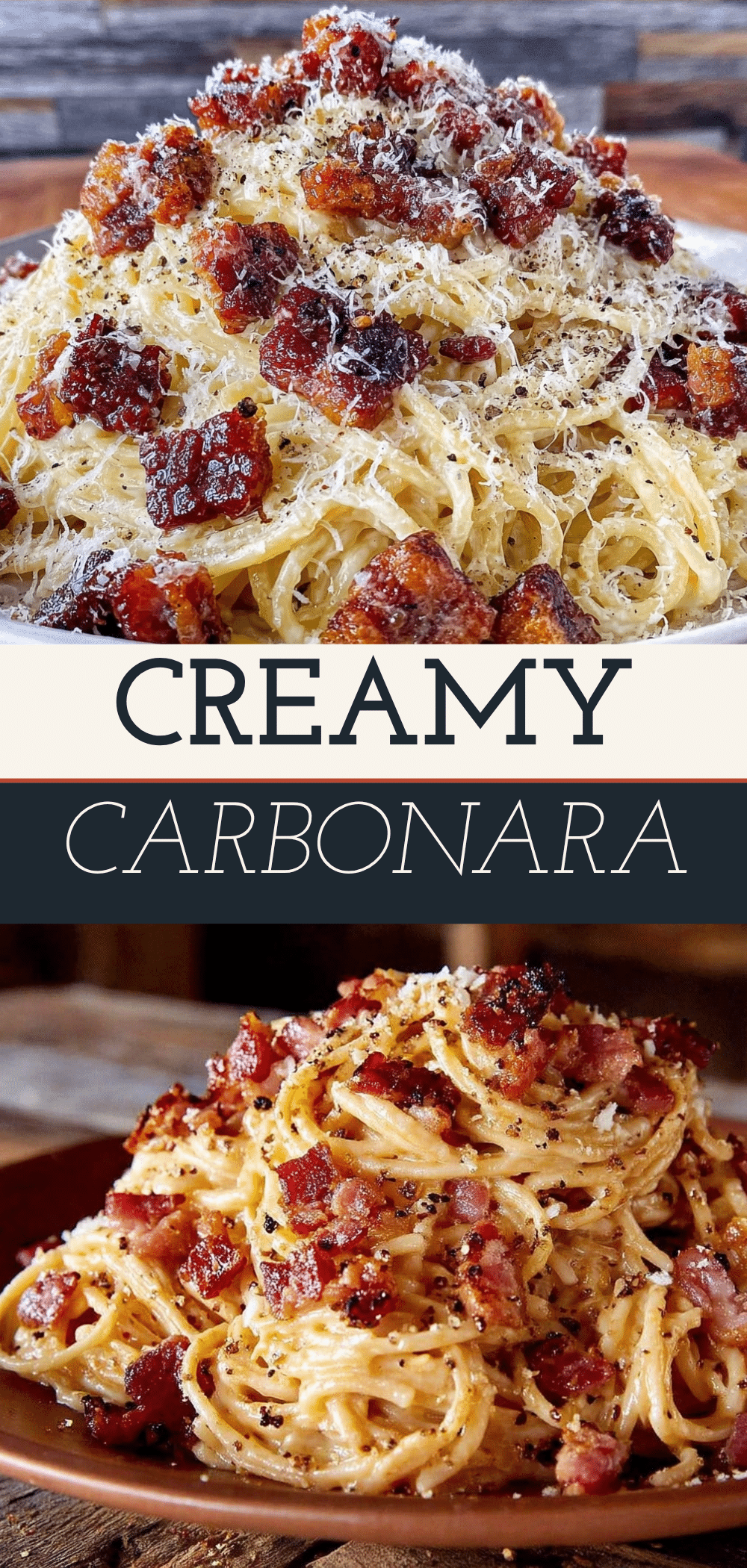
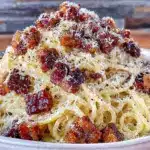
Authentic Italian Carbonara: Crispy Pancetta Recipe
- Total Time: 20 minutes
- Yield: 4 servings 1x
Description
An authentic Italian carbonara recipe featuring crispy pancetta, eggs, Pecorino Romano, and black pepper. This technique-driven dish creates a silken, savory sauce without cream, ready in just 20 minutes.
Ingredients
- 1 pound (450g) Spaghetti or Rigatoni
- 3 large eggs + 1 egg yolk
- 1 cup (100g) freshly grated Pecorino Romano cheese
- 1–2 teaspoons freshly cracked black pepper
- 8 ounces (225g) Pancetta or Guanciale, cut into small cubes
- 1 tablespoon Olive Oil (optional, if pancetta is lean)
- Salt for pasta water
Instructions
- Prep ingredients: Cut pancetta into cubes, grate cheese, and whisk eggs, cheese, and pepper together in a bowl until smooth. Set aside.
- Cook pancetta: Heat a large skillet over medium heat. Add pancetta and cook for 8-10 minutes until crispy and golden brown. Remove crispy bits with a slotted spoon, leaving the rendered fat in the pan. Turn off heat.
- Boil pasta: Bring a large pot of salted water to a boil. Cook pasta until al dente. Before draining, reserve 1 cup of starchy pasta water.
- Combine pasta and fat: Add drained hot pasta to the skillet with the reserved pancetta fat. Toss to coat. Ensure heat is off or on lowest setting.
- Temper eggs: Add a splash (about ¼ cup) of hot pasta water to the egg mixture and whisk quickly. Pour this mixture over the pasta in the skillet.
- Emulsify: Toss vigorously with tongs. The residual heat will cook the eggs gently into a creamy sauce. Add more pasta water if needed to reach desired consistency.
- Serve: Stir in the crispy pancetta bits. Serve immediately on warm plates, topped with extra cheese and black pepper.
Notes
Do not use cream. The sauce is created by emulsifying eggs, cheese, and starchy pasta water. Ensure the pan is off the heat when adding eggs to prevent scrambling. Serve immediately as the sauce thickens upon cooling. For best results, use room temperature eggs and freshly grated cheese.
- Prep Time: 5 minutes
- Cook Time: 15 minutes
- Category: Main Course
- Cuisine: Italian
Nutrition
- Serving Size: 1 plate (approx. 1/4
- Calories: 550
- Sugar: 2
- Sodium: 650
- Fat: 22
- Saturated Fat: 9
- Carbohydrates: 60
- Fiber: 3
- Protein: 25
Keywords: Italian, Carbonara, Pasta, Pancetta, Guanciale, Egg Sauce, Quick Dinner, Weeknight Meals, Authentic Recipe