I have a confession to make. Last month, I was tasked with hosting a small dinner party for six people. I wanted something that looked impressive on the table but didn’t require me to stand over the stove for three hours while my guests sat around awkwardly drinking wine. I wanted light, bright, and utterly delicious. Something that felt like I was vacationing in Italy, not my kitchen.
That’s when I landed on this Mediterranean Shrimp Pasta with Cherry Tomatoes and Olives. It’s the kind of dish that makes people ask, “Did you get this from a restaurant?” (The answer is no, but they don’t need to know that. Let them think I’m a miracle worker.)
This recipe is my go-to when I want to impress without the stress. It’s vibrant, it’s packed with flavor, and it comes together in under 30 minutes. The combination of plump, juicy shrimp, burst cherry tomatoes, and briny olives creates a flavor profile that is instantly nostalgic and deeply satisfying. It’s the perfect balance of comfort and elegance.
What I love most about this pasta is how it feels special. The sauce isn’t heavy or creamy; it’s a light, oily emulsion that coats every strand of pasta, bringing out the sweetness of the tomatoes and the savory depth of the olives. It’s fresh, it’s zesty, and it’s guaranteed to be the star of your table. I’ve made this for everything from casual Tuesday nights to holiday gatherings, and it never fails to disappear.
Why You’ll Love This Mediterranean Shrimp Pasta
If you’re looking for a dinner party recipe that checks all the boxes—easy, beautiful, and absolutely delicious—look no further. Here’s why this Mediterranean Shrimp Pasta with Cherry Tomatoes and Olives has earned a permanent spot in my rotation:
- Impressive Without the Effort — Seriously, this looks like something you’d order at a high-end Italian bistro. But the truth? It’s just pasta, shrimp, and veggies tossed in a simple sauce. I’ve served this to food critics (okay, just my very picky brother), and he couldn’t believe it was homemade.
- Light and Fresh — Unlike heavy cream-based pastas, this dish feels light on the stomach. Perfect for a dinner party where you don’t want your guests to fall asleep after dessert. The bright flavors of lemon and herbs wake up your palate.
- Quick to Make — Shrimp cooks in minutes. Tomatoes burst in seconds. You’re looking at about 20-25 minutes of active time. I can prep the ingredients while the water boils, and by the time my guests finish their first glass of wine, dinner is ready.
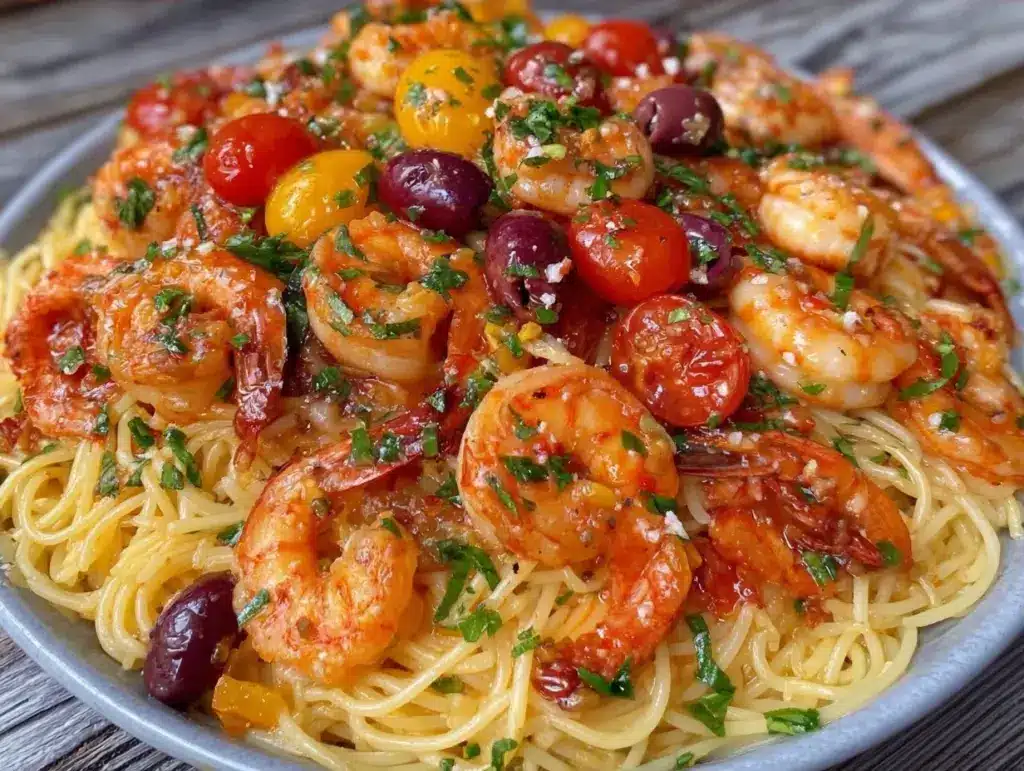
- Visually Stunning — The colors alone sell this dish. Red tomatoes, green olives, pink shrimp, and fresh basil against a backdrop of golden pasta. It’s Instagram-worthy before you even take a bite. And let’s be honest, we eat with our eyes first.
- Perfect for Sharing — This dish is naturally shareable. I love serving it family-style in a large platter. It encourages conversation and makes the meal feel more communal and relaxed.
This Mediterranean Shrimp Pasta with Cherry Tomatoes and Olives is my answer to “What should I make for dinner?” when I want to treat myself or my loved ones to something special. It’s reliable, it’s delicious, and it always makes everyone happy.
Ingredients You’ll Need
One of the best things about this recipe is how simple the ingredient list is. You probably have most of this already. I’m particular about a few key items here, and I’ll tell you exactly why they matter.
For the Pasta Base
Linguine or Spaghetti (1 pound / 450g) — I prefer linguine because its flat shape holds the light olive oil sauce better than thin spaghetti. But honestly, any long pasta works. Angel hair might be too delicate, and penne changes the whole vibe. Stick to long strands for that classic Mediterranean feel.
Extra Virgin Olive Oil (½ cup / 120ml) — This is your sauce base. Use good quality here. I don’t skimp. A robust, fruity extra virgin olive oil makes a huge difference in the final flavor. If you use something bland, the dish will taste flat.
Garlic (6 cloves, minced / about 2 tablespoons) — Yes, six cloves. Don’t be shy. Garlic is the backbone of this dish. Fresh only—please, no jarred garlic. It has a metallic aftertaste that ruins the delicate balance. Mince it finely so it infuses the oil without burning.
For the Flavor
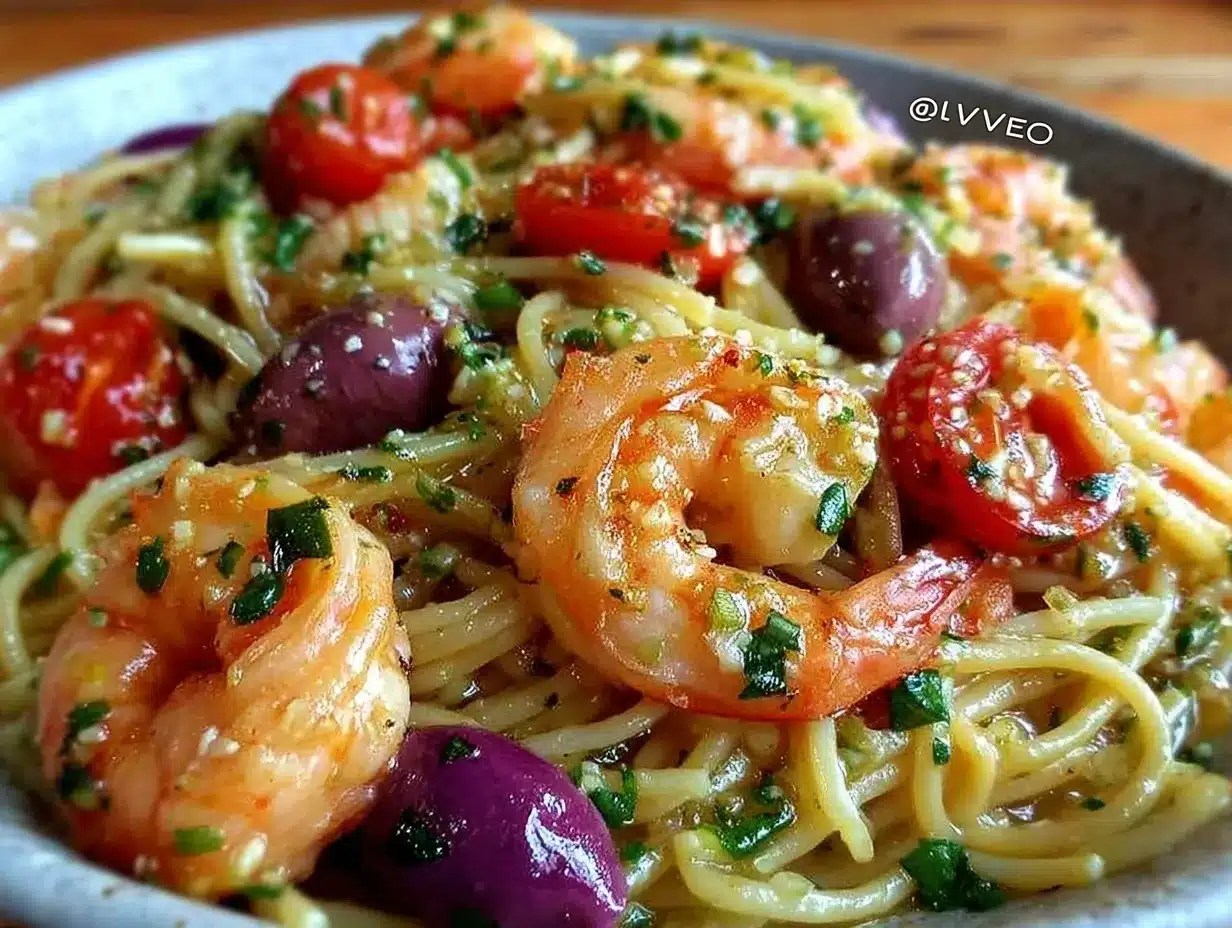
Cherry Tomatoes (2 pints / about 500g) — Halved. These are non-negotiable. Their natural sweetness and burst of juice create the sauce. I use a mix of red and yellow cherry tomatoes for visual appeal, but red works perfectly too. Look for tomatoes that are ripe and fragrant.
Kalamata Olives (½ cup / 80g, pitted and halved) — These add that essential briny, salty punch that defines Mediterranean cuisine. If you can’t find Kalamata, black olives work, but Kalamata has a deeper, wine-like flavor that I love. Avoid the green olives unless you’re a huge fan of their sharpness.
Feta Cheese (½ cup / 70g, crumbled) — Not for melting into the sauce, but for crumbling on top at the end. It adds a creamy, tangy contrast to the salty olives and sweet tomatoes. Use a block and crumble it yourself for the best texture.
For the Finish
Fresh Basil (½ cup, chopped) — Added at the very end to preserve its fresh, aromatic flavor. Dried basil just doesn’t cut it here. If you don’t have fresh, parsley is a decent substitute, but basil is ideal.
Lemon (1 large, zested and juiced) — The lemon juice brightens everything up, cutting through the richness of the olive oil and cheese. The zest adds a floral aroma that elevates the whole dish. Use organic lemons if possible for the best zest.
Red Pepper Flakes (½ teaspoon) — Optional, but I recommend it. A little heat balances the sweetness of the tomatoes and the saltiness of the olives. Adjust to your spice tolerance.
Shrimp (1 pound / 450g, peeled and deveined) — Medium to large shrimp work best. Look for wild-caught if you can find them—they have a better texture and flavor. Pat them dry before cooking to ensure they sear nicely instead of steaming.
Optional Add-ins
Capers (2 tablespoons, drained) — If you love briny flavors, add these with the olives. They add another layer of saltiness.
Sun-dried Tomatoes (¼ cup, chopped) — For an extra intense tomato flavor. I sometimes add these for a richer, deeper taste.
White Wine (½ cup) — A splash of dry white wine deglazes the pan and adds complexity. I use Pinot Grigio or Sauvignon Blanc.
Equipment Needed
You don’t need fancy equipment for this. Here’s what I actually use:
Large Skillet or Sauté Pan — 12-inch works best. I prefer stainless steel or cast iron because they distribute heat evenly. Non-stick is fine if that’s what you have, but stainless steel gives you better browning on the shrimp.
Large Pot — For boiling the pasta. Needs to be big enough for the pasta to move around freely.
Sharp Knife — For chopping the tomatoes and mincing the garlic. A dull knife will crush the tomatoes instead of cutting them cleanly.
Colander — For draining the pasta.
Tongs — Essential for tossing the pasta with the sauce. A spoon works, but tongs give you better control.
Zester or Microplane — For getting that perfect lemon zest without the bitter white pith.
How to Make It: Step-by-Step
Alright, let’s make this! I’m walking you through exactly how I do it, including the little tricks I’ve picked up over the years.
Step 1: Prep Your Ingredients (5-8 minutes)
Before you start cooking, halve your cherry tomatoes, pit and halve the olives, mince the garlic, and chop the basil. Grate the lemon zest and squeeze the juice. Pat the shrimp dry with paper towels. Having everything ready to go is crucial because the cooking process moves fast. Once you start heating the pan, you don’t want to be searching for ingredients.
Step 2: Cook the Pasta (8-10 minutes)
Bring a large pot of salted water to a boil. The water should taste like the ocean—use about 1 tablespoon of salt per pound of pasta. Add the linguine and cook according to package directions until al dente. IMPORTANT: Before draining, scoop out 1 cup of pasta water and set it aside. This starchy water is magic for creating a silky sauce. Drain the pasta and set aside.
Step 3: Sauté the Aromatics (2-3 minutes)
While the pasta cooks, heat the olive oil in a large skillet over medium heat. Add the minced garlic and red pepper flakes. Cook for 1-2 minutes, stirring constantly. The garlic should be fragrant and golden, but not brown. Browned garlic tastes bitter. If it starts to darken, remove the pan from the heat immediately.
Step 4: Cook the Shrimp (3-4 minutes)
Increase the heat to medium-high. Add the shrimp in a single layer. Cook for 1-2 minutes per side, until they turn pink and opaque. Don’t overcrowd the pan—if you have a small skillet, cook the shrimp in batches. Remove the shrimp from the pan and set aside on a plate. You don’t want to overcook them.
Step 5: Burst the Tomatoes (3-4 minutes)
In the same skillet, add the halved cherry tomatoes. Cook for 3-4 minutes, tossing occasionally, until they start to soften and burst. The juices will release and mix with the olive oil and garlic to form a light sauce. If the pan looks dry, add a splash of that reserved pasta water.
Step 6: Combine and Finish (2 minutes)
Add the cooked pasta to the skillet with the tomatoes. Toss everything together over low heat. Add the lemon juice, lemon zest, and olives. Toss until the pasta is well coated in the sauce. If the sauce looks too thick, add more pasta water a tablespoon at a time. The goal is a glossy, emulsified coating on the pasta.
Step 7: Serve
Return the shrimp to the pan. Add the chopped basil and gently toss. Transfer to a serving platter or individual bowls. Crumble the feta cheese over the top. Serve immediately with extra lemon wedges on the side.
Total Time: About 30 minutes (10 minutes active, 20 minutes mostly hands-off)
Expert Tips & Tricks
Here’s everything I’ve learned from making this dozens of times. These tips will save you from my mistakes.
Don’t Overcook the Shrimp — Shrimp cooks incredibly fast. Once they turn pink and opaque, they’re done. If you leave them in the pan too long, they’ll become rubbery and tough. Remove them early and add them back at the end just to warm through.
Save That Pasta Water — This is the #1 tip for any pasta dish. The starchy water helps emulsify the olive oil and tomato juices into a silky sauce that clings to the pasta. I forgot it once and the sauce was just okay instead of amazing. Now I set out a measuring cup before I even start cooking so I don’t forget.
Use Good Olive Oil — Since olive oil is the base of the sauce, its quality matters. A cheap, bland oil will make the dish taste flat. Spend a little extra on a good extra virgin olive oil. Your taste buds will thank you.
Burst the Tomatoes Properly — Don’t just warm them up. Let them cook until they start to break down and release their juices. This creates the natural sauce. If they’re still firm when you add the pasta, the dish will feel dry.
Balance the Salt — Olives and feta are both salty. Taste the pasta before adding any extra salt. You might not need any at all. I usually add a pinch of salt to the pasta water and rely on the olives and feta for seasoning.
Room Temperature Shrimp — If possible, take the shrimp out of the fridge 15 minutes before cooking. Cold shrimp can cause the oil temperature to drop, leading to steaming instead of searing. It’s a small detail, but it makes a difference.
Variations & Substitutions
Once you’ve nailed the basic version, here’s how you can mix it up. I’ve tried all of these.
Vegetarian Version — Simply omit the shrimp. Add extra vegetables like zucchini, bell peppers, or artichoke hearts. Sauté them with the tomatoes for added bulk. This is my go-to when I want a lighter meal.
Lemon Herb Shrimp — Add 1 teaspoon of dried oregano and 1 teaspoon of dried thyme to the olive oil when sautéing the garlic. This enhances the Mediterranean flavor profile.
Spicy Kick — Increase the red pepper flakes to 1 teaspoon or add a pinch of cayenne. If you like heat, this version is fantastic.
White Wine Deglaze — After removing the shrimp, deglaze the pan with ½ cup of dry white wine. Let it reduce by half before adding the tomatoes. This adds a sophisticated depth of flavor.
Dairy-Free — Skip the feta cheese or use a dairy-free feta alternative. The dish is still delicious without it, though you’ll miss the creamy tang.
Gluten-Free — Use gluten-free pasta. Everything else is naturally gluten-free. I’ve used Barilla gluten-free linguine and it holds up well in this sauce.
Serving & Storage
How to Serve: I usually serve this straight from the skillet at the dinner table—it looks rustic and stays warm. But here are other ways I’ve enjoyed it:
Side Dishes: This dish is so complete on its own, but if you want sides, try a simple arugula salad with lemon vinaigrette, or some crusty bread to soak up the extra sauce. A light white wine, like Pinot Grigio, pairs perfectly.
Storage: Store leftovers in an airtight container in the refrigerator for up to 3 days. The pasta will absorb some of the sauce, so it might look a bit dry.
Reheating: The best method is to reheat in a skillet over low heat with a splash of water or olive oil. Stir frequently until warmed through. This restores the sauce’s consistency. Microwave reheating can make the shrimp rubbery, so I avoid it if possible.
Freezing: I don’t recommend freezing this dish. The shrimp texture changes when frozen and thawed, and the sauce can separate. It’s best enjoyed fresh.
Nutrition Information
I’m not a nutritionist, but here’s the breakdown if you’re tracking.
Per Serving (based on 6 servings):
| Nutrient | Amount |
|---|---|
| Calories | 380 |
| Protein | 22g |
| Carbs | 45g |
| Fiber | 3g |
| Fat | 12g |
| Sodium | 450mg |
Look, this is a pasta dish with olive oil and cheese. It’s not a diet recipe. But it’s packed with healthy fats from the olive oil, protein from the shrimp, and vitamins from the tomatoes. When I want to make it lighter, I use whole wheat pasta and reduce the feta. But usually? I just eat a reasonable portion and enjoy it.
Final Thoughts
So that’s my Mediterranean Shrimp Pasta with Cherry Tomatoes and Olives! I’ve probably talked your ear off at this point, but when you make a recipe this often, you have a lot to say about it.
This has saved dinner parties more times than I can count. It’s my answer to “what’s for dinner” when I want to impress without the stress. My guests are happy, my family is happy, and I’m happy because I’m not stressed about cooking.
Make it yours! Try different add-ins, swap in your favorite vegetables, adjust the spices. The best recipes are the ones you adapt to your family’s tastes.
If you make this, drop a comment and let me know what you think! I love hearing how recipes turn out in your kitchen. And if something doesn’t work, tell me that too—I’m here to help troubleshoot.
Happy cooking! And I hope your kitchen smells half as good as mine does right now.
Frequently Asked Questions
Can I use frozen shrimp?
Yes, but you need to thaw them completely and pat them very dry. Excess moisture will steam the shrimp instead of searing them, and you’ll lose that nice golden color. I prefer fresh shrimp when available, but frozen works in a pinch.
Why did my sauce turn out watery?
Usually, this means you didn’t let the tomatoes cook long enough to burst and release their juices. Or you added too much pasta water. Let the tomatoes simmer until they’re soft and broken down. If the sauce is already watery, let it simmer for a few more minutes to reduce.
Can I make this ahead for a dinner party?
Sort of. You can prep all the ingredients ahead of time—chop the tomatoes, mince the garlic, peel the shrimp. But cook the shrimp and pasta fresh, right before serving. Shrimp overcooks easily, and pasta gets mushy if it sits in sauce for too long.
Can I use jarred garlic?
You can, but fresh tastes so much better in this recipe. Jarred garlic has a weird metallic taste that really shows up in light olive oil sauces. If you must use it, use half the amount because it’s stronger. But honestly, mincing 6 cloves takes like 2 minutes.
How do I reheat leftovers without the shrimp getting rubbery?
Reheat gently in a skillet over low heat with a splash of water or olive oil. Avoid the microwave if possible, as it tends to overcook the shrimp quickly. Stir frequently and remove from heat as soon as it’s warm.
Can I double this recipe?
Absolutely! Double everything and use your largest skillet. The cooking times stay the same. I do this when I’m feeding a crowd. Just make sure your skillet is big enough for all the ingredients—don’t overcrowd the pan.
What wine pairs best with this dish?
A crisp white wine like Pinot Grigio, Sauvignon Blanc, or Vermentino works beautifully. The acidity in the wine complements the lemon and tomatoes. If you prefer red, a light-bodied Pinot Noir can work, but white is traditional.
Pin This Recipe!
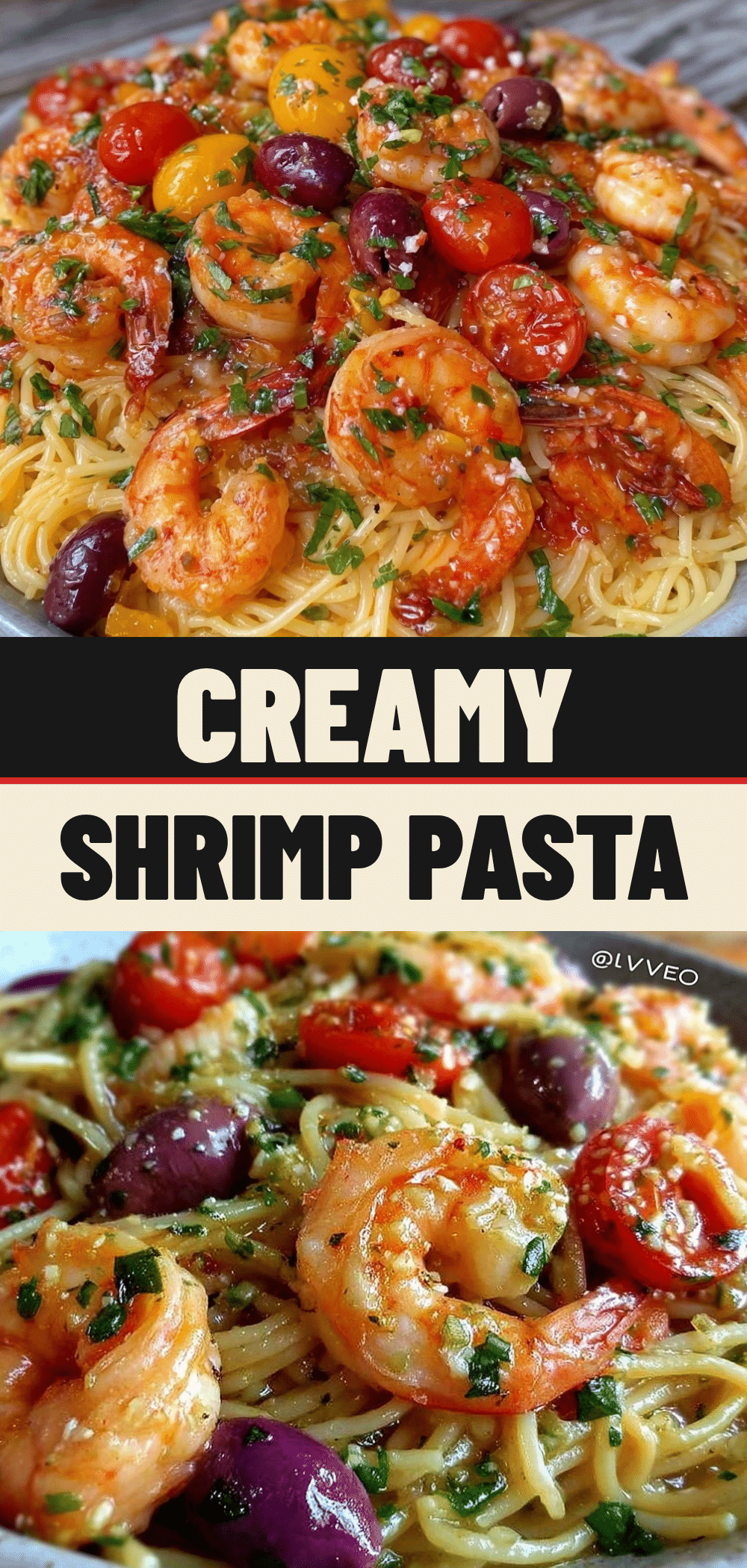
Mediterranean Shrimp Pasta with Cherry Tomatoes and Olives
- Total Time: 30 minutes
- Yield: 6 servings 1x
Description
A light, bright, and impressive 5-ingredient dinner party pasta featuring plump shrimp, burst cherry tomatoes, briny olives, and a zesty lemon-olive oil emulsion.
Ingredients
- 1 pound linguine or spaghetti
- 1/2 cup extra virgin olive oil
- 6 cloves garlic, minced
- 2 pints cherry tomatoes, halved
- 1 pound shrimp, peeled and deveined
- 1/2 cup Kalamata olives, pitted and halved
- 1 large lemon, zested and juiced
- 1/2 cup fresh basil, chopped
- 1/2 cup feta cheese, crumbled
- 1/2 teaspoon red pepper flakes
- Salt, for pasta water
- Optional: 2 tablespoons capers, 1/4 cup sun-dried tomatoes, 1/2 cup dry white wine
Instructions
- Prep ingredients: Halve tomatoes, pit/halve olives, mince garlic, chop basil, zest/juice lemon, and pat shrimp dry.
- Bring a large pot of salted water to a boil. Cook pasta until al dente. Reserve 1 cup pasta water before draining.
- Heat olive oil in a large skillet over medium heat. Add garlic and red pepper flakes; sauté for 1-2 minutes until fragrant but not brown.
- Increase heat to medium-high. Add shrimp in a single layer and cook 1-2 minutes per side until pink. Remove shrimp and set aside.
- Add tomatoes to the same skillet. Cook 3-4 minutes, tossing occasionally, until they burst and release juices.
- Add cooked pasta to the skillet with tomatoes. Toss with lemon juice, zest, and olives. Add reserved pasta water as needed to create a glossy sauce.
- Return shrimp to the pan. Add basil and gently toss to combine.
- Serve immediately, topped with crumbled feta cheese.
Notes
Do not overcook the shrimp or they will become rubbery. Save the starchy pasta water to help emulsify the sauce. Use high-quality extra virgin olive oil as it is the base of the sauce. Taste before adding extra salt as olives and feta are salty.
- Prep Time: 10 minutes
- Cook Time: 20 minutes
- Category: Main Course
- Cuisine: Italian
Nutrition
- Serving Size: 1/6 of the recipe
- Calories: 380
- Sugar: 4
- Sodium: 450
- Fat: 12
- Saturated Fat: 4
- Carbohydrates: 45
- Fiber: 3
- Protein: 22
Keywords: Mediterranean shrimp pasta, quick dinner party recipe, 5-ingredient pasta, shrimp and tomatoes, easy weeknight dinner, gluten-free option