Last summer, I was panicking. My husband’s boss had just dropped by unexpectedly, and our kitchen was still a disaster zone from the lunch rush. I needed something that looked like I’d spent hours planning, tasted like it came from a high-end coastal restaurant, and could be thrown together in twenty minutes flat. I didn’t have time to roast vegetables separately, grill a whole fish, or fuss with complicated plating.
So I did what I always do when the clock is ticking: I raided the fridge and the pantry. I pulled out some wild-caught salmon fillets, a bag of pre-washed arugula, a lemon that was begging to be zested, and some feta cheese that needed to be used up. I threw it all into a bowl. It was bright, it was tangy, it was colorful, and it was absolutely perfect.
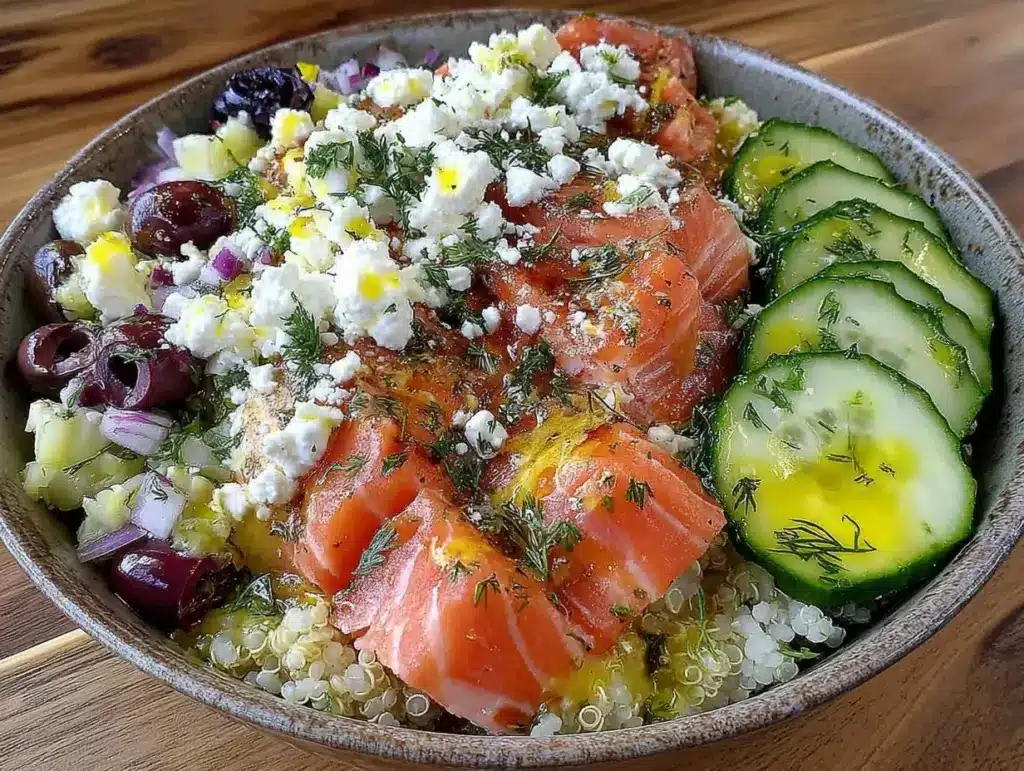
That accidental meal turned into a tradition. Now, whenever I need to impress guests without stressing myself out, I make this Mediterranean Salmon Bowl. It’s become my go-to for dinner parties, weekend brunches, and even those “I’m tired but want to eat well” Tuesdays. The best part? It looks stunning on the table. The vibrant orange of the salmon against the green arugula, the white crumbles of feta, and the deep purple of olives—it’s like a piece of the Mediterranean on a plate.
I’ve tested this recipe at least a dozen times, tweaking the dressing ratios and the cooking method until it was foolproof. Whether you’re hosting a crowd or just treating yourself to a luxurious weeknight dinner, this bowl delivers big flavor with minimal effort. It’s fresh, it’s healthy, and it’s ridiculously easy to scale up for a party.
Why You’ll Love This Recipe
There are a few reasons this Mediterranean Salmon Bowl has earned a permanent spot in my weekly rotation, but here are the big ones:
- It’s a Visual Showstopper — Seriously, this dish photographs itself. The colors are so vibrant that guests think you’ve spent hours plating. It’s perfect for those who want to share their meals on social media or just want a dinner that feels special.
- Ready in 20 Minutes — I know, it sounds too good to be true. But salmon cooks incredibly fast, and this dressing comes together in seconds. From oven to table, you’re looking at about 18 minutes of active time.
- Make-Ahead Friendly — The hardest part about dinner parties is timing. With this bowl, you can prep the grains, chop the veggies, and make the dressing hours before guests arrive. You just sear or bake the salmon right before serving.
- Bright and Tangy Flavor — After eating heavy, creamy dishes all week (like my creamy chicken alfredo tortellini), this bowl feels like a breath of fresh air. The lemon-honey dressing cuts through the richness of the fish perfectly.
- Customizable for Everyone — If you have guests with different tastes, this bowl is a dream. Some people love extra olives, others want more cucumber. It’s a build-your-own vibe that takes the pressure off the host.
This is my answer to “what’s for dinner?” when I want to feel fancy but don’t want to be stuck in the kitchen all night. It’s light, it’s satisfying, and it makes everyone feel like they’re on vacation.
Ingredients You’ll Need
Here’s the best part: most of these ingredients are fresh, simple, and likely already in your fridge or pantry. I’m particular about a few things here, so pay attention to the details!
For the Salmon
Salmon fillets (1.5 lbs / 700g) — I use wild-caught sockeye or Atlantic salmon. Wild has a firmer texture and deeper flavor, which holds up better in a bowl. Look for fillets that are about 6-8 ounces each. If they’re huge, you might need to cut them in half.
Extra virgin olive oil (2 tablespoons) — Use a good quality one here. You’ll taste it. I keep a bottle of mild EVOO for cooking and a robust one for finishing.
Garlic (2 cloves, minced) — Fresh only. Jarred garlic has a weird metallic taste that doesn’t work well with delicate fish.
Smoked paprika (1 teaspoon) — This adds a subtle smokiness that pairs beautifully with the lemon. Don’t skip it—it’s the secret flavor booster.
Salt and black pepper — Coarse sea salt is best for seasoning the fish. Freshly cracked black pepper adds a nice bite.
For the Base
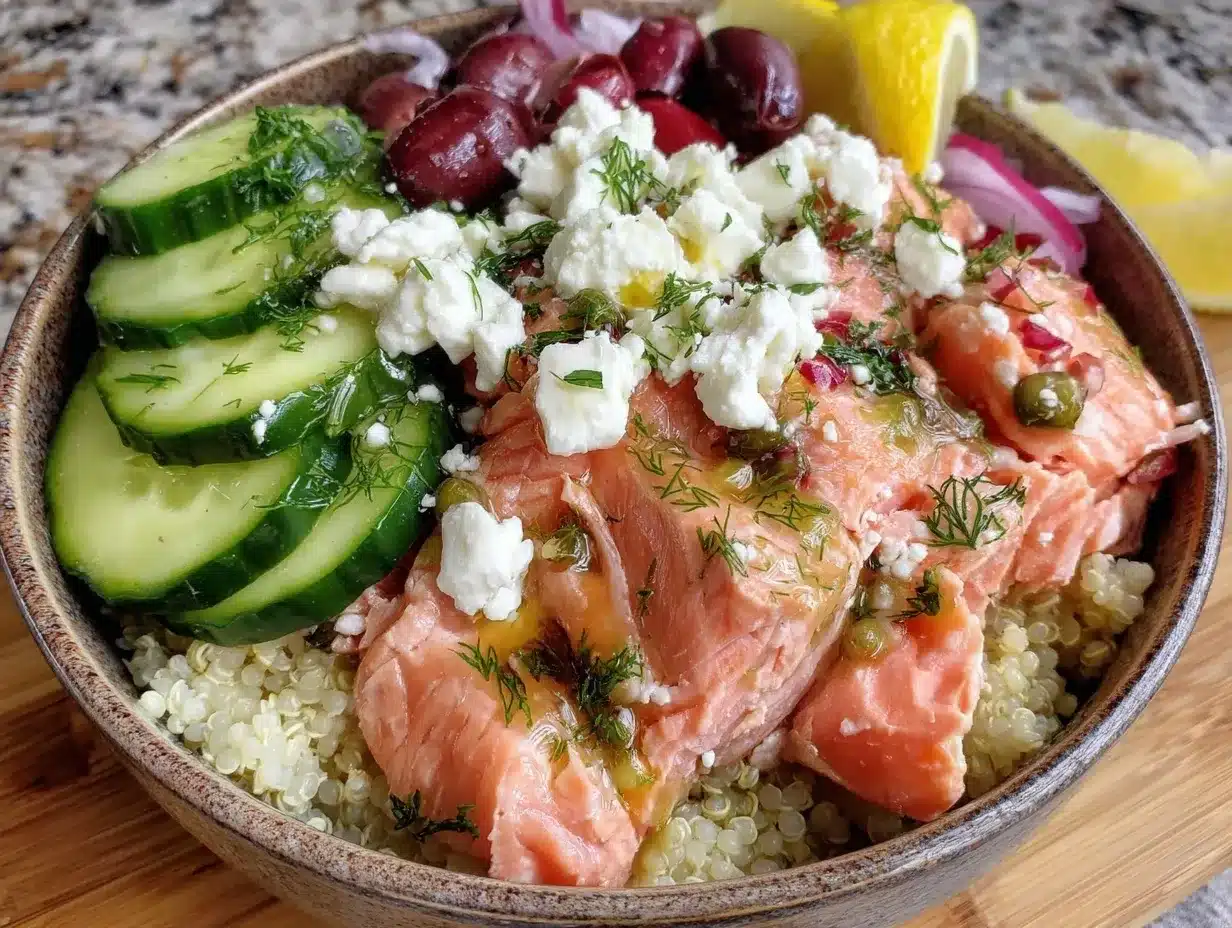
Quinoa or couscous (1 cup dry / 200g) — I prefer quinoa for its nutty texture and protein boost, but fluffy couscous works too if you’re in a rush. Cook it according to package directions, but fluff it with a fork and let it cool slightly.
Arugula (4 cups / 120g) — Fresh baby arugula adds a peppery kick that balances the sweet dressing. If you’re not a fan of arugula, mix it with spinach or use all spinach.
For the Fresh Veggies
Cucumber (1 medium, diced) — I use English cucumbers because they have fewer seeds and a crunchier texture. Peeled or unpeeled is your call—I usually leave the skin on for color.
Cherry tomatoes (1 cup, halved) — Sweet, juicy bursts of flavor. Look for ripe ones that are heavy for their size.
Red onion (½ medium, thinly sliced) — Raw red onion can be sharp. Soak the slices in cold water for 5 minutes to mellow the bite, then drain.
Kalamata olives (½ cup, pitted and halved) — These are non-negotiable for me. Their briny, salty flavor is what makes it “Mediterranean.” If you can’t find Kalamata, black olives work too.
Feta cheese (½ cup, crumbled) — Buy a block and crumble it yourself. Pre-crumbled feta has anti-caking agents that make it dry and chalky. Freshly crumbled feta is creamy and salty.
For the Lemon-Honey Dressing
Fresh lemon juice (3 tablespoons) — Squeeze your own! Bottled lemon juice tastes flat and bitter. You’ll need about 2 lemons.
Lemon zest (1 teaspoon) — Don’t skip the zest! It adds aromatic oils that juice alone can’t provide. Use a microplane for the finest zest.
Honey (1 tablespoon) — Raw honey is best, but any honey works. It balances the acidity of the lemon.
Dijon mustard (1 teaspoon) — This emulsifies the dressing and adds a subtle tang. It won’t make the dressing taste like mustard, I promise.
Dried oregano (½ teaspoon) — A classic Mediterranean herb. If you have fresh oregano, use 1 teaspoon chopped.
Salt and pepper — To taste. Start with a pinch and adjust after whisking.
Equipment Needed
You don’t need fancy gadgets for this. Here’s what I actually use:
Baking sheet — A standard 13×18 inch sheet pan. Line it with parchment paper for easy cleanup. I prefer this method over pan-searing because it’s less messy and cooks the salmon evenly without drying it out.
Small bowl — For whisking the dressing. Any small mixing bowl works.
Whisk — To emulsify the dressing. Fork works in a pinch.
Sharp knife and cutting board — For chopping veggies and slicing salmon. A dull knife is dangerous and frustrating.
Microplane or zester — For the lemon zest. If you don’t have one, a regular grater works, but be careful not to get the white pith.
Rice cooker or small pot — For cooking the quinoa. I use my rice cooker because I can set it and forget it while I prep the veggies.
How to Make It: Step-by-Step
Alright, let’s make this! I’m walking you through exactly how I do it, including the little tricks I’ve picked up over the years.
Step 1: Prep the Grains (15-20 minutes)
Start by cooking your quinoa or couscous. If you’re using quinoa, rinse it thoroughly under cold water to remove the bitter saponin coating. Combine 1 cup quinoa with 2 cups water (or broth for extra flavor) in a pot. Bring to a boil, reduce heat to low, cover, and simmer for 15 minutes. Remove from heat and let it sit, covered, for 5 minutes. Then fluff with a fork and spread it out on a plate to cool slightly. You want it warm, not hot, when you assemble the bowls.
Step 2: Make the Dressing (5 minutes)
While the grains cook, make the dressing. In a small bowl, whisk together the olive oil, lemon juice, lemon zest, honey, Dijon mustard, dried oregano, salt, and pepper. Whisk vigorously until the dressing is emulsified and slightly thickened. Taste it—it should be bright, tangy, and just a touch sweet. If it’s too sour, add a little more honey. If it’s too sweet, add a splash more lemon juice. Set aside.
Step 3: Prep the Veggies (5 minutes)
While the dressing sits, chop your vegetables. Dice the cucumber, halve the cherry tomatoes, slice the red onion, and pit and halve the olives. If you’re soaking the red onion, do it now. Toss everything in a large bowl with the arugula. You’ll add the salmon and cheese later.
Step 4: Season and Cook the Salmon (12-15 minutes)
Preheat your oven to 400°F (200°C). Line a baking sheet with parchment paper. Pat the salmon fillets dry with paper towels—this helps them sear better. Brush them lightly with olive oil, then sprinkle with smoked paprika, salt, and pepper. Place them skin-side down on the baking sheet. Bake for 12-15 minutes, depending on thickness. The salmon is done when it flakes easily with a fork and is opaque throughout. Don’t overcook it! It should be moist and tender. If you prefer pan-searing, heat a skillet over medium-high heat, add a little oil, and sear the salmon skin-side down for 4 minutes, then flip and cook for 3 more minutes.
Step 5: Assemble the Bowls
Divide the warm quinoa among four bowls. Top with the arugula and vegetable mixture. Flake the cooked salmon into large chunks and arrange it on top. Crumble the feta cheese generously over the salmon and veggies. Drizzle the lemon-honey dressing over everything. Add a final crack of black pepper and a sprinkle of fresh herbs if you have them (parsley or dill work great).
Step 6: Serve Immediately
Serve these bowls right away while the salmon is warm and the quinoa is slightly heated. The contrast of temperatures is part of the charm. Enjoy!
Expert Tips & Tricks
Here’s everything I’ve learned from making this dozens of times. These tips will save you from my mistakes.
Don’t Overcook the Salmon
Salmon continues to cook slightly after you take it out of the oven. Pull it when it’s just barely opaque in the center. It will be moist and flaky. Overcooked salmon is dry and rubbery, and no amount of dressing can fix that.
Warm the Bowls
If you really want to impress, warm your serving bowls in the oven for a few minutes before assembling. Warm bowls keep the quinoa warm and make the whole dish feel more comforting.
Fluff the Quinoa
Letting the quinoa rest for 5 minutes after cooking allows the steam to redistribute, making it fluffy instead of mushy. Don’t skip this step.
Make the Dressing Ahead
The dressing actually tastes better after it’s sat for an hour, letting the flavors meld. You can make it up to 2 days ahead and store it in the fridge. Let it come to room temperature before using.
Use Fresh Herbs for Garnish
A sprinkle of fresh parsley or dill adds a pop of color and freshness. It’s a small touch that makes the dish look professional.
Soak the Red Onion
Raw red onion can be overpowering. Soaking the slices in ice water for 5-10 minutes removes the harsh bite and makes them crisp and sweet. It’s a game-changer.
Variations & Substitutions
Once you’ve nailed the basic version, here’s how you can mix it up. I’ve tried all of these.
Shrimp Bowl
Swap the salmon for large shrimp. Toss the shrimp in the same seasoning and bake or sauté for 3-4 minutes until pink. Shrimp cooks faster, so watch it closely!
Chickpea Power Bowl
For a vegetarian version, skip the fish and add a can of drained and rinsed chickpeas. Toss them with the spices and roast them along with the salmon (or separately) until crispy. Add a dollop of hummus for extra creaminess.
Tuna Bowl
Use ahi tuna steaks instead of salmon. Sear them quickly for 1-2 minutes per side for a rare center. Slice thinly and arrange on top. This is my husband’s favorite variation.
Couscous Swap
If you’re short on time, use instant couscous. Just pour boiling water over it, cover, and let sit for 5 minutes. It’s lighter and fluffier than quinoa.
Dairy-Free
Skip the feta or use a vegan feta alternative. The dressing is naturally dairy-free, so you’re good to go.
Gluten-Free
Quinoa is naturally gluten-free. Just make sure your feta and olives don’t have any added gluten (rare, but check labels).
Serving & Storage
How to Serve:
I usually serve these bowls family-style, with the bowls in the center and everyone serving themselves. It’s interactive and fun. Pair it with a simple side salad or some warm pita bread if you’re feeding a crowd.
Side Dishes:
– Warm pita bread or naan
– Roasted asparagus
– A simple cucumber-tomato salad with extra dressing
Storage:
Store leftovers in an airtight container in the fridge for up to 3 days. The salmon will firm up as it cools, but it’s still delicious cold or reheated gently.
Reheating:
To reheat, microwave the salmon for 30-60 seconds on low power, or eat it cold. The quinoa and veggies are great cold too. Avoid high heat, which will dry out the fish.
Freezing:
I don’t recommend freezing this dish. The texture of the salmon and the arugula suffers. Make it fresh for the best experience.
Nutrition Information
I’m not a nutritionist, but here’s the breakdown if you’re tracking.
Per Serving (based on 4 servings):
- Calories: 450
- Protein: 35g
- Carbs: 32g
- Fiber: 5g
- Sugar: 6g
- Fat: 22g
- Saturated Fat: 6g
- Cholesterol: 85mg
- Sodium: 420mg
What’s Good:
– High in protein from the salmon and quinoa
– Rich in omega-3 fatty acids
– Good source of fiber and vitamins from the veggies
What to Know:
– Moderate in calories due to the olive oil and cheese
– Contains dairy and gluten (unless modified)
My Take:
“This is a balanced, nutrient-dense meal. It’s not ‘diet food,’ but it’s light enough to feel good after eating. I love that it has healthy fats, lean protein, and complex carbs all in one bowl.”
Final Thoughts
So that’s my Mediterranean Salmon Bowl! I’ve probably talked your ear off at this point, but when you make a recipe this often, you have a lot to say about it.
This has saved me from dinner-party disasters more times than I can count. It’s my answer to “I need to impress but I’m tired.” It’s fresh, it’s flavorful, and it’s beautiful. My guests always ask for the recipe, and my husband loves that it’s healthy but still feels indulgent.
Make it yours! Try different greens, swap the olives for artichoke hearts, or add some roasted red peppers. The best recipes are the ones you adapt to your tastes.
If you make this, drop a comment and let me know what you think! I love hearing how recipes turn out in your kitchen. And if something doesn’t work, tell me that too—I’m here to help troubleshoot.
Happy cooking! And I hope your kitchen smells half as good as mine does right now.
Frequently Asked Questions
Can I use canned salmon instead of fresh?
You can, but the texture will be quite different. Canned salmon is softer and more flaky, which works well if you’re making salmon cakes or mixing it into the quinoa. For this bowl, I recommend fresh fillets for the best texture and presentation. If you must use canned, drain it well and flake it gently over the top.
Why is my dressing too thin?
Usually, this means you didn’t whisk it enough to emulsify, or you added too much lemon juice. Try whisking it vigorously for a full minute. If it’s still too thin, add a little more Dijon mustard or a teaspoon of honey to help thicken it. The oil and lemon juice need to be forced together to create a creamy dressing.
Can I meal prep this for the week?
Yes! This is a great meal-prep recipe. Cook the quinoa and chop the veggies ahead of time. Store the salmon separately in the fridge. Assemble the bowls right before eating to keep the arugula crisp and the salmon moist. The dressing can be made 2 days ahead.
What if I don’t like feta?
No problem! You can swap it for goat cheese, which is tangier and creamier. Or use shaved Parmesan for a nuttier flavor. Even crumbled queso fresco works if you want something milder. The key is a salty, creamy cheese to balance the lemon.
Can I make this in an air fryer?
Absolutely! Cook the salmon in the air fryer at 400°F for 6-8 minutes, depending on thickness. It will be slightly crispier on the outside. The rest of the bowl remains the same. This is a great option if you don’t want to heat up your oven.
How do I know when the salmon is done?
The easiest way is to check the internal temperature. It should reach 145°F (63°C). Alternatively, press the top of the fillet gently with a fork. If it flakes easily and feels firm but not hard, it’s done. If it’s still translucent in the center, give it another 2 minutes.
Pin This Recipe!
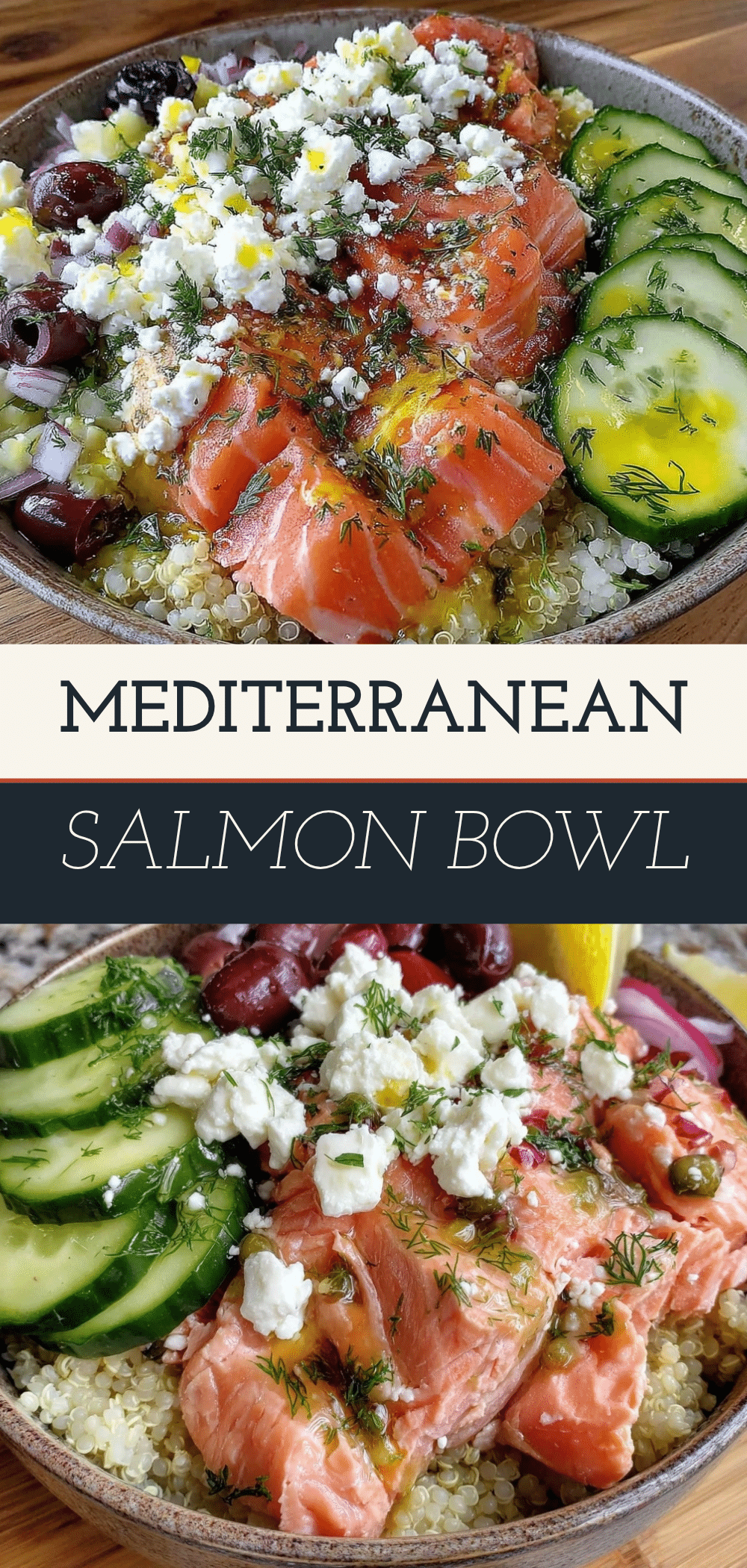
Mediterranean Salmon Bowl: Best 20-Min Party Dinner
- Total Time: 30 minutes
- Yield: 4 servings 1x
Description
A vibrant, tangy, and healthy salmon bowl that comes together in just 20 minutes. Featuring wild-caught salmon, quinoa, fresh arugula, and a bright lemon-honey dressing, this dish is perfect for impressing guests or enjoying a luxurious weeknight dinner.
Ingredients
- 1.5 lbs wild-caught salmon fillets
- 2 tablespoons extra virgin olive oil (divided)
- 2 cloves garlic, minced
- 1 teaspoon smoked paprika
- Salt and black pepper to taste
- 1 cup dry quinoa or couscous
- 4 cups fresh baby arugula
- 1 medium English cucumber, diced
- 1 cup cherry tomatoes, halved
- 1/2 medium red onion, thinly sliced
- 1/2 cup Kalamata olives, pitted and halved
- 1/2 cup feta cheese, crumbled
- 3 tablespoons fresh lemon juice
- 1 teaspoon lemon zest
- 1 tablespoon honey
- 1 teaspoon Dijon mustard
- 1/2 teaspoon dried oregano
Instructions
- Cook quinoa according to package directions (rinse first if using quinoa). Fluff with a fork and let cool slightly.
- In a small bowl, whisk together olive oil, lemon juice, lemon zest, honey, Dijon mustard, dried oregano, salt, and pepper until emulsified. Set aside.
- Dice cucumber, halve cherry tomatoes, slice red onion, and pit/halve olives. Toss vegetables with arugula in a large bowl.
- Preheat oven to 400°F (200°C). Pat salmon dry, brush with olive oil, and season with smoked paprika, salt, and pepper.
- Place salmon skin-side down on a parchment-lined baking sheet. Bake for 12-15 minutes until opaque and flaky.
- Divide warm quinoa among four bowls. Top with the arugula and vegetable mixture.
- Flake cooked salmon into large chunks and arrange on top. Crumble feta cheese over the salmon.
- Drizzle with lemon-honey dressing and garnish with fresh herbs if desired. Serve immediately.
Notes
Soak sliced red onion in cold water for 5 minutes to mellow the bite. Do not overcook the salmon; it should be moist and flaky. The dressing can be made up to 2 days ahead. For a vegetarian version, substitute salmon with roasted chickpeas.
- Prep Time: 15 minutes
- Cook Time: 15 minutes
- Category: Main Course
- Cuisine: Mediterranean
Nutrition
- Serving Size: 1 bowl per person
- Calories: 450
- Sugar: 6
- Sodium: 420
- Fat: 22
- Saturated Fat: 6
- Carbohydrates: 32
- Fiber: 5
- Protein: 35
Keywords: Mediterranean Salmon Bowl, healthy dinner, quick meals, salmon recipes, quinoa bowl, gluten-free options, meal prep, weeknight dinner