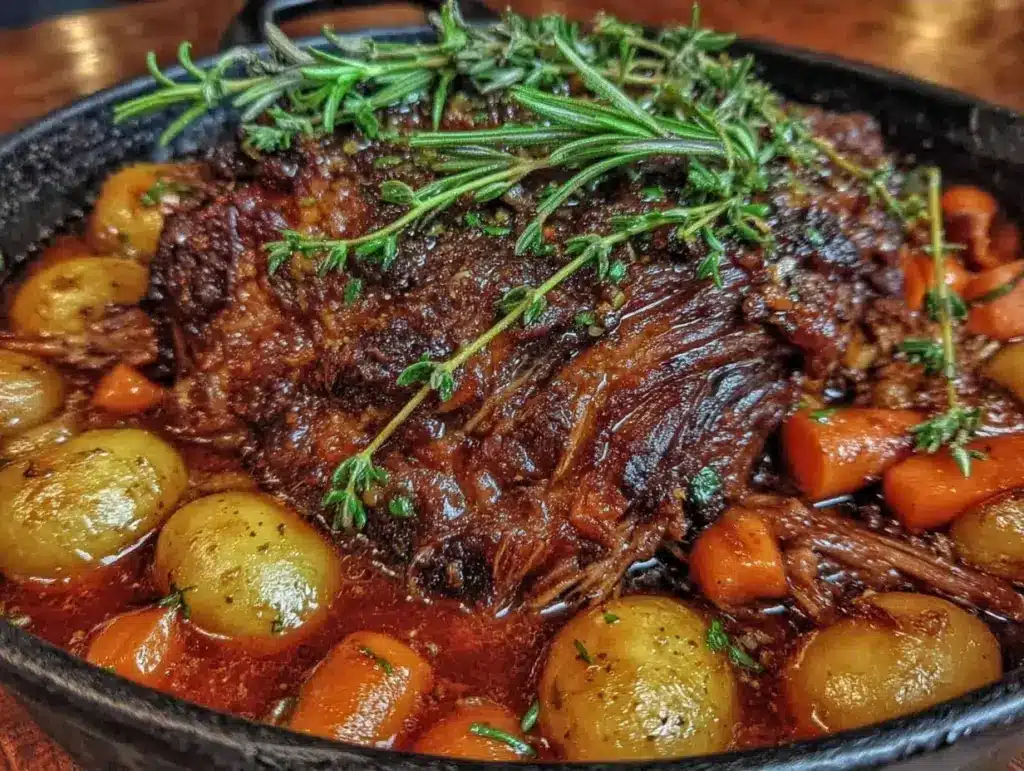
It’s that time of year again when the air gets crisp and the farmers’ markets start shifting from bright summer berries to deep, earthy root vegetables. I was walking through the market last Saturday, nose buried in a pile of just-picked Brussels sprouts, when I spotted them: these beautiful, marbled pork shoulders. They looked like little treasures wrapped in fat and muscle. I bought three, not knowing exactly what I’d do with them, but knowing I wanted something that smelled like comfort.
That night, I decided to channel the memory of my grandmother’s Sunday roasts. She never rushed a meal. She’d put a big cut of meat in the oven with a glass of wine and let it slow down until it fell apart. But I’m a modern cook with a 5 PM deadline. I needed that same tender, fall-apart texture, but faster, and with a flavor profile that screamed “harvest.” So, I grabbed the maple syrup from my pantry, dug out the Dijon mustard, and threw together what I thought would be a simple glaze. Thirty minutes later, the smell hitting the kitchen wasn’t just dinner; it was a hug.
This Cozy Fall Maple Dijon Braised Pork Shoulder has become my absolute favorite way to welcome the season. It’s not just about the pork; it’s about the sauce. That sticky, sweet-savory coating that clings to every shred of meat? It’s addictive. I’ve made this recipe at least six times since October started, tweaking the spice levels and the vegetable ratio until it felt perfect. It’s the kind of dish that makes your house smell like a bakery crossed with a butcher shop, and your guests ask for the recipe before they’ve even finished their second plate.
Real talk: you don’t need to be a fancy chef to make this work. You just need a heavy pot, some patience, and a willingness to trust the process. Whether you’re hosting a small dinner party or just feeding your hungry family on a Tuesday, this Cozy Fall Maple Dijon Braised Pork Shoulder delivers big flavor with minimal stress. Let’s get into why this dish is taking over my weeknight rotation.
Why You’ll Love This Cozy Fall Maple Dijon Braised Pork Shoulder
There are a million reasons to cook this dish, but here are the ones that actually keep me coming back to the stove. It’s not just “delicious”—it’s practical, flavorful, and deeply satisfying.
It’s Foolproof Tender — The low-and-slow braising method breaks down the tough connective tissues in the shoulder. I’ve tried quick-sear methods, but they always leave the meat chewy. This method? It’s fork-tender every single time. I can literally pull it apart with two forks without even trying.
Flavor That Deepens — Unlike a quick stir-fry, this dish gets better the next day. The maple and Dijon meld together overnight, creating a glaze that’s richer and more complex. I often make this on Sunday and serve it on Monday, and the leftovers are somehow even better than the fresh batch.
Seasonal Produce Pairing — This recipe is built around what’s growing right now. The sweetness of the maple pairs perfectly with the earthiness of roasted carrots and parsnips. It’s a celebration of autumn ingredients, not just a random collection of groceries.
One-Pot Wonder — You sear the meat, sauté the veggies, and braise everything in the same pot. Cleanup is a breeze. I love a good recipe, but I love a good cleanup even more. This Cozy Fall Maple Dijon Braised Pork Shoulder respects your time.
Freezer Friendly — Because the sauce is so rich, it freezes beautifully. I portion it out into meal-prep containers for those busy weeks when I don’t have the energy to cook. It reheats without drying out, which is a miracle for braised meats.
This is my go-to when I want to feel cozy without spending all day in the kitchen. It’s hearty, it’s healthy-ish, and it’s just plain good.
Key Ingredients for the Best Cozy Fall Maple Dijon Braised Pork Shoulder
When you’re braising, the quality of your ingredients matters more than usual. You can’t hide bad meat under heavy spices. Here’s what I use and why.
Pork Shoulder (Boston Butt) (4 lbs / 1.8 kg) — This is the star. Look for a bone-in shoulder if you can find it; the bone adds flavor to the braising liquid. If you buy boneless, just adjust the cooking time slightly. I always buy mine from the local butcher who knows how to handle it properly. Avoid pre-trimmed lean cuts; you need that intramuscular fat to keep it juicy.
Maple Syrup (1/2 cup / 120 ml) — Not pancake syrup. Real, 100% pure maple syrup. Grade A Dark or Grade B is best because it has a stronger, more robust flavor that stands up to the pork. I buy mine from a local producer in Vermont when I can, but a good grocery store brand works fine too. Avoid anything with corn syrup listed first.
Dijon Mustard (3 tbsp / 45 g) — This provides the tangy counterpoint to the sweet maple. I prefer a smooth Dijon like Maille or Grey Poupon. It emulsifies into the sauce beautifully, creating that glossy finish. If you don’t have Dijon, whole grain mustard works, but the texture will be chunkier.
Carrots (1 lb / 450 g) — Peel and chop them into large chunks. They release natural sugars into the sauce as they braise. I love using rainbow carrots for the visual pop, but orange ones are traditional and sweet.
Parsnips (1 lb / 450 g) — These are the unsung heroes of fall cooking. They look like white carrots but taste like sweet, earthy honey. Chop them to the same size as the carrots so they cook evenly. If you can’t find parsnips, sweet potatoes are a good substitute, though they’ll break down faster.
Thyme and Rosemary (2 sprigs each / approx. 1 tbsp chopped) — Fresh herbs are non-negotiable here. Dried herbs will make the sauce taste dusty. I pick fresh sprigs from my garden or the market. Tie them together with kitchen twine for easy removal, or just chop them up if you don’t mind fishing out bits of leaves later.
Chicken Stock (2 cups / 480 ml) — Use low-sodium stock so you can control the saltiness. Homemade stock is ideal, but a good quality store-bought one like Swanson or Pacific Works perfectly. Avoid bone broth if you want a cleaner flavor profile; it can be too gelatinous for this specific glaze.
Tools Needed
You don’t need fancy equipment. Here’s what I use to make this Cozy Fall Maple Dijon Braised Pork Shoulder shine.
Dutch Oven — I use a 7-quart enameled cast iron pot. It holds heat incredibly well, which is crucial for braising. If you don’t have one, a heavy-bottomed stockpot works, but the lid needs to fit tightly to trap steam.
Chef’s Knife — Sharpness matters when chopping root vegetables. A dull knife will crush the carrots instead of slicing them. I use my Wüsthof, but any sharp knife will do.
Tongs — Essential for flipping the heavy pork shoulder without piercing it. Piercing lets the juices out, and we want to keep them in.
Meat Thermometer — This is the game-changer. I used to guess, but now I check. You want an internal temperature of 195°F–205°F for that fall-apart tenderness. It removes all the guesswork.
How to Make This Cozy Fall Maple Dijon Braised Pork Shoulder
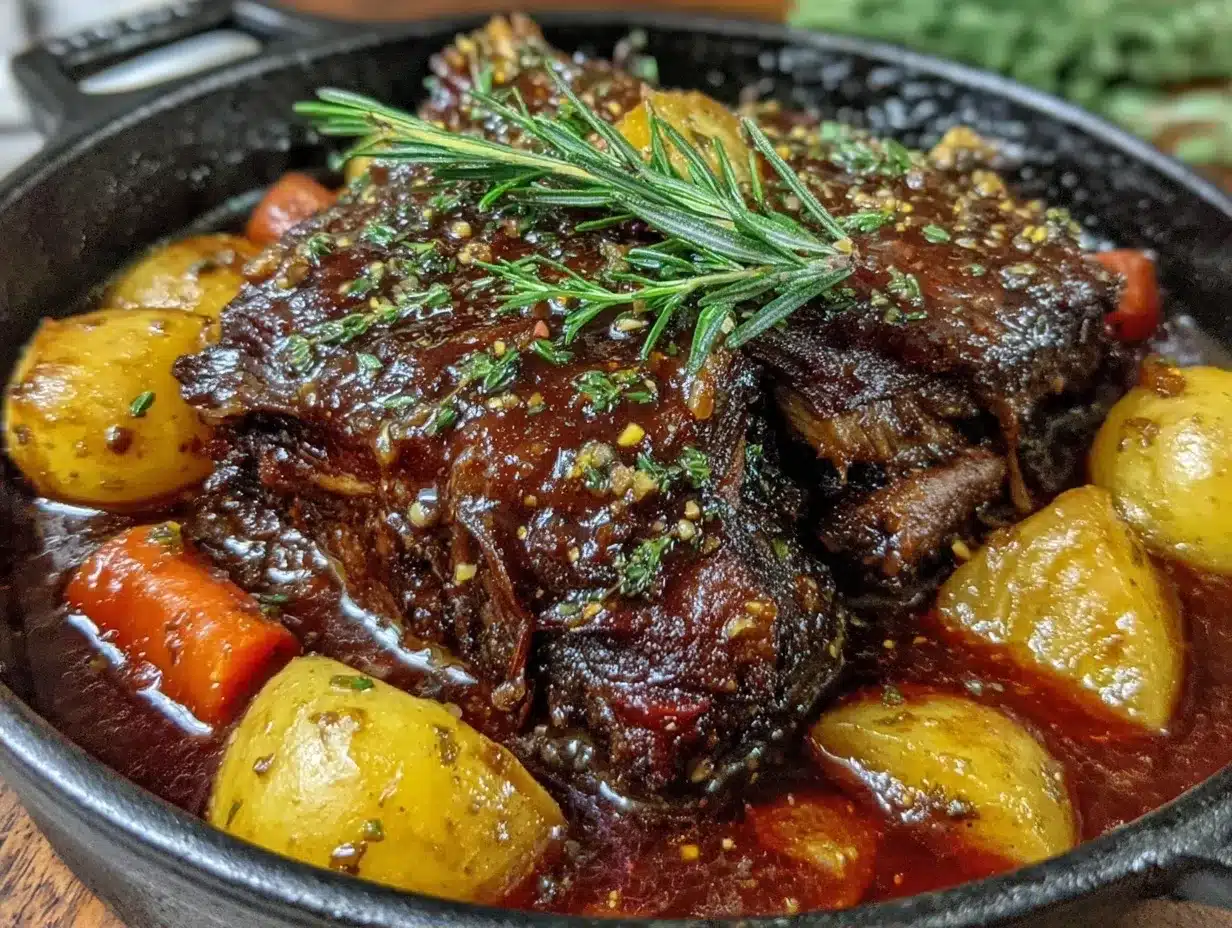
Let’s walk through the steps. It’s straightforward, but there are a few tricks to get that perfect glaze.
Step 1: Prep and Season (10 minutes)
Pat the pork shoulder dry with paper towels. This is crucial. If the meat is wet, it will steam instead of sear. Season generously with salt and black pepper on all sides. I use about 1 tablespoon of kosher salt for a 4-pound roast. Let it sit at room temperature while you prep your veggies. This helps it cook more evenly.
Step 2: Sear the Pork (15 minutes)
Heat your Dutch oven over medium-high heat. Add 2 tablespoons of olive oil. Once the oil shimmers, place the pork shoulder in the pot. Sear it for 3-4 minutes per side until you get a deep, golden-brown crust. Don’t rush this step. The Maillard reaction is what gives the sauce its depth. If the meat sticks, don’t scrape it yet. Let it release naturally. Remove the pork to a plate.
Step 3: Sauté Aromatics (5 minutes)
Reduce heat to medium. Add the chopped onions, carrots, and parsnips to the same pot. Cook for 5-7 minutes, stirring occasionally, until the onions are translucent and the veggies start to brown slightly. This builds the flavor base. Deglaze the pot with 1/2 cup of the chicken stock, scraping up all those brown bits from the bottom. Those bits are liquid gold.
Step 4: Build the Sauce (2 minutes)
Stir in the maple syrup, Dijon mustard, thyme, and rosemary. Mix well. Add the remaining chicken stock. The liquid should come about halfway up the sides of the pork, not covering it completely. We’re braising, not boiling.
Step 5: Braise (2.5–3 hours)
Return the pork to the pot. Cover with a tight-fitting lid. Transfer to a 325°F (165°C) oven. Braise for 2.5 to 3 hours. Check at the 2-hour mark. The meat should be tender but still holding its shape. If it’s still tough, give it another 30 minutes. The internal temperature should read between 195°F and 205°F.
Step 6: Reduce and Serve (10 minutes)
Remove the pot from the oven. Carefully lift the pork out and place it on a cutting board. Cover it with foil. Turn the stove to medium-high and boil the sauce uncovered for 10-15 minutes. It will reduce and thicken into a gorgeous glaze. Taste and adjust salt and pepper. Slice or shred the pork, drizzle with the sauce, and serve immediately.
Total Time: 3 hours 30 minutes (including prep). Active Time: 45 minutes.
Expert Tips for Perfect Results
Here’s everything I learned from making this too many times so you don’t have to make the same mistakes.
Don’t Skip the Sear
I know it’s tempting to just throw the raw meat into the liquid. Don’t. The sear creates a layer of flavor that braising alone cannot achieve. I learned this the hard way when my first batch tasted bland and boiled. The sear is non-negotiable.
Watch the Heat
If you’re braising on the stovetop instead of in the oven, keep the simmer very gentle. You want a low bubble, not a rolling boil. A rolling boil will make the meat tough and stringy. Low and slow is the mantra.
Balance the Sweetness
Maple syrup is sweet, but Dijon is sharp. If your maple syrup is particularly sweet, add a splash of apple cider vinegar at the end. It brightens the sauce and cuts through the richness. I usually add 1 teaspoon, but taste as you go.
Shred, Don’t Slice
While you can slice the pork, shredding it allows more surface area to catch the glaze. Use two forks to pull it apart. It’s therapeutic and ensures every bite is coated in that delicious sauce.
Recipe Variations for This Cozy Fall Maple Dijon Braised Pork Shoulder
Once you’ve nailed the basic version, here’s how to mix it up.
Spicy Maple Glaze
Add 1 teaspoon of cayenne pepper or a chopped jalapeño to the sautéing veggies. The heat contrasts beautifully with the sweet maple. Great if you like a kick.
Apple and Cider Twist
Swap half the chicken stock for hard apple cider. Add 2 chopped apples (like Honeycrisp) with the carrots. The apples break down into the sauce, adding a fruity depth. This pairs wonderfully with the pork.
Vegan Option
Use a firm tofu or seitan “pork” alternative. Sear it well, then braise in vegetable stock with the same maple-Dijon sauce. The sauce works perfectly on vegetables too, so serve it over mashed cauliflower.
Gluten-Free
Most Dijon and maple syrup are naturally gluten-free, but check your labels. Ensure your chicken stock is certified gluten-free. Serve with gluten-free bread or rice to soak up the sauce.
Serving and Storage
Serving:
I serve this Cozy Fall Maple Dijon Braised Pork Shoulder over creamy mashed potatoes or buttered egg noodles. The sauce needs a starch to cling to. A side of roasted Brussels sprouts or green beans adds a nice crunch. For a wine pairing, go with a Pinot Noir or a Chardonnay. The acidity in the wine cuts through the richness of the pork.
Storage:
This dish keeps well in the refrigerator for up to 4 days. Store the meat and sauce together in an airtight container. It reheats beautifully in the microwave or on the stovetop with a splash of water to loosen the sauce. It also freezes perfectly for up to 3 months. Thaw overnight in the fridge before reheating. The flavors actually improve after a day or two in the fridge, making it ideal for meal prep.
Nutrition Information
I’m not a nutritionist, but here’s the breakdown per serving (assuming 6 servings).
| Nutrient | Amount |
|---|---|
| Calories | 480 kcal |
| Protein | 35 g |
| Carbohydrates | 22 g |
| Fiber | 3 g |
| Fat | 28 g |
| Sodium | 650 mg |
My Take: This is comfort food. It has fat and sugar, but it’s also packed with protein and vegetables. It’s a balanced meal, just a hearty one. It’s much better than takeout because you know exactly what’s in it. Enjoy it without guilt.
Final Thoughts
Making this Cozy Fall Maple Dijon Braised Pork Shoulder is about embracing the season. It’s about slowing down and letting the flavors develop. I love that it fills my home with such a welcoming scent. Whether you’re feeding a crowd or just treating yourself, this recipe delivers. Don’t be afraid to tweak the spices or swap the veggies. Make it your own. If you make this, drop a comment! I love hearing how it turns out in your kitchen. Happy cooking!
FAQs
Can I use a slow cooker for this recipe?
Absolutely. Sear the pork first in a pan, then transfer everything to the slow cooker. Cook on low for 6-8 hours or high for 4-5 hours. The sauce might be thinner, so you’ll need to reduce it on the stovetop after cooking.
What kind of pork shoulder should I buy?
Boston butt is the best cut. It has the right amount of fat and connective tissue. Avoid loin cuts; they’re too lean and will dry out during braising.
Can I make this ahead of time?
Yes! In fact, it’s better made ahead. Make it a day in advance, let it cool, and refrigerate. Reheat gently before serving. The flavors have time to meld.
Why is my sauce too thin?
It needs more time to reduce. After removing the pork, boil the sauce on the stovetop until it coats the back of a spoon. You can also add a cornstarch slurry (1 tsp cornstarch + 1 tsp water) if you’re in a hurry.
Can I freeze this recipe?
Yes, it freezes very well. Store in portions for easy reheating. It will last up to 3 months in the freezer.
Pin This Recipe!
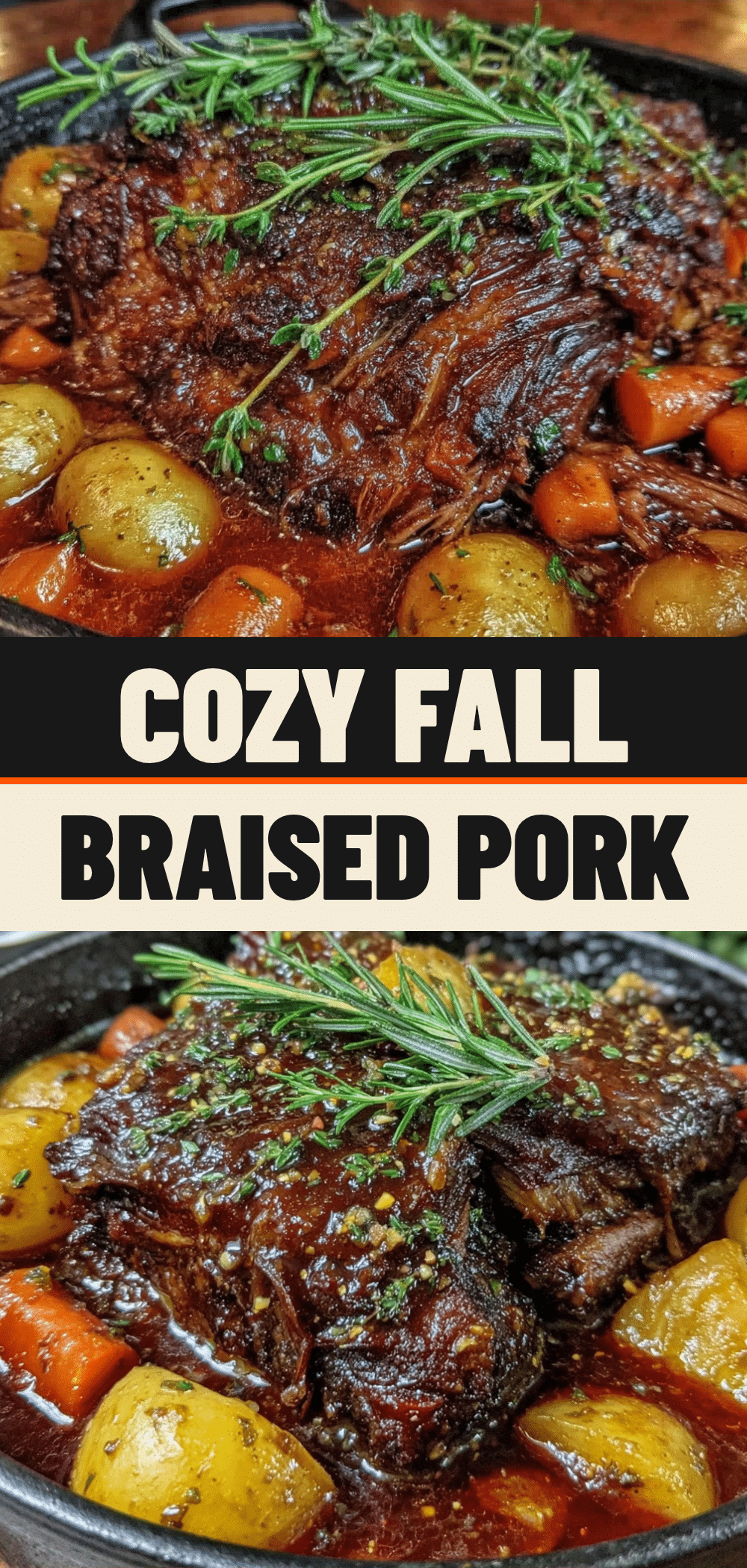

Cozy Fall Maple Dijon Braised Pork Shoulder
- Total Time: 3 hours 30 minutes
- Yield: 6 servings 1x
Description
A tender, fall-apart braised pork shoulder glazed with a sweet and savory maple-Dijon sauce, slow-cooked with seasonal root vegetables for a comforting autumn meal.
Ingredients
- 4 lbs (1.8 kg) Pork Shoulder (Boston Butt), bone-in preferred
- 1/2 cup (120 ml) 100% pure maple syrup
- 3 tbsp (45 g) Dijon mustard
- 1 lb (450 g) Carrots, peeled and chopped into large chunks
- 1 lb (450 g) Parsnips, chopped to same size as carrots
- 2 sprigs fresh Thyme (approx. 1 tbsp chopped)
- 2 sprigs fresh Rosemary (approx. 1 tbsp chopped)
- 2 cups (480 ml) Low-sodium chicken stock
- 2 tbsp Olive oil
- 1 tbsp Kosher salt
- Black pepper, to taste
- 1 Onion, chopped (implied from sauté step)
Instructions
- Pat the pork shoulder dry with paper towels and season generously with salt and black pepper. Let it sit at room temperature while prepping vegetables.
- Heat a Dutch oven over medium-high heat with olive oil. Sear the pork shoulder for 3-4 minutes per side until a deep golden-brown crust forms. Remove pork to a plate.
- Reduce heat to medium. Add chopped onions, carrots, and parsnips to the pot. Sauté for 5-7 minutes until onions are translucent and veggies begin to brown.
- Deglaze the pot with 1/2 cup chicken stock, scraping up brown bits from the bottom.
- Stir in maple syrup, Dijon mustard, thyme, and rosemary. Add remaining chicken stock. The liquid should come halfway up the sides of the pork.
- Return pork to the pot. Cover with a tight-fitting lid and transfer to a 325°F (165°C) oven. Braise for 2.5 to 3 hours, until internal temperature reaches 195°F–205°F.
- Remove pot from oven. Lift pork out and cover with foil. Boil the sauce uncovered on the stovetop for 10-15 minutes until reduced to a thick glaze.
- Taste and adjust seasoning. Slice or shred the pork, drizzle with sauce, and serve immediately.
Notes
The pork is done when it reaches an internal temperature of 195°F–205°F for fork-tender results. The dish improves in flavor after sitting overnight in the refrigerator. It can be frozen for up to 3 months. If using a slow cooker, sear first, then cook on low for 6-8 hours.
- Prep Time: 45 minutes
- Cook Time: 2 hours 45 minutes
- Category: Main Course
- Cuisine: American
Nutrition
- Serving Size: 1 serving (approx. 1
- Calories: 480
- Sugar: 18
- Sodium: 650
- Fat: 28
- Saturated Fat: 8
- Carbohydrates: 22
- Fiber: 3
- Protein: 35
Keywords: pork shoulder, braised pork, maple dijon, fall recipes, autumn cooking, comfort food, one-pot meal, root vegetables